4 months ago
69
4 months ago
69

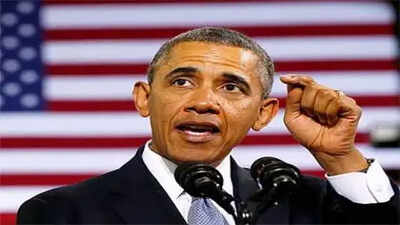
Quote of the day by Barack Obama
Failure is frequently viewed as something people should avoid at all costs. Failure is often associated with disappointment, embarrassment or regret, be it school exams, careers, relationships or public life.
But some of the world’s most influential leaders have spoken openly about failure not as an end, but as an important part of growth. One such voice is former US President Barack Obama, whose quote still echoes with millions of people around the world, "You can’t let your failures define you – you have to let them teach you. You have to let them show you what to do differently next time."The message of the statement goes far beyond politics. It’s about resilience.
It’s about learning. It’s about personal growth. It’s about the ability to bounce back. Obama’s words remind people that mistakes and failures are not weaknesses in a world where people are under constant pressure to look successful. But they can also be turning points that shape future successes.The quote has been especially popular among students, entrepreneurs, professionals, and young people trying to navigate uncertainty.
It’s often shared in hard moments because it takes the focus off shame and onto improving oneself. It does not encourage people to shy away from failure, but to study it, understand it, and grow from it.
Quote of the day by Barack Obama
"You can’t let your failures define you – you have to let them teach you. You have to let them show you what to do differently next time."
Why Barack Obama’s quote about failure continues to inspire people
This quote is powerful because it’s real, and almost everyone experiences it. Failure is the rule. Everyone experiences setbacks in life, regardless of how successful they are. It’s not the failure itself that determines outcomes, but how people respond to it.Obama’s words suggest that failure should not define a person’s identity. People often use one bad experience as proof that they are not good enough or that they are incapable. Failing an exam might make someone feel stupid. Someone may feel unsuccessful after their business fails. Rejection can make us feel that we aren’t good enough.But the quote also directly challenges this way of thinking. It means that failure is information, not fate.
It can reveal weaknesses, improve judgment, and teach lessons that success sometimes cannot.This is especially relevant in today’s world, where social media has frequently promoted unattainable ideals of perfection. People share achievements publicly but seldom talk openly about struggles. As a result, many people start to believe that successful people never fail. Obama’s quote counters that illusion by normalising setbacks as part of the learning process.
The personal journey behind Obama’s words
The quote also rings true because it comes from someone who has overcome many obstacles before reaching global prominence. Barack Obama has suffered political defeats, criticism and uncertainty about his future before becoming President of the United States.His early career suffered a serious setback in 2000 when he lost to Bobby Rush in a race for Congress in Illinois. The defeat was a blow that required him to rethink his political project and personal ambitions.
He did not quit politics, but thought about the experience and rebuilt his career step by step.He would go on to become the first African American President of the United States, serving two terms from 2009 to 2017. His journey has been an example of persistence, patience and long-term thinking.This context makes the quote sound less like a motivational slogan and more like an experience. Obama was not talking theoretically about failure.
He had experienced it firsthand and publicly.
Failure often becomes the foundation of future success
Many psychologists and leadership experts believe that failure can play an important role in human development. People often learn more from hard experiences than from easy victories. Failure brings reflection. It encourages adaptation and can also build emotional resilience.In entrepreneurship, for example, failed businesses are considered learning experiences rather than permanent defeat.
Many successful entrepreneurs are candid about the mistakes they made early on. They take lessons from those experiences that often help them build stronger companies later on.The same pattern is seen in sports, education, science, and creative industries. Many champions learn important lessons after losing matches. You’re going to get rejection letters before you publish your first book. Scientists make breakthroughs only after experiments fail, over and over again.This is very much in line with Obama's quote. It does not deny the pain of failure, but it reframes failure as something which can still have value.
Why fear of failure stops many people from taking risks
One of the themes that the quote implies is courage. The fear of failure can stop people from trying new things in the first place. Many people don't take risks because they are afraid of embarrassment, criticism, or disappointment.This fear can quietly influence life decisions. Someone may not apply for a dream job for fear of rejection.
The risk of failure may be too high a prospect for someone else to ever start a business idea. Some might be stuck in situations that no longer bring them joy simply because not knowing is intimidating.Obama’s message calls for a different mindset. If we see failure as a teacher and not as something permanent, it loses some of its sting. The opportunity to learn softens the emotional impact of a setback.This concept is important for professional and personal development.
Many times, people find out what their strengths are after going through a difficult period.
The connection between resilience and leadership
Great leadership is seldom built on a smooth road to success. Often, resilience is one of the defining characteristics of influential leaders. But the ability to recover from mistakes is often more important than avoiding mistakes.Some of the most respected names in history had failures before they got recognition. Abraham Lincoln lost a number of elections before he was elected president.
Oprah Winfrey had some career setbacks early in television. Walt Disney had business failures before building one of the world’s largest entertainment companies.Obama’s quote embodies this larger truth about resilience. Leadership is not the absence of mistakes. Sometimes, it’s the ability to keep learning, despite them.
Modern culture’s complicated relationship with failure
There's a lot of talk about self-growth and resilience, but society still struggles in many ways with failure.
Academic pressure, work competition, and comparisons to others create environments where mistakes can seem insurmountable.Young people in particular feel a lot of pressure to achieve. Grades, pay, social status, and career achievements are often used as measures of worth. In such a setting, even small setbacks could feel heavy emotionally.This is one reason why quotes like Obama’s still spread widely on the Internet.
They offer emotional reassurance but also a practical point of view. The message is more than “stay positive.” Rather, it promotes analysis, adaptation, and persistence.And the quote also points to a better long-term way to think about ambition. Success rarely follows a straight path. Most journeys involve uncertainty, delays, missteps, and surprises.
Lessons from failure often become more valuable over time
One interesting thing about failure is that the lessons aren’t always immediately obvious.
Sometimes it takes people years to understand the value of a setback.Sometimes, a missed opportunity can lead a person down a better career path. A failed relationship can teach emotional maturity. A professional disappointment can lead to patience or discipline.Obama’s quote captures this delayed understanding well. Failure matters not because it feels good at the moment but because it can change future decisions.Most successful people do not consider their failures to be the end, but a turning point. The tough experience forced them to upgrade skills, re-evaluate priorities or build resilience they didn’t have before.
The emotional side of failure people rarely discuss
Much motivational talk focuses on ‘learning from failure’, but the emotional side matters just as much. Failure can have a profound impact on confidence, identity and mental well-being.People experience embarrassment, shame, sadness, or fear after setbacks.
Obama’s quote is important, in part, because it recognises the emotional force of failure. The warning against letting failure “define you” recognises that people take setbacks too much to heart.It is difficult to separate one’s self-worth from temporary outcomes. But psychologists often note that this divide is crucial for emotional resilience. Just because someone fails doesn't mean they lack talent, intelligence or worth.Rather, setbacks tend to be situational and temporary. With this knowledge, people can recover more constructively.
Barack Obama’s communication style and why his quotes spread globally
Obama is known for speeches and statements that are both optimistic and realistic. He often speaks in terms of hope, perseverance and moving forward together, but he never dismisses the difficulties.This quote reflects that balance clearly. It doesn’t try to make failure fun. Failure, however, is not seen as useful if approached thoughtfully.Through the years, quotes from Obama have been widely shared for their ability to speak to wider human experiences, not just political issues. His words are universal, frequently touching upon themes of resilience, responsibility and personal growth.Years after leaving office, his speeches and statements are still shared in classrooms, leadership seminars, social media posts, and self-improvement conversations.
Why the quote by Barack Obama still matters in everyday life
The enduring power of Obama’s quote lies in its simplicity and honesty. Everyone experiences disappointment at some point. Careers sometimes stall. Plans go awry. Expectations are broken. But those moments don’t necessarily determine what comes next.The quote encourages people to treat failure differently. It asks people to view setbacks as opportunities for adjustment and growth rather than signs of defeat.This message feels especially relevant today in many ways. The world today is changing very fast, and people are always faced with uncertainty. Careers change, industries change, and so do personal goals, often over time.Flexibility has become more important than perfection.Obama’s words capture that reality clearly. Failure is not the end of the story unless people allow it to be. For many, that idea continues to motivate them in difficult times.That may be why the quote continues to resonate with people today. It doesn’t promise easy success or immediate change. It just reminds people that failure can still have a purpose, lessons and direction for what comes next.