10 hours ago
2
10 hours ago
2

46 minutes ago
Martin LindsayNorth East and Cumbria Investigations

 BBC
BBC
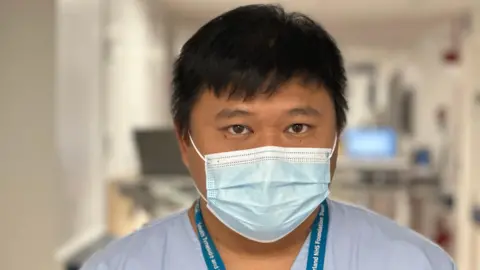
Tito Vicario says when his hospital asks people to wear masks that also attracts abuse from patients who refuse
There has been a significant rise in reports of NHS staff being racially abused by patients, the BBC has found. Workers say they are being physically and verbally attacked because of their ethnicity more often than ever.
Nurse Tito Vicario says, in the two years he has worked at Sunderland Royal Hospital, he has been racially abused by patients multiple times.
"Whenever I feel like it's going to happen again I feel my heart racing," he says.
The abuse is often verbal but, in extreme cases, he says he has been physically attacked.
"There are times where some patients will try to punch you or slap you," he says.
"It affects you not just physically but mentally as well."
In one incident Vicario, who is originally from the Philippines, was on the receiving end of a highly offensive racial slur. The patient's mortified family immediately apologised but the damage had been done, Vicario says, and such experiences leave him feeling powerless, anxious and nervous.
On another occasion, he says he was racially abused by a female patient who refused to take medication from him.
"They try to say these things to release their anger and anxiety but we're not punching bags, we're still people," he says.
"You can't hit back, just smile.
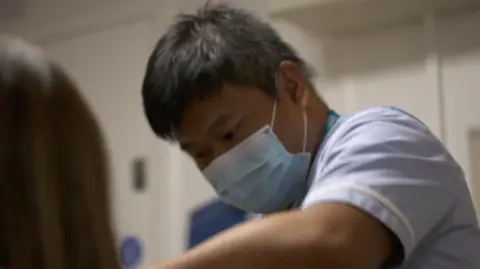
Tito Vicario says patients have tried to punch and kick him because of the colour of his skin
The BBC submitted Freedom of Information requests to all NHS hospital and mental health trusts in England to ask how many times staff had reported being racially abused by a patient.
From the 106 trusts which provided data, there were 8,235 such reports in 2024, a 17% increase on the 7,002 reports in 2023. Several trusts did not record reports of racism prior to 2023, meaning older comparison figures are not available, but campaigners claim the issue has been growing for several years.
Staff being encouraged to report incidents could have contributed to some of the rise, however the total figure, which includes physical and non-physical incidents, could be higher because not all trusts provided data.
The founder of the campaign group Equality 4 Black Nurses, Neomi Bennett, says a "really concerning" number of incidents go unreported.
"In our research around 67% chose not to report," she says, adding that some health workers "don't trust the system to protect them".
"Some of the nurses that have approached us have ended up going to work in retail or into sales or something which is less risky than nursing," she says.
Many foreign nurses had also returned to their home country "because they can't take it anymore".
 Supplied
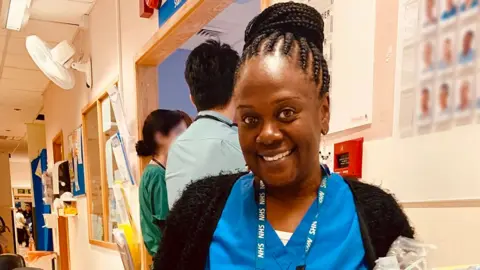
Nurse Neomi Bennett set up Equality 4 Black Nurses to support those who are racially abused
Ishaan, who is originally from India, has answered 111 and 999 calls for the North East Ambulance Service (NEAS) for the last two years. The BBC has agreed not to use his real name or his photograph because of fears they could attract more abuse.
Callers sometimes say they "want to speak to an English person, we don't want to speak to you", he says, or they tell him to "go back to where you came from, you have taken everything from us".
When the caller's "demands are not met they start becoming aggressive and racially abusive", and it can happen multiple times a day, he says.
In his first year working at NEAS, racial abuse occurred every few months, he says, but "this year it has increased drastically" and makes the call handers' work harder and delays patient care.
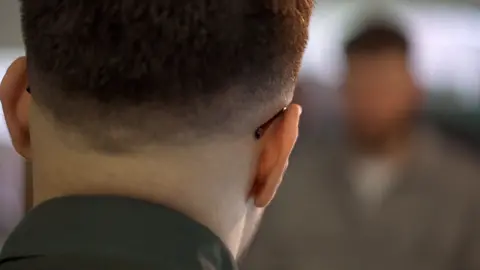
The BBC has agreed not to use Ishaan's real name or photograph in case this attracts more abuse.
Ishaan says on occasions he has had to stop taking calls because he has become so "distressed, frustrated and angry" and the abuse has made him question his long-term future in England.
"It lowers my confidence, it takes a mental toll, it does put stress on me," he says.
"It makes me think is it worth it still doing this job."
The kindness of other callers keeps him going with "that little thank you we get in the end" making him want to stay.
The Department of Health and Social Care (DHSC) said the NHS had a "zero tolerance approach to racism" but there had been an "intolerable rise in racism against hardworking NHS staff" in recent years.
"Discrimination undermines everything our health service stands for," a spokesperson said.
A review was being conducted into antisemitism and other forms of racism and a support package to protect frontline staff from violence and aggression had been announced in 2025, the DHSC said.
The measures include encouraging staff to report incidents and making it mandatory for the reports to be collected at national level, where they would be analysed to better understand if certain staff groups are targeted more often than others, it said.