53 minutes ago
5
53 minutes ago
5

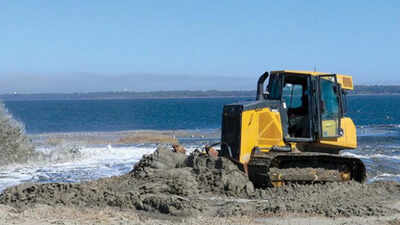
The restoration also comes as North Carolina's coastal bird nesting islands face continued erosion (Representational photo)
A North Carolina island that had been losing land to erosion has been restored using material removed while clearing a nearby navigation channel. The dredged material, which would otherwise have been placed offshore, was used to rebuild Wells Island near Wanchese and create open, sandy habitat for nesting waterbirds.
Within a week of the restoration work, wildlife officials found American Oystercatchers and a group of terns exploring the newly created habitat, according to North Carolina Wildlife Resources Commission (NCWRC).The restoration was completed in March through a collaboration between the US Army Corps of Engineers (USACE), Gator Dredging and the North Carolina Wildlife Resources Commission (NCWRC). The work was linked to a dredging project near Wanchese that was needed to maintain a section of the Old House Channel.The project was designed to serve two purposes. It would help keep the navigation channel open while also giving material removed from the channel a useful purpose. Instead of simply placing the material offshore, officials used it to restore Wells Island, which had experienced considerable erosion in recent years.The restoration also comes as North Carolina's coastal bird nesting islands face continued erosion.
A separate analysis by NCWRC examined 48 non-barrier coastal islands known to have been used by nesting wading birds. It found that 19 currently had no area of emergent habitat, while 10 had experienced 50% to 95% erosion. Another 19 islands had been eroded by up to 25%.
Dredged material used to rebuild Wells Island
NCWRC owns and manages several islands along the North Carolina coast for the conservation of nesting waterbirds. Wells Island was one of those sites, but erosion had reduced its habitat over recent years.When the USACE planned maintenance work on the Old House Channel, officials looked for a beneficial use for the material that would be removed. NCWRC and USACE have worked together for decades on ways to keep waterways navigable while also supplying sand for beaches and islands, including sites protected for nesting waterbirds.Wells Island was identified as a suitable location for the material. Staff from USACE and NCWRC worked together to design an island that could meet the habitat needs of birds while also reducing erosion.The dredged material was piped from the navigation channel to Wells Island. Temporary berms were used to keep the material within the planned area while it accumulated. Bulldozers were then used to smooth and shape the deposited material.The result was an expanse of open, sandy habitat. According to NCWRC, this type of habitat is suitable for many species of nesting waterbirds.
Birds explored the new habitat within a week
The first signs of wildlife use came soon after the restoration work was finished.
During a site visit the following week, NCWRC staff found a pair of American Oystercatchers and a group of terns exploring the newly created habitat.The observation came as officials continue to track the condition of coastal nesting islands across the state. NCWRC's analysis found that erosion and changing water levels are important threats to these areas and need to be monitored for species identified as being of conservation concern.The wider analysis looked at known non-barrier coastal islands used by nesting wading birds. Researchers used nesting records going back to 1975 and examined colour images from Google Earth dating back to 2003. They mapped the shoreline of each island for years when clear imagery was available.The findings showed substantial changes in several nesting islands. Of the 12 islands that had nesting wading birds in 2023, nine had experienced up to 25% erosion, while three had experienced between 50% and 95% erosion.One island used by Little Blue Herons and Snowy Egrets in the Albemarle and Currituck sounds had also changed considerably. It measured 4.5 acres in 2003 but had fallen to 1.9 acres by 2024.
Restoration combines navigation and habitat needs
The Wells Island project shows how material removed during dredging can be used for habitat restoration. In this case, the same work needed to maintain a navigation channel also provided material that could be used to rebuild an eroding island.The restoration involved several stages. The dredged material was transported through pipes to the island, where temporary berms helped hold it in place. Heavy equipment then shaped the material into the planned habitat.NCWRC said partnerships of this kind are important as development continues along the coast and waterbirds need areas free from disturbance where they can nest.