1 hour ago
6
1 hour ago
6

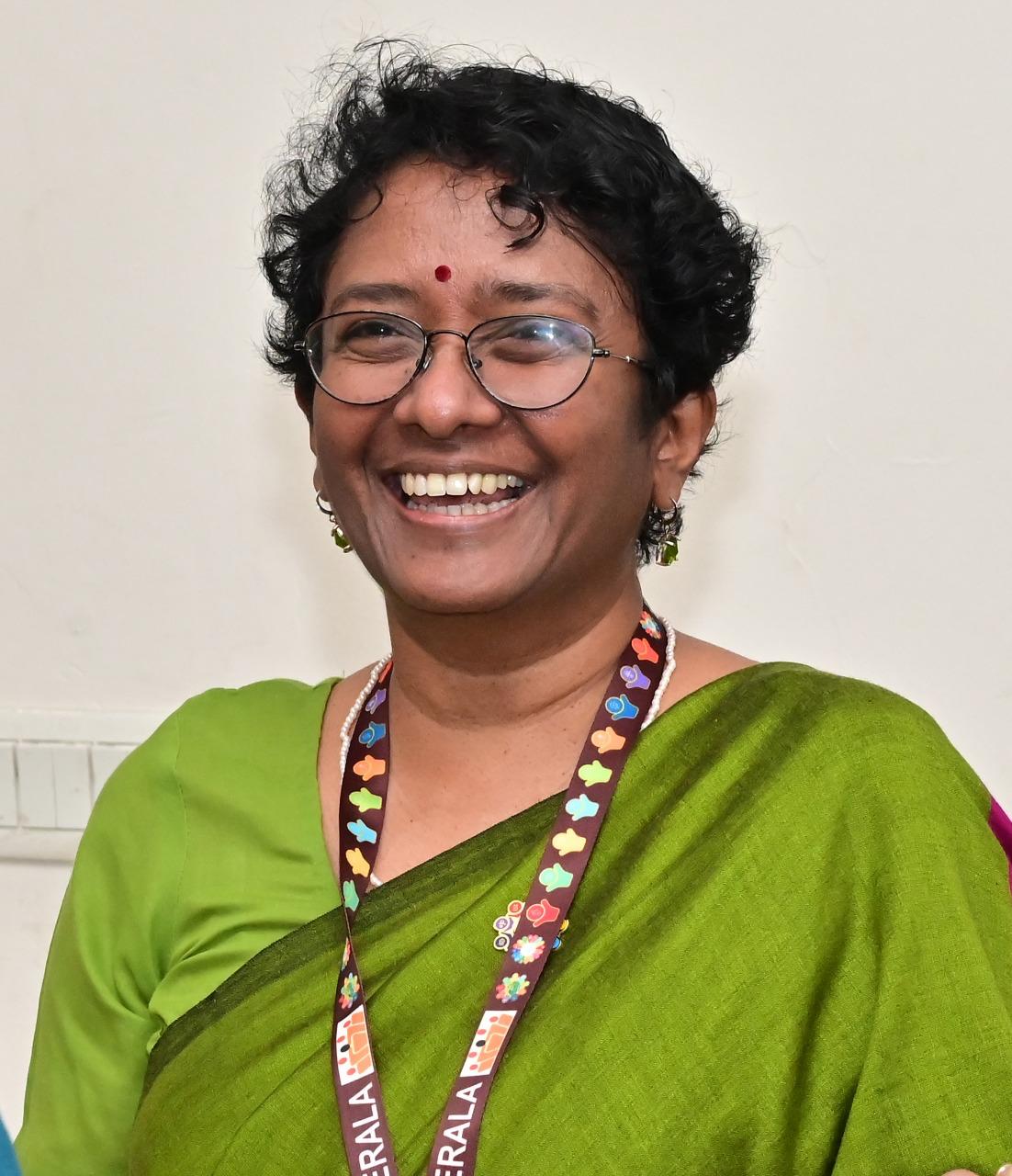 Sarada Murlidharan, Photo: Supplied
NEW DEHLI, September 28 (IPS) - As a young girl, Sarada Murlidharan cringed at the thought of going to school. It was not the studies but the taunts of ‘being black’ or having dark skin, where fair skin was considered preferential, that made her unhappy.
It was not a one-off: it was there as a constant, often unsaid but equally piercing. She was not one of them but one apart, and that too in the negative sense.
Back home in the silence of the night, she would often cry, something she refused to admit in her adult years: “I don’t remember if I actually cried, but yes, I used to be anxious; in fact, torn apart … my insides eaten away … Yes, I went through all that,” Murlidharan told IPS in an exclusive interview.
Those were the days, and in later years of life too, Murlidharan often questioned her destiny and the curse of her darkness; she often wished she could go back to her mother’s womb and come out “all fair and pretty.” To this day, she shudders at the painful memory of having actually asked her aunts and cousins about the soap they used “to look fair and lovely.”
Etched deep in memory are also her teenage years when her father served as a warden in an engineering college down south. A disciplinarian, he took a strong stand against a group of senior students ragging freshers.
In the Indian context, ragging is a serious issue in higher educational institutions. Even with laws in place, colleges still see numerous cases of “violent fun.” When a first-year university student was brought home in a body bag in a city in eastern India, his parents were initially unaware that a 120-minute ragging session had ended his life.
But back to Murlidharan and her father, who had rusticated students on charges of ragging. Sarada recalls how every time that she and her sister stepped out, there were catcalls referring to her dark skin: “We heard it every single day. Words like ‘irrutu murali’ and ‘kurutte budhi’ … continue to haunt me.”
In Malayalam, which is spoken in the southern part of India, ‘irrutu’ means ‘pitch dark’. Roughly translated, ‘irrutu murali’ and ‘kurutte budhi’ mean someone who is pitch dark and has a devious mind.
Memories run deep: the bitter ones are often buried not to surface again. But this memory did surface, thanks to a social media post that created havoc in India. It brought alive an issue that was kind of buried within deep recesses.
The stigma of being dark stung yet again. It also brought an issue out in the open: one that had until now been private to those battling the curse of being dark-skinned.
When Muraleedharan woke up that morning when she was still serving in the state government in a senior position, it was like any other day, unaware that a storm awaited.
A Facebook post had allegedly commented on her skin colour. Worse still, it was a peg to compare her work with that of her husband, Venu Vasudevan.
“Heard an interesting comment yesterday on my stewardship as Chief Secretary — that (someone wrote that she) is as ‘black’ as my husband’s was ‘white’,” she wrote. “I need to own my blackness … I was hurt, yes … it was about being labelled ‘black’, as if it was something to be ashamed of … I need to own my ‘blackness’.”
Both Murlidharan and her husband were senior administrative officers. Like her husband, Sarada served as administrative head of the state of Kerala in South India: a coveted post.
Murlidharan also made history, given that she succeeded her husband. It was the first time that a husband-wife duo had held the top bureaucratic post in the state in succession.
But back to being dark-skinned and to Murlidharan’s story.
“Incidentally, my husband is fair-skinned,” she said, adding that she was calling out those who harboured a colour bias. “I felt it was time to own my blackness … to understand that there is beauty, except it is of a different kind, and it is not always that being fair means being beautiful. Even we who are dark can be beautiful.”
Ostensibly, Murlidharan may have worked around all these issues, but within, she was torn apart.
“The realisation of not being good enough; not being the right colour and the constant feeling that there was something wrong in the way I was born and that ‘black’ is not a good colour to be. I wanted to change it all,” she said.
It is a battle that she has fought all by herself, confronting “our demons”, as she calls her internal strife, her private hell.
“Sometimes we win, sometimes we lose,” she said.
Murlidharan is not alone. There are others who have faced and continue to face colour bias, but unlike Murlidharan, they did not fight it out.
“Better to keep it hidden than call it out,” said Pratibha, a second-year university student in southern India.
The sentiment, rather than rejection, resonates with what Murlidharan’s husband, Vasudevan, has said.
“My sister is not ‘fair’, and she has had to endure snide remarks from the family.”
Whether or not he stood up for his sister, Vasudevan has clearly supported his wife, Murlidharan.
Defending her outburst, he said, “It was a pensive reflection of a personal experience on a matter she felt deeply about and had endured for many years. The obsession with fair complexion is deep-rooted, fed by the general discourse in a society that worships it. There is only one word for this: ridiculous.”
Ridiculous it surely is, yet this reality is deep-rooted, unspoken, and abhorred.
Colourism, now popularly known as colour discrimination, is gender-specific. The intersection of colour and gender is a double whammy. It hits women hard and is tougher on them than it is on men.
“I cannot notbe a woman, and I cannot notbe dark. The problems that I have had for having to prove myself for being both woman and dark do not go” Murlidharan said, underlining that men being dark is acceptable, but when it comes to women, it is frowned upon, particularly in India, where there is widespread discrimination in terms of caste, gender and, of course, colour.
Even as women are coming into their own professionally and personally, men still get the better of them on the issue of colour.
Weekends are particularly dreadful given that large matrimonial advertisements stare one in the face. The catchline: Wanted a fair-skinnedbride…
Occasionally they may say ‘caste no bar’, but they never say ‘colour no bar’. The prerequisite, decidedly, is fair skin, which in India is synonymous with being pretty.
However, this statement suggests that awareness has indeed dawned upon working women. They have not only opposed the fair skin demand, which until some years ago was kind of non-negotiable, but have also protested and, in many cases, changed the status quo.
In this context, what stands out is the campaign by well-known Indian film star and producer Nandita Das, who says she is “tired of being called dark and dusky.”
UNESCO handpicked her and launched a campaign called “India’s Got Colour.”
The campaign was a take-off from an initiative launched some years ago by the founder of Women and Worth, popular as WOW in India, Kavitha Emmanuel, titled Dark is Beautiful. The India’s Got Colour campaign was a significant advance in the fight against colourism.
Once Das got actively involved, other film personalities also got involved, including Bhumi Pednekar, another well-known name in the Indian film industry. To make this clear, Pednekar had intentionally appeared in a trailer of one of her films with make-up that showed her up as darker than she actually is.
For her part, Das has faced several situations during her film career when her skin tone has been lightened simply because she is playing the role of an educated upper-class woman, quite the opposite of when she is playing the role of a slum dweller.
Das has also faced situations when her makeup man reportedly told her, “Don’t worry. I am an expert in making people look fair.” She could then have torn her hair apart.
In addition to individuals, some top brands in the corporate sector were also facing backlash on this issue.
A well-known brand, Hindustan UniLever, had to rework its campaign after a furore over its Fair and Lovely ad. And advertisements wooing women to use fairness cream were nothing new. It had been in the market for over two decades until reality struck. And once it did, there was a backlash against the company for promoting colourism and racism.
The advertisement in question relied on a narrative that portrayed dark skin as ugly and fair skin as acceptable. Over the years several complaints were filed and penalties imposed. The government too stepped in and proposed a ban on such products till companies like Hindustan Unilever rebranded and dropped Fair from its brand name. Amid clamour for the cream’s withdrawal from the market, the company renamed it Glow and Lovely.
But is that enough? Does the rebranding and name change end the bias? Or does it also apply to colourism as well? Do pro-dark-skinned campaigns make life easier for dark-skinned women in India? Or is it mere eyewash, clearly just to grab eyeballs?
Sadly, little has changed in practice. Murlidharan may have taken up cudgels against the bias, and film stars may have backed the Black is Beautiful campaigns, but the truth is that when it comes to Indian society judging women, dark-skinned is considered unattractive, and light-skinned continue to rule.
IPS UN Bureau Report



© Inter Press Service (20260928144016) — All Rights Reserved. Original source: Inter Press Service