2 hours ago
2
2 hours ago
2

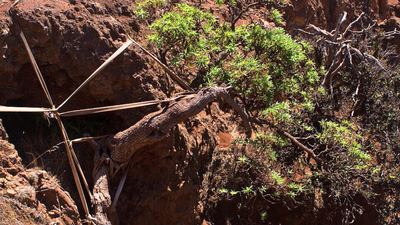
A rare tree daisy from Chile's Robinson Crusoe Island is receiving a new lifeline after two seedlings arrived at Logan Botanic Garden in south-west Scotland. Dendroseris neriifolia has been reduced to one known wild tree, which grows on a steep cliff and is supported by ropes to prevent it from falling.
Conservationists in Chile and the UK are working to preserve the species through seed collection and cultivation. In May 2026, 29 seeds were collected from the surviving tree and sent to Kew's Millennium Seed Bank. Eight seedlings germinated, and two have since been transferred to Logan, where specialists hope to learn more about their growth and help secure the future of the critically endangered plant.
World's rarest wild Chilean tree daisy clings to life
The remaining wild Dendroseris neriifolia tree grows on a steep volcanic outcrop on Robinson Crusoe Island.
Its precarious position has made physical support essential, with ropes helping prevent the tree from falling. The species has experienced a sharp decline over several decades. By 1980, only eight wild trees remained. Reintroduction projects were attempted in the early 2000s, but the breakdown of protective measures in 2017 allowed invasive plants and grazing animals to threaten the site again.The Chilean tree daisy has been affected by widespread forest clearance, intensive grazing by introduced mammals, invasive vegetation and repeated fires.
These pressures have damaged the natural habitat on which the species depends. Robinson Crusoe Island is part of the Juan Fernández Archipelago, a group of islands recognised for its distinctive native flora. The restricted distribution of Dendroseris neriifolia makes the loss of its remaining wild population particularly significant.
Scientists collect 29 seeds from the last known wild tree
In May 2026, conservationists collected 29 seeds from the surviving tree and sent them to the Millennium Seed Bank at Kew Wakehurst in England.
Kew's analysis found that 25 seeds were potentially viable. Eight seedlings subsequently germinated. The work provides an opportunity to preserve plant material from the wild survivor and investigate cultivation methods for the species. The seed collection is part of a broader conservation effort that includes previous collections and restoration projects intended to support the recovery of the tree daisy on its native island.
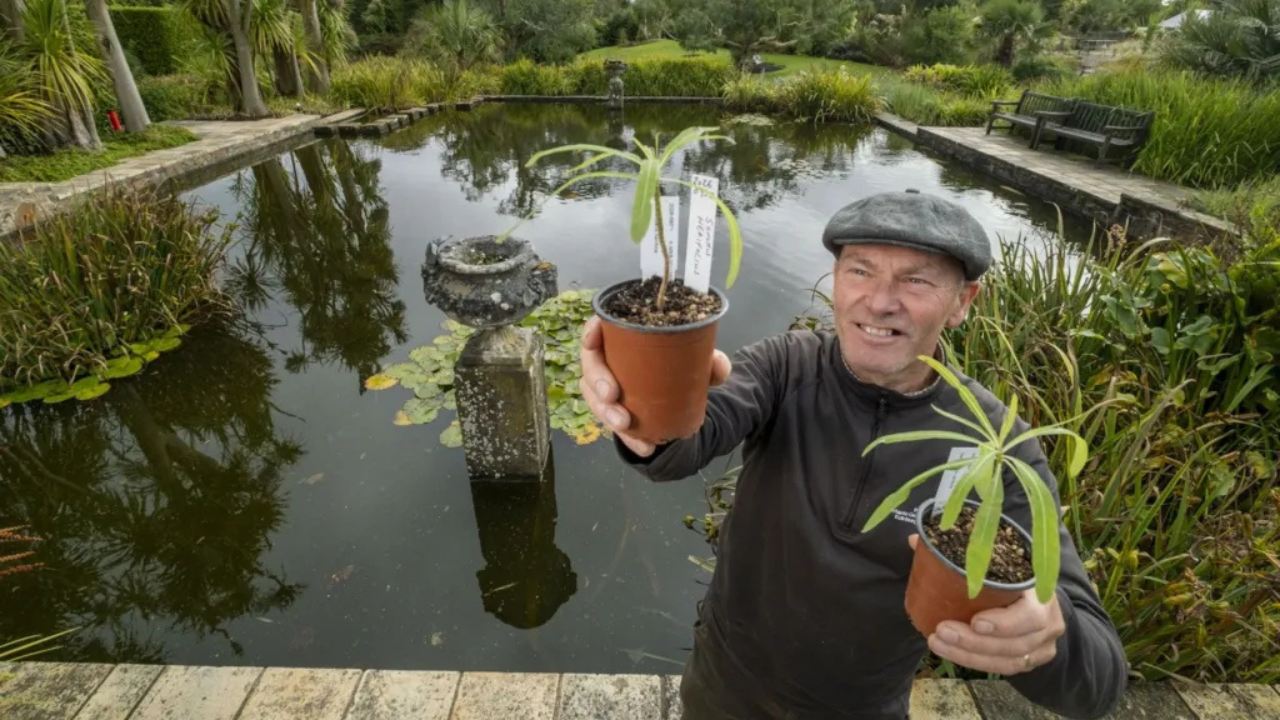
Image: BBC
Two seedlings arrive at Logan Botanic Garden in Scotland
Two of the germinated seedlings have now been transferred to Logan Botanic Garden in Dumfries and Galloway. The remaining germinated plants will stay at Kew and Logan is known for its mild climate, which allows it to cultivate plants from warmer regions. Its experience with species from the Juan Fernández Islands makes it a suitable location for growing the young tree daisies. Richard Baines, curator at Logan, said the arrival of the seedlings was a significant moment for everyone involved.
He explained that the garden would provide a safe place for the plants while specialists learn more about their development and adaptation to different environments.
International conservationists work against extinction
The project involves conservationists and scientists from Chile and the UK. Jardín Botánico VerdeNativo, Chile's National Forest Corporation and the Juan Fernández National Park are among the organisations involved in the conservation effort.
Diego Penneckamp, a scientist at Jardín Botánico VerdeNativo, described the work as a race against time. He said the international collaboration could help prevent the extinction of a species with a unique evolutionary history.
Felipe Saez, a plant biotechnology engineer and administrator of Parque Nacional Archipiélago Juan Fernández, also highlighted the significance of the seed transfer for protecting the archipelago's native plant life.
Why scientists are growing the seedlings outside Chile
The seedlings at Logan and Kew provide a form of ex-situ conservation, which involves protecting species outside their natural habitats. This approach can help safeguard plants when wild populations face severe threats.Growing the seedlings to maturity could allow researchers to study their development and potentially produce additional seeds. However, the long-term success of the programme will depend on the plants' ability to survive, reproduce and contribute to future conservation work.The wider Dendroseris genus is endemic to the Juan Fernández Islands. Kew has also identified conservation concerns affecting other species within the genus, underscoring the importance of protecting the archipelago's unique biodiversity.
Conservation efforts offer hope for the species
The arrival of two seedlings at Logan Botanic Garden marks a new stage in the effort to preserve Dendroseris neriifolia. The wild tree remains on Robinson Crusoe Island, where ropes are helping protect it from falling, while its offspring are being cultivated in the UK.The project combines field conservation in Chile with seed banking and horticultural expertise in Britain. By maintaining plants outside the wild, conservationists hope to develop a stronger foundation for protecting the species and supporting its future recovery.