.png) 1 year ago
28
1 year ago
28


Updated
Israel launched a stunning series of strikes on Friday morning against Iran’s nuclear program and killed three of the nation’s security chiefs, in a remarkable coup of intelligence and military force that immediately decapitated Tehran’s chain of command, prompted threats of severe retaliation and raised fears of a wider conflict.
Prime Minister Benjamin Netanyahu of Israel described the attacks as a last resort to prevent a nuclear-armed Iran, which Israel views as an existential threat. In addition to targeting Iranian nuclear facilities, Israel’s strikes killed top Iranian officials and nuclear scientists and hit Tehran’s long-range missile facilities and aerial defenses.
Israel has exchanged previous volleys of strikes with Iran and fought its proxy forces across the Middle East, but this was the first time it successfully hit Tehran’s nuclear facilities after years of preparation and threats. Though the extent of the damage at the nuclear sites was not yet clear, the scale of the strikes stunned Iranians and Israelis alike.
Iran’s supreme leader, Ayatollah Ali Khamenei, said that Israel “should anticipate a harsh punishment.” Later on Friday morning, the Israeli military announced that Iranian forces had fired about 100 drones at Israel, as Mr. Netanyahu vowed the fighting would last “as many days as it takes.” There were no immediate indications of significant damage caused by the drones, and it was not clear if they had penetrated Israeli airspace.
It was also not immediately clear whether the United States, Israel’s most important ally, had blessed the attack. For weeks, President Trump’s envoys have been holding talks with Iranian officials on a new agreement to curb Iran’s nuclear program. As recently as Thursday evening, Mr. Trump suggested that Israel should not yet attack Iran because such an assault would “blow it” for the nuclear negotiations.
Here’s what else to know:
Top Iranians assassinated: Mohammad Bagheri, the commander in chief of the military and the second-highest commander after the supreme leader, was killed, according to the Israeli military and Iranian media, as well as other top security officials. Mr. Khamenei moved quickly to appoint replacements, aiming to avoid the appearance of a leadership vacuum. Read more ›
What was hit: The Israeli military said it had struck Iran’s main nuclear enrichment facility at Natanz, hitting an underground compound housing centrifuges. Rafael Grossi, the chief of the International Atomic Energy Agency, said that there were no indications of attacks at two other major Iranian nuclear sites, the deep-underground uranium enrichment center at Fordow or the Isfahan nuclear fuel site.
How it happened: Israel attacked at least six military bases around the capital Tehran, residential homes at two highly secured complexes for military commanders and multiple residential buildings around Tehran, according to four senior Iranian officials. Read more ›
Tehran on edge: Residents of Tehran, the Iranian capital, reported hearing huge explosions, and Iranian state television broadcast images of smoke and fire billowing from buildings. Long lines were forming at gas stations and grocery stores. The Iranian government said that a number of civilians had been killed, including children, and dozens injured. Read more ›
Threats to U.S. facilities: This week, the United States withdrew diplomats from Iraq, Iran’s neighbor to the west, and authorized the voluntary departure of the family members of U.S. military personnel from the Middle East. The U.S. military has a large fleet of warplanes, naval vessels and thousands of troops stationed in the region.
Oil prices rise: Crude oil prices jumped sharply following the Israeli attack, with Brent crude jumping 9 percent to nearly $78 a barrel. Read more ›

Image
The streets of Jerusalem, normally bustling on a Friday morning with shoppers preparing for the Jewish Sabbath, were eerily quiet. There was none of the usual build up of traffic of Muslim worshipers heading for noon prayers at Al Aqsa Mosque either.
Many residents of this contested, holy city seemed dazed, after being woken up well before daybreak by siren-like alerts sent to their cellphones declaring a nationwide state of emergency as Israel launched its wide-ranging, surprise attack against Iran’s nuclear program.
Soon after, another alert instructed all citizens to stay close to protected areas and bomb shelters in anticipation of Iranian retaliation.
By breakfast time, the Israeli military said Iran had already begun its first wave of response, sending more than 100 drones in Israel’s direction.
All gatherings were banned. Schools remained closed. Israel felt strangely cut off from the world after its airspace was closed to civilian air traffic and all flights arriving at or departing from Ben-Gurion International Airport, near Tel Aviv, were canceled.
Image
Many people were confused about how to proceed because officials had said on television that they should venture out only to pick up essential items. Some people had already headed out before dawn to stock up on food from 24-hour grocers and lined up at gas stations.
After 9 a.m., others were hurrying through the aisles of a Jerusalem supermarket, hoping to make it back home in the hour or so they thought they had before the drones might arrive from Iran.
Shoppers were stocking up on bottled water and there had been a run on eggs.
“I’m a little apprehensive, on the one hand,” said David Hazony, 56, an American Israeli writer who had just finished his shopping, adding that he has children who serve in the military reserves.
“On the other hand, there’s a strong sense of relief,” he said, referring to Israel’s offensive against Iran. “It’s something we knew needed to happen for decades, but I always had doubts that our leadership had the guts to do it,” he said.
Jawwad Abu Humous, 45, a manager at the supermarket and a Palestinian resident of East Jerusalem, said he had heard about the Israeli attack only when he got to work in the morning.
“We’ve heard ‘Iran, Iran’ for years,” he said. “In the end,” he added, “we want peace and quiet. War is hard for everyone.”
The military said it had begun intercepting the drones outside of Israeli territory. By 11 a.m., the instructions were relaxed. Citizens were no longer required to stay close to bomb shelters but were told they could go out, get some air — and stock up on food.

Iran is moving quickly to replace top military leaders killed in the Israeli strikes. Supreme Leader Ayatollah Ali Khamenei has appointed Maj. Gen. Abdolrahim Mousavi as chief of staff of the armed forces, Iran’s state news agency IRNA reported. Mousavi replaces Maj. Gen. Mohammad Bagheri, who was killed in the Israeli attack.

Israel believes that it has killed Gen. Amir Ali Hajizadeh, leader the airspace unit of the Islamic Revolutionary Guards Corps, in a strike, along with other officials, according to three Israeli officials with knowledge of the operation.

Johnatan Reiss
The Israeli military said it struck the Iranian uranium enrichment facility at Natanz in Friday’s airstrikes. The attack hit a subterranean compound housing centrifuges and “infrastructure vital for the site’s continued operation and the advancement of Iran’s military nuclear project,” the military said.

Rafael Grossi, the head of the U.N. nuclear agency, said that so far there are ”no elevated radiation levels” detected around the Natanz nuclear site. He also said there were no indications of attacks so far at two other major Iranian nuclear sites, the deep-underground enrichment center at Fordow or the Isfahan nuclear fuel site, where much early processing of nuclear fuel takes place. Isfahan is also suspected of being a core location for secret nuclear weapons research, American officials say.
Ayatollah Ali Khamenei, Iran’s supreme leader, has appointed Mohammad Pakpour as the chief of the powerful Revolutionary Guards, the Iranian state news agency IRNA reported. Pakpour replaces Gen. Hossein Salami, who was killed in the Israeli strikes.

Image
Residents of Tehran weathered a night of terror and shock, reeling from explosions across the Iranian capital and from the news that senior military commanders and top-security nuclear and military bases had been attacked by Israeli fighter jets.
Long lines were forming at gas stations and grocery stores were filling up as Iranians prepared for uncertain times. As of Friday morning, the government had not given a complete tally of casualties and only said that a number of civilians had been killed, including children. Dozens were injured.
Israeli strikes targeted Natanz, the major nuclear facility near the city of Isfahan; the Parchin military base near Karaj. At least a dozen military bases, missile depots and nuclear and military research centers in multiple cities across Iran were hit.
Israel also struck residential buildings in densely populated neighborhoods of Tehran, in affluent, middle-class and working-class neighborhoods, according to witnesses, videos, photos and Iranian state media.
Iranian officials had dismissed the warning signs that Israel was planning to strike nuclear sites as propaganda and a media frenzy aimed at pressuring Tehran into concessions in talks with the United States over curbing its nuclear activities.
The government advised people to stay calm. But there was no sign of any measures to provide shelter and no guidance to the public on safety if more attacks were to come.
Fatemeh Hassani, a Tehran resident who lives in the affluent neighborhood of Pasdaran, said she and her husband and children were startled awake by an extremely loud boom, followed by another, and then another. Only when she checked her phone to see whether it was a thunderstorm did she learn that it was an attack.
Ms. Hassani said she huddled with her children away from the windows.
Across the city, Mohammad Jamali, standing on a roof near Chitgar Lake, said he could see jets approaching a military base and then a large fire and smoke billowing in the air.
Sara, a 52-year-old mother of two in Tehran, said it was a very scary night.
“We woke up with our house shaking from the explosions, and it hasn’t stopped,” said Sara, who asked to be identified by her first name only.
Mehdi, a resident in the Sadaat Abaad neighborhood, where an apartment building had collapsed, said neighbors had spilled into the streets with children in their pajamas clinging to their parents, looking dazed.
When dawn broke, the attacks had not stopped. But residents and local journalists in Tehran were in the streets anyway, taking stock of the damage.
State television reporters did live broadcasts from targeted neighborhoods. Some apartment buildings were shown half standing, and in one instance, an entire floor was blown out. In another, the roof of several buildings had pancaked and debris, shredded glass and mangled metal covered the streets.
Ali, a 42-year-old businessman who has a toddler and lives in a high-rise in northern Tehran, said in a telephone interview that he and his wife were rattled by the attacks on residential buildings, including one in their neighborhood. He was considering leaving the city for the countryside for a few days.
Some called for revenge.
At the Jamkaran mosque in the city of Qom, a crowd of government supporters gathered early Friday chanting, “Death to Israel,” and “Death to America,” according to state media.
The attack on the Natanz nuclear site closed down a major highway connecting Tehran to Isfahan, state media reported. The cities are roughly 200 miles apart.
Some Iranians feared the country was heading into an all-out war. And with air defenses taken out and military commanders killed, they wondered how the country could sustain a prolonged conflict.

Lin Jian, a spokesman for China’s Foreign Ministry, said on Friday that Beijing is “deeply concerned” about Israel’s strike on Iran and opposed the “violating” of “Iran’s sovereignty, security and territorial integrity.” He called on all parties to avoid escalating tensions and said China would play “a constructive role in promoting the easing of the situation.”
Jordan’s military said it had intercepted a number of missiles and drones that entered the country’s airspace on Friday morning. It said it had assessed that the missiles and drones were likely to fall in Jordanian territory, including populated areas. The statement from the military did not specify where the drones and missiles came from.

The Israeli military has begun intercepting the retaliatory wave of drones fired by Iran outside of Israeli territory, said a military official, who spoke on condition of anonymity to comply with protocol.
Johnatan Reiss
Leaders of Israel’s major opposition parties — including bitter critics of Prime Minister Netanyahu — struck notes of unity over the attack on Iran. “Israel executed a first-rate strategic operation tonight. In this historic hour, we stand united behind the defense establishment, and I want to send strength to the political leadership,” wrote Benny Gantz, a major Netanyahu rival.

The attack rippled through transportation links throughout the region. The airspace over Iran, Iraq, Jordan and Israel was largely clear of airplanes, with flights to and from the Persian Gulf heavily concentrated across northern Saudi Arabia, according to data visible on Flightradar24. Emirates Airlines announced on its website that it was cancelling all flights serving Iran, Iraq, Jordan and Lebanon.
Iran’s Isfahan nuclear site and Fordow fuel enrichment plant have not been affected, Rafael Grossi, the International Atomic Energy Agency’s chief, said in a statement, citing updates from the Iranian authorities.
Prime Minister Keir Starmer of Britain said his government was engaging with its partners to de-escalate the situation. “We urge all parties to step back and reduce tensions urgently,” he said in a statement. “This is a dangerous moment,” Britain’s foreign secretary, David Lammy, said in a separate statement, urging restraint by both sides.
Image
Iran announces on state television it will not participate in nuclear negotiations with the United States on Sunday and until further notice.
The commander in chief of Iran’s military, Mohammad Bagheri, was killed during the Israeli strikes on Friday morning, Iran’s state news agency IRNA reported. Bagheri was Iran’s second highest commander after Supreme Leader Ayatollah Ali Khamenei. His death was earlier reported by semi-official Iranian media.

Image
Israel launched a series of strikes on Tehran on Friday morning, dealing a major blow to Iran’s chain of command by killing its top three generals, according to Iranian state media and officials.
The Israeli military confirmed the deaths of the three Iranian commanders.
Two scientists who played leading roles in Iran’s nuclear development were also assassinated on Friday, according to Iranian state media.
Iranian Military Generals
Maj. Gen. Mohammad Bagheri, chief of staff of the armed forces and the second-highest commander after Supreme Leader Ayatollah Ali Khamenei.
Gen. Hossein Salami, commander in chief of the Islamic Revolutionary Guards Corps, Iran’s primary military force.
Gen. Gholamali Rashid, deputy commander in chief of the armed forces.
Nuclear Scientists
Fereydoun Abbasi, the former head of the Atomic Energy Organization of Iran.
Mohammad Mehdi Tehranchi, a theoretical physicist and president of the Islamic Azad University in Tehran.
The Israeli military says 200 warplanes participated in the overnight attack in Iran, dropping hundreds of bombs across the country and striking over 100 targets. The attack on Tehran was the biggest since the Iran-Iraq war decades ago.
Israel also said that it had killed the top military leadership of Iran, confirming reports from Iran state media and officials. Among those killed were Mohammad Bagheri, the Iranian chief of staff and Hossein Salami, the head of the Islamic Revolutionary Guards Corps.

It appears that Iran has launched its first wave of response. Brig. Gen. Effie Defrin, the Israeli military’s chief spokesman, said Iran launched more than 100 drones toward Israel in the past few hours.
President Trump told Fox News anchor Bret Baier that he had prior knowledge of Israel’s plans to target top Iranian leaders. Baier said he spoke with Trump shortly after Israel struck Tehran.
“Iran cannot have a nuclear bomb. We’ll hopefully get back to the negotiating table,” Trump said, according to Baier. “There are several people in leadership in Iran who will not be coming back.”

Rawan Sheikh Ahmad
Jordan’s Civil Aviation Regulatory Commission announced the temporary closure of the country’s airspace, citing potential risks from the ongoing escalation in the region.
Rawan Sheikh Ahmad
Saudi Arabia’s Foreign Ministry condemned the Israeli attack on Iranian soil, adding it was “a blatant violation of international laws and norms.”
As morning broke in Israel, the streets, normally bustling on a Friday with shoppers preparing for the Sabbath, were eerily quiet. Expecting an Iranian counterattack, possibly in the coming hours, some people had headed out before dawn to stock up on food from 24-hour groceries and lined up at gas stations. But many others were confused about how to proceed, having been told by officials to remain close to protected areas and bomb shelters and to leave home only to buy essential items.
Despite the Trump administration saying the Israeli strikes were unilateral and without American involvement, Iran’s foreign ministry said the attack could not have happened without “coordination and authorization” from the United States. The ministry said the United States, as Israel’s main supporter, would also be responsible for the consequences.
Steve Witkoff, President Trump’s Middle East envoy, still intends to participate in talks in Oman on Sunday with Iranian officials, according to a person familiar with the matter, who spoke on condition of anonymity to discuss sensitive diplomacy.
It was unclear whether Iran planned to send its officials to Oman this weekend.
Image
Oman, which has been mediating the nuclear talks between the United States and Iran, said the Israeli strikes are “dangerous and reckless,” and a threat to the ongoing efforts to find a diplomatic solution. Oman was set to host a meeting between Steve Witkoff, President Trump’s special envoy to the Middle East, and Iran’s foreign minister on Sunday. It is unclear if that meeting will happen now.
David E. Sanger has covered Iran’s nuclear program, and the efforts to prevent it from obtaining an atomic weapon, for more than two decades.
Image
When Prime Minister Benjamin Netanyahu said Thursday evening that Israel had struck “Iran’s main enrichment facility in Natanz,” he was signaling the scope of his country’s ambitions in the largest strike it has ever aimed at Iran: It sought to destroy the beating heart of the Iranian nuclear program.
The Natanz facility is where Iran has produced the vast majority of its nuclear fuel — and, in the past three years, much of the near-bomb-grade fuel that has put the country on the threshold of building nuclear weapons.
There are no reports yet of whether Iran’s other major enrichment site, called Fordow, was targeted as well. It is a much harder target, buried deep under a mountain, deliberately designed to be out of Israel’s reach.
As a result, it may take days, or weeks, to answer one of the most critical questions surrounding the attack of Iran’s facilities: How long has Israel set back the Iranian nuclear program? If the program is delayed only a year or two, it may look as if Israel has taken a huge risk for a fairly short-term delay. And among those risks is not only the possibility of a long-lasting war, but also that Iran will withdraw from the Nuclear Nonproliferation Treaty, take its program underground, and race for a weapon — exactly the outcome Mr. Netanyahu was out to prevent.
History suggests such attacks have unpredictable results. Even the most ingenious attack on the program 15 years ago — a cyberassault that put malware into the system, destroying centrifuges — only slowed Iran for a year or two. And when the program came back, it was bigger than ever.
Over nearly 20 years, Israel and the United States have targeted the thousands of centrifuges that spin inside the Natanz facility, in hopes of choking off the key ingredient Iranian scientists needed to build a nuclear arsenal. Together the two countries developed the Stuxnet worm, the cyberweapon intended to make the centrifuges spin out of control. That operation, code named Olympic Games, was born in George W. Bush’s administration and flourished in Barack Obama’s until the operation was exposed.
Then Israel sabotaged buildings that produced critical parts for the centrifuges, and began assassinating scientists key to the operation. But those were temporary setbacks. Iran recovered quickly. And the centrifuges at Natanz continued to spin, until the 2015 nuclear deal with Tehran forced the country to give up 97 percent of its fuel and slow the enrichment at Natanz to a crawl. That agreement also capped the level of enrichment to a level useful for generating nuclear power but not sufficient to make a bomb.
For three years, it seemed like the threat posed by Natanz had been contained. Most American officials believed that while the agreement had not terminated the program, it had contained it. The output of the Natanz plant was minimal.
But then President Trump pulled the United States out of the accord in 2018, calling the deal a disaster. And within a few years, Iran began revving up the facility, and putting new, far more efficient centrifuges in place. It increased enrichment levels to 60 percent purity — just shy of bomb grade. Experts said it would take only a few weeks to further raise the level to 90 percent, commonly used in atomic weapons.
Iran also made other moves that painted an even bigger target on Natanz. Over the past few months, international inspectors have concluded, Iran sped up its enrichment. On Thursday night — Friday morning in Israel — Mr. Netanyahu used its recent progress to argue that Iran now has enough fuel for nine weapons and that the country could “weaponize” that fuel within a year. That accords with what inspectors reported a week ago.
Mr. Netanyahu made the argument in an address to the Israeli people that the intelligence suggested the risk to Israel of not acting was too high. That judgment will be long debated — along with the question of whether the diplomacy that Mr. Trump had underway might have contained Iran’s capability, as the accord a decade ago did.
But it is still too early to know how much damage Israel did. Natanz is not deeply buried, but the centrifuge halls are 50 yards or more beneath the desert, and covered by highly reinforced concrete. The question is whether the centrifuges were destroyed.
Israel’s attacks went beyond the facilities. It also sought to decapitate both the military and nuclear leadership.
For years, Israel targeted top nuclear scientists individually. Some were killed by sticky bombs attached to their car doors. The country’s chief nuclear scientist was killed in a robot-assisted assassination. But some of the strikes Thursday night appeared to wipe out their headquarters and living spaces, part of an apparent effort to kill the personnel en masse.
One mystery still surrounding the attack is whether Israel made any attempt to hit the deepest, most protected facility among its sprawling nuclear complexes: the enrichment center called Fordow. It is on an Islamic Revolutionary Guards Corps base, and is deep within a mountain — nearly a half-mile under the surface, according to Rafael Mariano Grossi, the director general of the International Atomic Energy Agency, who has visited the site.
“If you don’t get Fordow,” Brett McGurk, who has served as Middle East coordinator for several American presidents of both parties, “you haven’t eliminated their ability to produce weapons-grade material.”
American officials have said Israel does not have the bunker-busting bombs to get at that facility, where Iran’s most advanced centrifuges have been installed. And if Fordow survives the attacks, then there is a good chance the key technology of the country’s nuclear program will survive with it.
Image
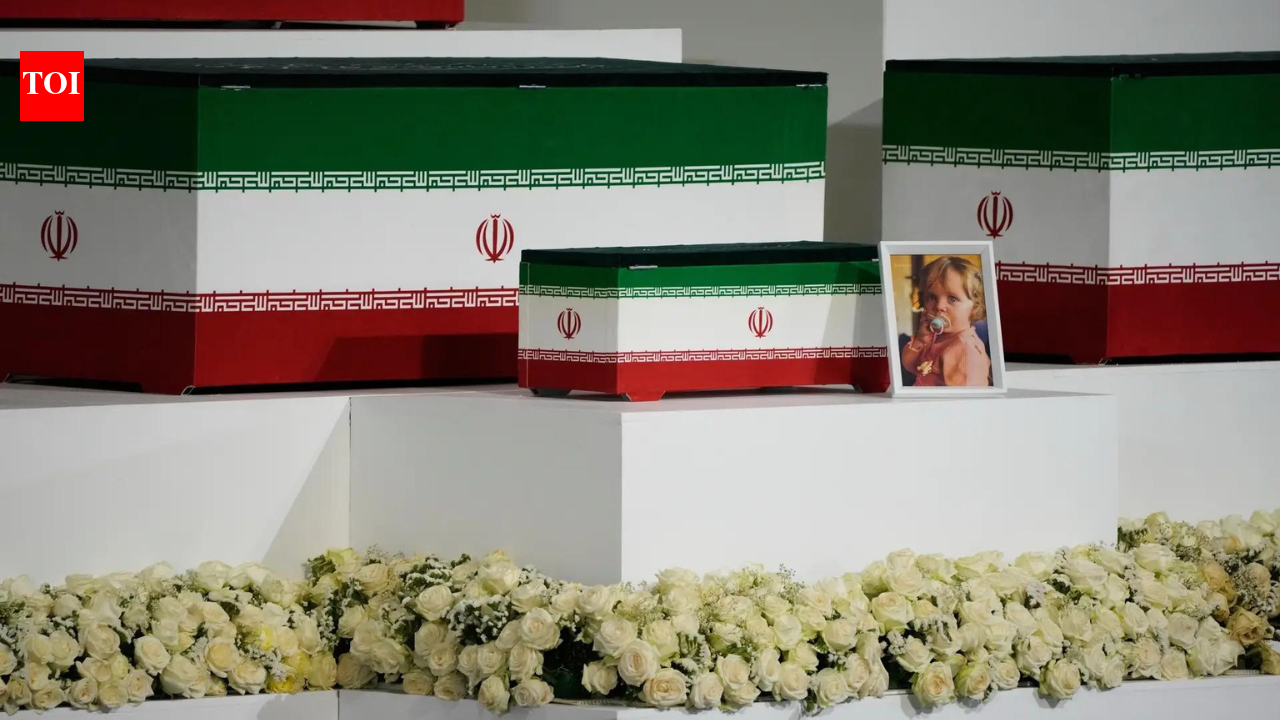
Israel’s strikes on Iran on Friday delivered a seismic blow to Iran’s chain of command, with Iranian officials and media reports saying that at least three of the top generals — including both the overall military commander and the leader of the powerful Islamic Revolutionary Guards Corps — had been killed.
Maj. Gen. Mohammad Bagheri, who is the chief of staff of Iran’s armed forces, was the most senior leader among the dead, according to state media. There was no immediate confirmation from the Iranian armed forces. One of General Bagheri’s deputies was also killed.
Israel has a history of successfully assassinating Iranian security officials and nuclear scientists. But it has generally picked them off one by one in covert operations as part of its long shadow war with Iran and in Lebanon or Syria.
The strikes early on Friday proved to be a stunning escalation of that tactic. Not only did they target Iran’s nuclear program and air defenses, the Israeli attacks also eliminated the top tier of military commanders all at once, targeting their residential homes, including some in secure military complexes. In some areas of the capital, Tehran, entire apartment buildings collapsed.
Gen. Hossein Salami, the commander of the Islamic Revolutionary Guards Corps, was killed in an Israeli strike within Tehran, the Revolutionary Guards said in a statement. General Salami was killed alongside a number of other members of the security body, it said.
Iran’s supreme leader, Ayatollah Ali Khamenei, who is also the commander in chief of all armed forces, said in a statement read on state television said that Israel “should anticipate a harsh punishment. The strong hand of the Islamic Republic will not let them go.” He added that a number of senior military commanders and nuclear scientists had been killed in attacks that included residential targets. “The Zionist regime with this crime has created a dark and painful fate for itself, and it will definitely receive it.” Mr. Khamenei did not mention the United States in his statement.
Iran had not been attacked by a foreign enemy with such sweeping force since 1989 when the country was at war with Iraq. Mr. Khamenei had made averting war a central part of his legacy, taking the country to the brink of conflict several times, including twice with Israel last year, but stopping short of an all-out war.
That calculation appeared to have ended on Thursday night as Iranian officials openly said the country was preparing for war. But that effort is likely to be severely hobbled by the heavy blows to Iran’s chain of command and the air defenses that protect key military, nuclear and strategic sites.
Four Iranian officials said Israel had attacked at least a dozen military bases, missile depots, nuclear and missile bases, in multiple cities in Iran including Tehran, Tabriz, Isfahan, Kermanshah and Arak. Natanz nuclear site was also severely damaged, according to state television, and the damages extended to a major highway connecting Tehran to Isfahan.
“Unfortunately they did what we did not think they would do,” said Mehdi Rahmati, a conservative political analyst in Tehran close to the government in an interview after the attacks. “Iran will be responding very seriously aiming to inflict destruction, we anticipate a period of pingpong attacks that could spread to the region.”
In addition to the military commanders, Ali Shamkhani, a senior former navy commander, and one of Iran’s most influential politicians and a close confidant of Mr. Khamenei was also killed after sustaining severe injuries in an attack on his penthouse apartment in a residential luxury tower in northern Tehran, according to three senior officials and Iranian media reports.
Mr. Shamkhani, former secretary of the Supreme National Council, was overseeing the nuclear talks with the United States as part of a committee named by Mr. Khamenei to direct the negotiations. Killing him, officials said, was targeting efforts at nuclear diplomacy.
At least three other senior Iranian figures were thought to have been killed, according to Iranian state media. They were Gen. Gholamali Rashid, a senior leader in the Iranian armed forces; Mohammad Mehdi Tehranji, an Iranian physicist; and Fereydoun Abbasi, an Iranian nuclear scientist.
As leader of the Guards force, General Salami was responsible for securing Iran’s borders and safeguarding it against any foreign attacks. The Revolutionary Guards spokesman vowed to “respond decisively and harshly to the aggression of the Zionist enemy” and deliver a decisive blow to Israel and the United States following his death.

Israel’s military strikes against Iran shook global markets, as oil prices surged and stocks tumbled on worries that the attacks could set off a broader Mideast conflict that would disrupt the world’s energy supplies and stoke inflation.
Prices of Brent crude oil, the international benchmark, jumped on Friday, at one point rising 9 percent to almost $78 a barrel. In early European trading, prices moderated somewhat, to around $73 per barrel, a 5 percent gain. That was still oil’s largest gain this year.
Stock markets fell broadly across Asia on Friday and were mostly lower in Europe. Trading in S&P 500 futures markets indicated that U.S. stocks could decline 1.3 percent when they open in New York. Investors seeking less risky places to put their money bid up the price of gold, and yields on the 10-year U.S. Treasury note, which move inversely to prices, were lower.
Iran is among the world’s largest producers of oil, and it sells almost all of what it produces to China, which consumes 15 percent of the global supply. Sales by Iran’s state oil company to China represent about 6 percent of Iran’s entire economy, and are equal to about half its entire government’s spending.
Iran’s exports have lagged in recent years as international sanctions have limited its ability to modernize its oil extraction and transportation technology.
But Iran’s shipments have begun to recover in the past year on strong demand from China, which would be forced buy oil elsewhere if a broader conflict were to interrupt Iranian supplies. China has a large strategic oil reserve, accumulated through more than a decade of purchases, that could help it withstand weeks of an interruption in imports.
Iran holds a strategic position on the northern side of the Strait of Hormuz, at the exit of the Persian Gulf. That means Iran could block oil and natural gas exports from other Mideast oil producers in retaliation for the Israeli strike. About a third of the world’s seaborne oil shipments pass through the strait.
Meghan L. O’Sullivan, a former U.S. deputy national security adviser specializing in the Mideast, said the United States military has the ability to force a reopening of the Strait of Hormuz, but that could create bigger issues.
“Such action would bring America squarely into the conflict, moving it to greater levels of regional disruption and global uncertainty,” said Ms. O’Sullivan, who is the director of the Harvard Kennedy School’s Belfer Center for Science and International Affairs.
In any case, Iran has strong financial reasons not to close the Strait of Hormuz: Nearly all of its oil exports must pass through it. And much of the oil imported by China, a close partner of Iran, is shipped through the strait.
“If I were Iran, I would think twice before closing the Strait of Hormuz,” said Muyu Xu, senior Asia oil analyst at Kpler, a global commodities and shipping data firm. “If they choke the Strait of Hormuz, they cannot move barrels out.”
The United States in recent years has become far less dependent on oil from the Persian Gulf, because of the rise of fracking and other advanced techniques to extract oil. Europe, along with China, import large quantities of oil from the region.
Iran has long had tense relations with Saudi Arabia, which tilts toward the United States, an ally of Israel. In 2019, Iran and its proxies used drone strikes to destroy oil facilities in Saudi territory.
Saudi Arabia, the third-largest producer of oil after the United States and Russia, has a backup plan in case of a wider conflict. It has built an extensive pipeline system leading south from the coast of the Persian Gulf, where it produces most of its oil, to the Red Sea, where oil could be loaded onto tankers.
Image
Secretary of State Marco Rubio said Thursday that the United States had no involvement in Israel’s unilateral strikes on Iran but had been told that Israel considered the attack necessary for its self-defense.
President Trump, who has been pushing for a deal with Iran on its nuclear program, was hosting the annual White House picnic on Thursday evening when reports of the strikes emerged from Tehran.
Despite his expressed hopes for a diplomatic breakthrough, Mr. Trump had also acknowledged on Thursday that Israel might attack first.
In a statement, Mr. Rubio said: “We are not involved in strikes against Iran and our top priority is protecting American forces in the region. Israel advised us that they believe this action was necessary for its self-defense.”
It was not immediately clear how much detail about the strike Israel had provided the United States, its main ally, and how far in advance.
Despite the Trump administration distancing itself from the attacks, its statements and precautionary measures this week have indicated the concern that Iran’s retaliation, which is expected to be swift, could also include American targets in the Middle East.
“Let me be clear: Iran should not target U.S. interests or personnel,” Mr. Rubio said.
On Wednesday, the United States withdrew diplomats from Iraq, Iran’s neighbor to the west, and authorized the voluntary departure of the family members of U.S. military personnel from the Middle East. The U.S. military has a large fleet of warplanes, naval vessels and thousands of troops stationed at its bases in the region, including in Qatar and Bahrain, just around 150 miles across the gulf from Iran.
Iran’s defense minister said this week that if nuclear talks failed and a conflict arose with the United States, his country’s military would target all American bases in the region.
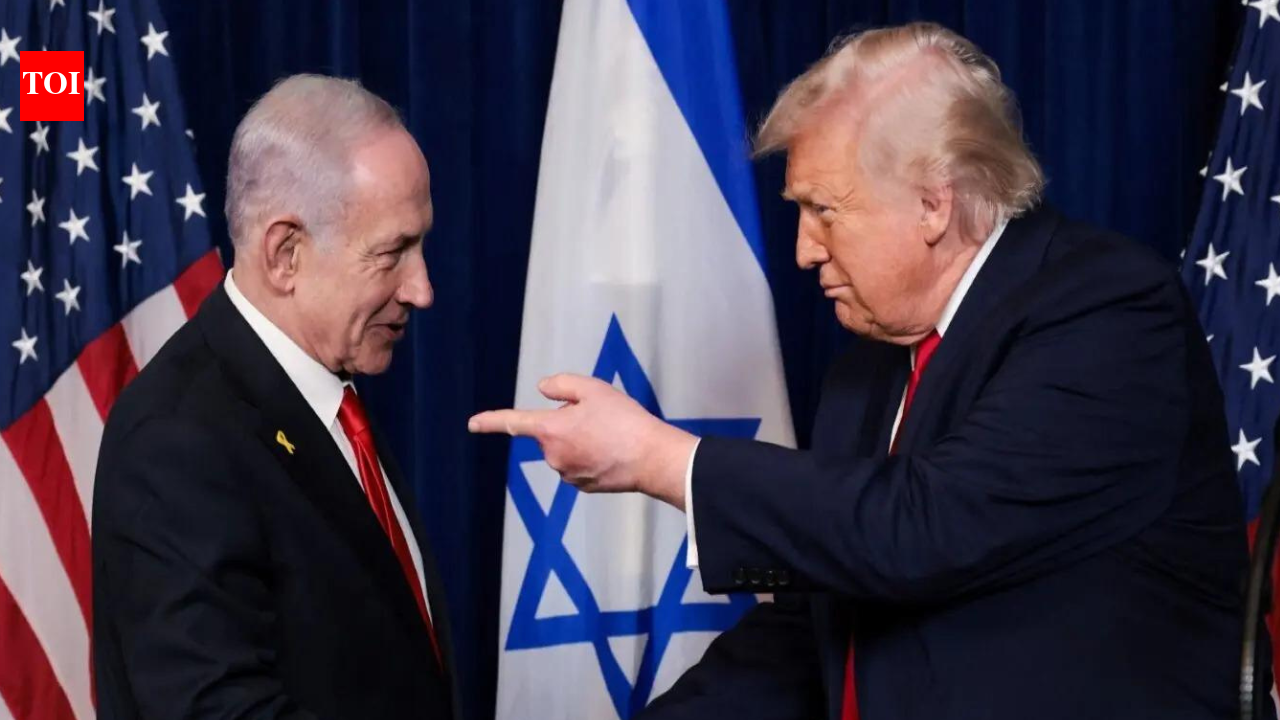
It was unclear what impact Israel’s strikes would have on the ongoing negotiations between the Trump administration and Iran, or on Mr. Trump’s relationship with Prime Minister Benjamin Netanyahu of Israel. The president had spoken with the Israeli leader on Monday but did not give any details about the conversation.
In recent weeks, Mr. Trump has said he has urged Israel to hold off on military strikes while the negotiations were taking place. Steve Witkoff, Mr. Trump’s special envoy to the Middle East, was expected to meet Iran’s foreign minister in Oman on Sunday for the next round of talks.
Around the time Israel began to strike Iran, Mr. Trump said he remained committed to a diplomatic resolution.
“My entire Administration has been directed to negotiate with Iran,” he posted on social media around 5 p.m. Eastern time. “They could be a Great Country, but they first must completely give up hopes of obtaining a Nuclear Weapon.”
Image
Benjamin Netanyahu, the Israeli prime minister, told an anxious country in an early morning video statement that Israel had attacked Iran’s nuclear facilities to ward off an existential threat, vowing that the battle would continue for “as many days as it takes.”
Israeli forces attacked Iran’s “main enrichment facility in Natanz,” as well its ballistic missile capabilities and top Iranian nuclear scientists, Mr. Netanyahu said.
“We struck at the heart of Iran’s nuclear enrichment program. We struck at the heart of Iran’s nuclear weaponization program,” he added. “We targeted Iran’s leading nuclear scientists working on the Iranian bomb. We also struck at the heart of Iran’s ballistic missile program.”
Israel’s targets included nuclear facilities, air defense batteries, homes and headquarters of senior officials, weapons depots and laboratories. The first wave of the assault also focused on senior Iranian figures.
Across Israel, people huddled in public shelters and fortified safe rooms in anticipation of an Iranian response. Israel’s defense ministry declared a national state of emergency and told the public to expect Iran to fire missiles and drones in response.
Justifying the government’s decision to launch the attack, which caps more than 20 months of war between Israel and Iranian-backed groups like Hamas and Hezbollah, Mr. Netanyahu said Israel had to act promptly to eliminate what he called the existential threat of a nuclear-armed Iran.
“I told our security leadership: We have no alternative but to act swiftly,” he said. “We can’t leave these threats for the next generation. If we don’t act now, there won’t be a next generation.”
Mr. Netanyahu said Israel was facing “difficult days, but great days” ahead. He also repeatedly invoked the Holocaust — the annihilation of European Jewry — as a reason not to treat a nuclear Iran lightly.
“Together, with God’s help, we will ensure Israel’s eternity,” he said.
Adam Rasgon contributed reporting.