1 hour ago
3
1 hour ago
3

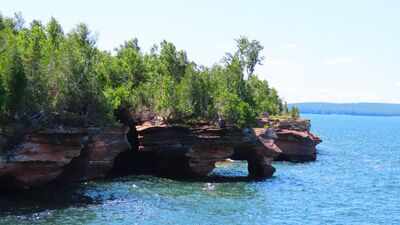
Wisconsin’s Apostle Islands Representative image by Canva
On the southern shore of Lake Superior, a scattered archipelago of 21 islands rises from the cold, clear water, crowned with pine forests, sandstone cliffs and historic lighthouses.
Since 1970, these Apostle Islands have been protected as a national lakeshore, managed by the National Park Service to balance conservation, recreation and local livelihoods. Now, a new proposal from Wisconsin Senator Tammy Baldwin, often referenced in local reporting as Tiffany’s proposal due to coverage framing, seeks to redesignate the area as a national park. The change would be largely symbolic, leaving federal ownership and management intact, but supporters argue it would raise the profile of the islands and strengthen their place in America’s protected landscape.
As reported by MPR News, the idea has sparked a quiet but meaningful debate about what the national park label really means for a place that has already been federally protected for more than five decades.A lakeshore born from compromiseThe Apostle Islands National Lakeshore was created in 1970 after years of negotiation among federal officials, state leaders, local residents and indigenous communities. The goal was to protect the islands’ natural and cultural resources while allowing continued public access for fishing, boating and tourism.
Unlike some earlier park designations that involved large scale land acquisition and displacement, the lakeshore model was designed to work with existing patterns of ownership and use.
Much of the land on the islands was already in federal hands, held by agencies such as the Forest Service or acquired over time for conservation. Private holdings, tribal lands and state properties were largely left untouched. The National Park Service was tasked with managing the federal portions, maintaining trails, historic structures and lighthouses, and regulating activities to prevent overuse or environmental damage.For more than 50 years, this arrangement has shaped how people experience the Apostle Islands. Kayakers paddle through sea caves carved into red sandstone. Campers sleep under star-filled skies on remote beaches. Historians tour lighthouses that once guided iron ore ships through some of the most treacherous waters on the Great Lakes. The lakeshore designation has provided a stable framework for all of this, with rules and resources tailored to a multi-use protected area rather than a more restrictive national park.What a national park designation would changeThe new proposal seeks to redesignate the Apostle Islands National Lakeshore as the Apostle Islands National Park. On paper, the shift is mostly about branding. The land would remain under federal ownership, managed by the National Park Service, with the same basic rules governing camping, boating, fishing and commercial use. No new land would be taken from private owners, tribes or the state as part of the change.Supporters argue that the national park label carries more weight in the public imagination. It signals a place of exceptional natural and cultural value, worthy of protection and visitation on par with Yellowstone, Yosemite or Acadia. In practical terms, that could translate into greater national visibility, more tourism marketing opportunities and potentially stronger leverage when competing for federal funding or staffing resources.
For a region that relies heavily on seasonal tourism, the hope is that a national park designation could bring more visitors, longer stays and more economic activity to nearby communities such as Bayfield and Ashland.Critics, however, question whether the change would deliver meaningful benefits. They note that the Apostle Islands are already part of the National Park System, just under a different subcategory.
The Park Service already manages the area with a conservation and recreation mandate similar to that of many national parks. In that sense, the redesignation may be more about optics than substance, a rebranding exercise that does little to address real challenges such as climate change, invasive species, funding shortfalls or the need for deeper collaboration with Ojibwe tribes whose ancestral homelands include the islands.Local reactions and the question of buy-inThe response to the proposal has been mixed. Some local business owners, tourism officials and outdoor enthusiasts welcome the idea. They see the national park label as a way to put the Apostle Islands on more maps, both literal and metaphorical, and to distinguish the archipelago from other Great Lakes destinations. In a crowded tourism market, a national park designation could be a useful differentiator, helping the region attract visitors who specifically seek out national parks during their travels.Others are more cautious. Some residents worry that a higher profile could lead to more crowds than the islands can handle, particularly in the busy summer months. Concerns include pressure on parking, trails, campgrounds and waste management, as well as potential impacts on wildlife and sensitive habitats. There is also a fear that the national park brand could shift the focus toward mass tourism at the expense of the quieter, more dispersed use patterns that have characterised the lakeshore era.Tribal perspectives add another layer. The Ojibwe people have deep historical and cultural connections to the Apostle Islands, including treaty-guaranteed rights to hunt, fish and gather on some lands.The politics of park labelsThe discussion over the Apostle Islands is indicative of a larger debate about the meaning of the national park label in the twenty-first century. Any change in designation that could influence management priorities or visitor pressure is considered with an eye to how it might impact those rights and the health of the ecosystems that support them.
Several tribal leaders have asked for more substantive consultation before any move to redesignate is made, emphasising that symbolic changes should not be made at the cost of meaningful partnership.The National Park System includes dozens of designations, from national parks and monuments to lakeshores, seashores, recreation areas and preserves. Each carries slightly different legal authorities and management emphases, but to the average visitor, the distinctions can be blurry.
A national lakeshore and a national park may feel very similar on the ground, with the same uniforms, signage and ranger programs.
Proponents of redesignation argue that consolidating more areas under the national park banner simplifies the message. It tells the public that these places are among the best of the best, deserving of the greatest protection and highest level of attention. Critics worry that too many areas will be labelled as national parks, diluting the brand and making it harder to distinguish the truly iconic landscapes from the more important but regional ones.For the Apostle Islands, the question is whether the benefits of a name change outweigh the risks of raising expectations without providing new resources or protections. Supporters say it will have been worth it if the redesignation delivers additional funding, better infrastructure and stronger conservation outcomes. If it only results in a new sign at the visitor center and a line on a map, critics say it will have been a missed opportunity to tackle more pressing issues.What comes nextThe proposal is still in the early stages, moving through legislative channels and community discussions. Senator Baldwin and her team are expected to continue outreach to local governments, tribal nations, business groups and conservation organisations to gauge support and address concerns. Any bill to redesignate the lakeshore as a national park would need to pass Congress and be signed into law, a process that could take months or years depending on political priorities and competing legislative agendas.
In the meantime, the Apostle Islands remain what they have been for more than half a century, a cherished archipelago of forests, cliffs and lighthouses protected under federal stewardship. Whether they ultimately carry the title of national lakeshore or national park, their future will depend less on the name and more on how well visitors, neighbours and managers work together to keep the islands resilient in a changing world.