1 hour ago
1
1 hour ago
1

 Image source, Anadolu via Getty Images
ByJennifer Bartram
BBC Weather
Temperatures are expected to reach 35C (95F) on Thursday as the current heatwave spreads further north and west across the UK.
The year's third heatwave, which began earlier this week, is not expected to break new temperature records, but the longevity of the heat will make it feel remarkable.
On Wednesday, temperatures peaked at 33.8C at Heathrow Airport in the strong July sunshine with Wales recording 31.2C at Cardiff Bute Park, Scotland seeing 29.0C at Aboyne and 27.1C at Helen's Bay in Northern Ireland.
From Thursday and Friday more areas are likely to see temperatures climb up to the high 20s or low 30s.
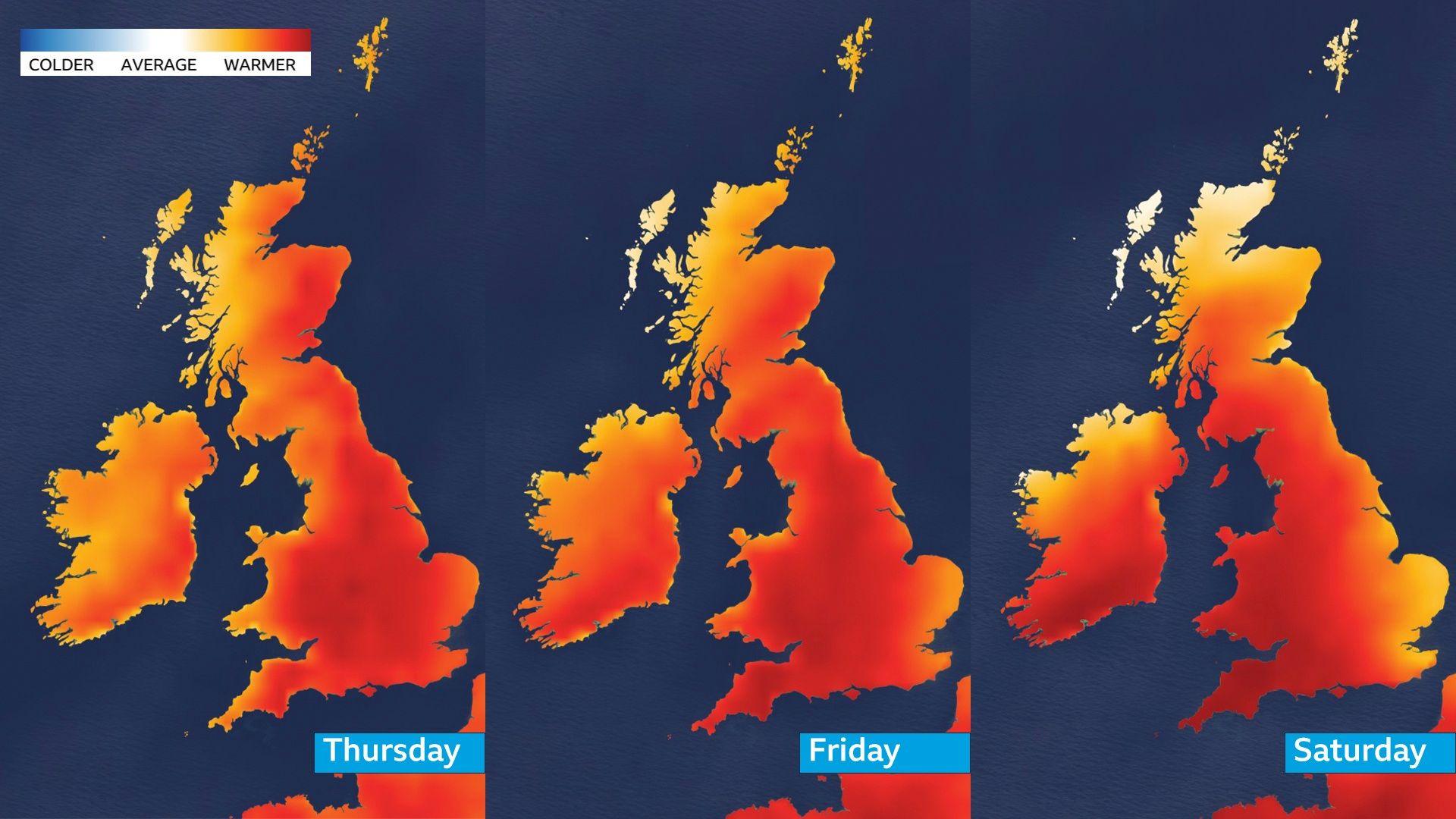
Above-average heat across much of the country on Thursday is set to spread westwards and northwards
The highest temperatures of this heatwave are expected on Thursday and Friday.
High pressure across the UK will keep conditions dry and settled for most over the next two days, allowing the heat to build extensively.
However, temperatures are not expected to reach those recorded in June's heatwave, where a provisional 37.7C was recorded in Lingwood, Norfolk.
This time, maximum daily temperatures will reach 34C across parts of London and Cambridgeshire on Thursday, with some areas maybe reaching 35C.
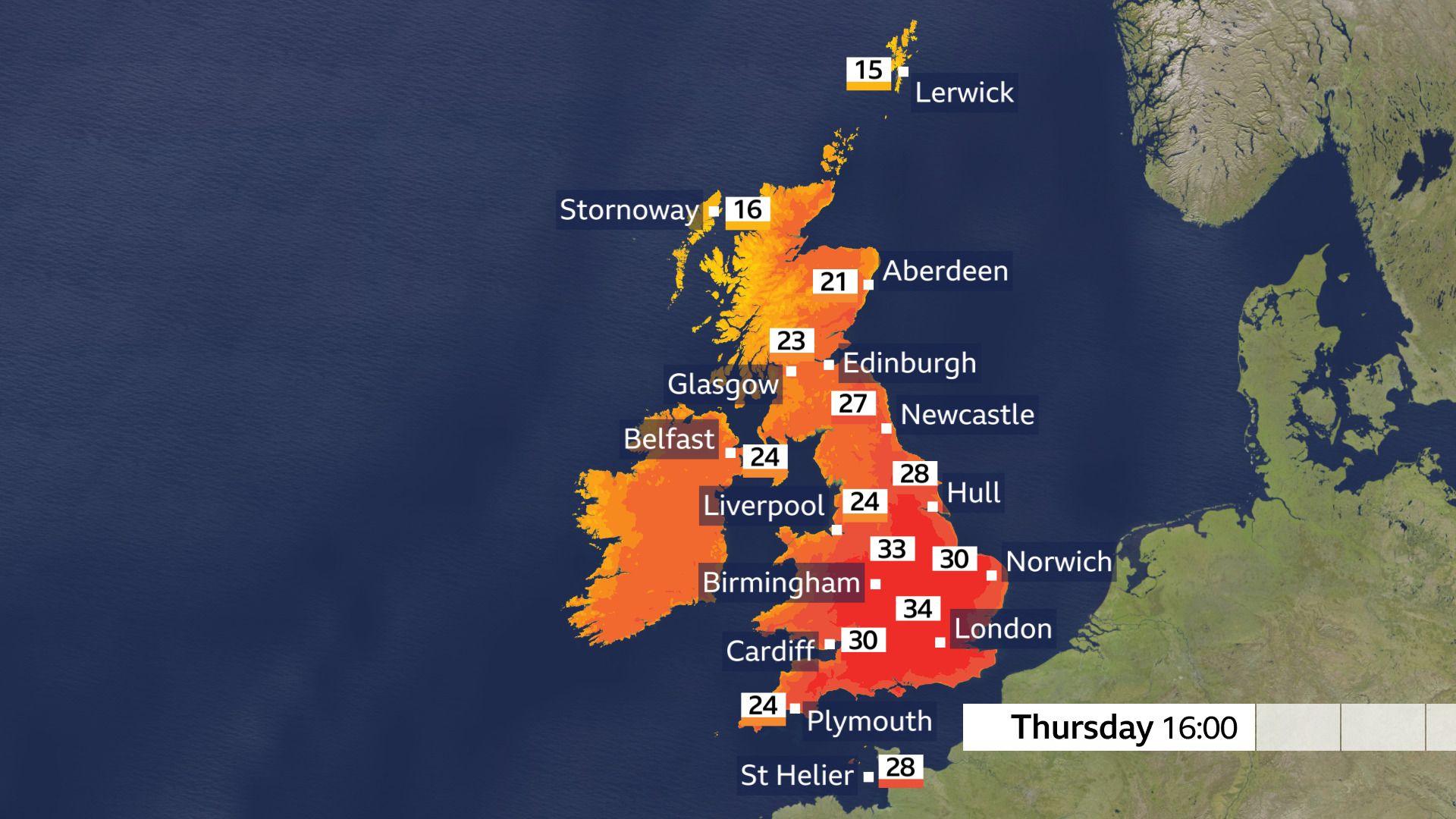 Image source, BBC Weather
Temperatures on Thursday will be 34C across southern and eastern England, with some areas reaching 35C.
By Friday, the area of high pressure will shift further northwards, allowing the heat to spread further north and west into parts of southern Wales and the Midlands, with temperatures in the low to mid 30s.
At the same time, a developing easterly breeze will bring slightly cooler conditions to more eastern areas.
For Northern Ireland and Scotland, temperatures are expected to reach the mid 20s Celsius by Friday.
Amber heat health alerts are in place across parts the Midlands, eastern and southern England until 12 July.
Yellow heat health alerts are also in force across northern England for the same period.
This means that significant impacts are likely across health and social care services, including a rise in deaths, particularly among people aged 65 and over or who have health conditions.
On Wednesday, the National Fire Chiefs Council (NFCC) said the dry and hot weather meant there was an increased risk of wildfires, and advised people to avoid using disposable barbecues in open countryside, park and moorlands.
Where is there a heatwave at the moment?
The extensive and prolonged heat means that many places are already experiencing an official heatwave.
A heatwave is declared when certain temperature thresholds are met - or exceeded - for three consecutive days or more. These temperature thresholds are:
28C or more across London and the Home Counties
27C across southeast England
26C across central England and southeast Wales
25C for the rest of England, Wales and all of Northern Ireland and Scotland
Parts of the south and east of England officially declared a heatwave on Monday and have seen temperatures reach 30C or higher for the last five days.
Other areas which are in official heatwave conditions include parts of the West Midlands, southern and southwest England.
 Image source, AFP via Getty Images
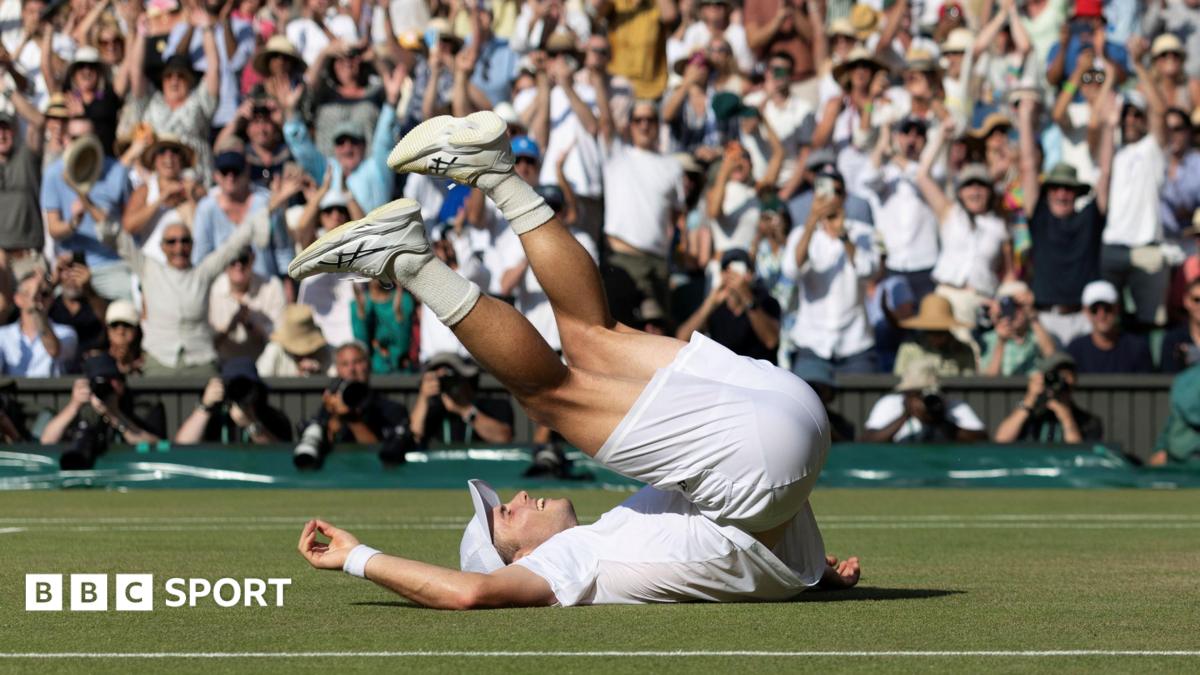
A steward uses a handheld fan to cool down a spectator at the tennis at Wimbledon.
When will the heatwave end?
Although temperatures will peak on Thursday and Friday, there will not be a quick cool down with many places hanging on to the heat through the weekend and much of next week.
Many areas could meet or exceed the heatwave criteria somewhere in the UK for the next 10 days: that's the rest of this week, the weekend and all of next week too.
After Sunday the temperatures may start to dip below 30C, but will still remain well above the July average of 18-23C.
This makes it one of the longest lasting heatwaves since the infamous year of 1976.
Back then, England saw multiple locations record 13 to 16 consecutive days above 30C.
The highest recorded July temperature in the UK was recorded in 2022 at Coningsby, Lincolnshire.
Will there be another heatwave?
Forecasters issued their three-month summer outlook on 1 June which suggested higher-than-normal chances of hotter weather during June.
Above-average temperatures are expected for each month of July and August, and "significant bursts" of heat are expected in the UK, and across Europe.
MeteoGroup, who currently provide BBC Weather with data, point to a "few notable high temperature spikes".
According to the Met Office, having a hotter summer is now twice as likely than the period of 1991-2020, which is consistent with our warming climate.