1 hour ago
2
1 hour ago
2

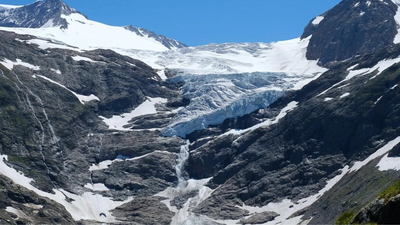
Two Belgian mountaineers who disappeared in the Swiss Alps in 1992 have finally been identified after their remains emerged from a retreating glacier 34 years later. The men, who were 39 and 41 when they vanished, had set out in the Weissmies region but never reached their planned destination.
Despite searches at the time, only a backpack was recovered and the pair remained missing for more than three decades. On July 26, 2026, a hiker discovered two bodies on the Trift Glacier near Saas-Grund in Switzerland's Valais canton. The remains were taken for forensic examination, where DNA testing formally confirmed their identities, bringing an end to a decades-old mystery while highlighting how retreating Alpine glaciers are exposing long-hidden remains.
Belgian climbers disappeared in Alps during mountain trip
The two Belgian men disappeared in September 1992 while travelling through the Weissmies region of the Swiss Alps. They had set out from the Weissmies Hut at an altitude of about 2,726 metres and were planning to reach the Almageller Hut. Their intended route involved crossing the 4,017-metre Weissmies, one of the major peaks in the region. According to reports from the time and subsequent accounts, the men encountered extremely poor weather conditions.
They never arrived at their planned destination, triggering searches in the surrounding mountains. Rescue teams eventually recovered a mountaineering backpack, but there was no sign of the two men. Their disappearance remained unresolved for 34 years.The breakthrough came on July 26, 2026, when a hiker reported finding two bodies on the Trift Glacier near Saas-Grund in the canton of Valais. The area lies in southern Switzerland, relatively close to the Italian border and within the broader Alpine region where the men had disappeared.
The remains were recovered and transferred to the Institute of Forensic Medicine at Valais Hospital in Sion. Authorities began working to establish who the bodies belonged to, with the age of the remains and their location raising the possibility that they could be connected to one of the region's long-standing missing-person cases.
DNA testing finally identified the men
The identification was eventually confirmed through DNA analysis. Valais police said a direct comparison of DNA profiles formally established that the remains belonged to the two mountaineers who had gone missing in the Weissmies region in 1992.
The DNA confirmation is significant because it removes the uncertainty that can surround the identification of remains recovered from glaciers. The discovery therefore did not merely provide a possible lead in the decades-old case.
It formally established the identities of the two missing Belgian men and brought their long-running disappearance to a close.
Their exact cause of death remains unclear
Although the discovery has solved the question of who the remains belonged to, it has not necessarily answered what happened to the men in 1992.
Authorities have not publicly established the exact circumstances or cause of their deaths. The men were last known to be travelling through mountainous terrain in difficult weather conditions. Their planned journey involved high-altitude terrain, where snow, ice, poor visibility and rapidly changing weather can create serious risks.
However, there is no confirmed public evidence establishing whether they died after a fall, an accident, exposure or another specific event.
It would therefore be speculative to claim that they fell into a crevasse or were killed by an avalanche unless investigators provide further evidence.
Retreating glaciers are exposing long-hidden remains
The discovery also illustrates a phenomenon increasingly being seen across the Alps. As glaciers retreat, material that has remained buried beneath ice for decades can become exposed. In some cases, that material includes the remains of people who disappeared during mountain expeditions many years earlier.
Valais police have noted that the retreat of glaciers repeatedly reveals the remains of people who disappeared in the mountains decades ago.
The latest discovery is therefore part of a wider pattern rather than an isolated incident.The broader scientific picture makes such discoveries increasingly possible. Switzerland's glaciers have experienced significant ice loss in recent decades, with the rate of retreat accelerating.
According to Swiss glacier monitoring data, the country's glaciers lost about 24% of their ice volume between 2015 and 2025. The loss was considerably greater than in the preceding decades, showing the increasing pace of glacier retreat.In 2025 alone, Switzerland lost around 3% of its remaining glacier volume, equivalent to roughly 1.4 cubic kilometres of ice. Continued warming and repeated periods of unusually high temperatures have contributed to increasingly rapid melting.
Other missing climbers have also been found
The Belgian climbers are not the first people to be recovered after disappearing in the Swiss Alps. In recent years, retreating glaciers have exposed remains connected to several long-standing missing-person cases.In 2025, the remains of a Swiss mountaineer who disappeared in 1994 were found on a glacier on the Ober Gabelhorn in Valais. In another case, the remains of a German mountaineer who disappeared in 1990 were discovered on the Stockjigletscher near Zermatt and later identified.One of the most striking cases occurred in 2017, when a shrinking glacier in Switzerland revealed the remains of Marcelin and Francine Dumoulin, a couple who disappeared in 1942. Their discovery came 75 years after they were last seen.
Glaciers can preserve remains for decades
A glacier can conceal people and objects beneath layers of ice for extraordinarily long periods. Extremely cold conditions can slow decomposition, while the surrounding ice can effectively hide remains from search teams and prevent them from being visible at the surface.
Glaciers are also dynamic environments. Ice moves slowly downhill, meaning that material trapped within a glacier can potentially shift over time before eventually becoming exposed as the ice melts.
This means the location where remains emerge does not necessarily represent the precise place where a person originally disappeared. In the case of the two Belgian mountaineers, authorities have confirmed their identities but have not publicly reconstructed every stage of what happened to them after they disappeared.