.png) 1 month ago
23
1 month ago
23

U.S. President Donald Trump and Chinese President Xi Jinping attend a bilateral meeting at the Great Hall of the People on May 14, 2026 in Beijing, China.
Alex Wong | Getty Images News | Getty Images
As the world watches U.S. President Donald Trump and Chinese leader Xi Jinping's historic summit, analysts suggest it could mark a reset in ties between the world's top two economies.
The two leaders are expected to discuss a slew of thorny issues, including Chinese purchases of American agricultural and industrial goods, tariffs, Taiwan, and rare earths, with the backdrop of the war in Iran.
After nine turbulent years, the summit could mark a "defining test" for the world's G2 power dynamic, said Justin Feng, Asia economist at HSBC, pointing out that the U.S., China, and European Union now account for 60% of global GDP.
The summit builds on Trump and Xi's meeting late last year in South Korea that led to a thaw in the trade war between the two countries, with Trump referring them as G2, sparking hopes of an extended truce. "It makes no sense for the two countries to engage in trade wars or tit for tat," said James Zimmerman, AmCham China chairman.
The Trump administration indicated ahead of the trip that it planned to press for greater Chinese purchases of American soybeans, Boeing aircraft, and other goods, while Beijing made it clear that the Taiwan issue would be front and center on its agenda for the meeting.
"The big word will be stabilization. The truce that the two parties negotiated … will, I suspect, become a formal agreement," Graham Allison, Harvard professor and former assistant secretary of defense, said on CNBC's "The China Connection" on Thursday.
Referring to the idea that tensions between a rising and ruling power have often resulted in a war, Xi asked if the U.S. and China could transcend the "Thucydides Trap" – a phrase popularized by Allison, also the author of "Destined for War: Can America and China Escape Thucydides's Trap?"
Read more Trump-Xi meeting coverage
Trump's entourage of a dozen-odd executives from some of the biggest U.S. companies has raised expectations for a more friendly business environment. Tesla's Elon Musk, Apple's Tim Cook, BlackRock's Larry Fink, and Boeing CEO Kelly Ortberg are among those accompanying Trump on the visit.
"I would not be surprised if — as President Trump loves big headline announcements — that he might announce that China is going to buy an additional $1 trillion of American goods," said Allison, including "a big buy" of Boeing aircraft, soybeans, beef, as well as the more advanced semiconductors that Beijing is interested in.
Nvidia CEO Jensen Huang also joined the China trip in what appears to be a last-minute addition, thrusting artificial intelligence and the technology sector into the spotlight.
Washington on Thursday cleared around 10 Chinese firms to buy Nvidia's second-most powerful AI chips, the H200, Reuters reported, although the company's most advanced chips continue to face tight U.S. restrictions.
"It gives us a sense of confidence, optimism that the two [U.S. and China] can continue to have a dialogue going forward, to address some of the challenges in the relationship between the two countries," Zimmerman said. "We're generally optimistic that the two will have a good conversation … [and] set a roadmap going forward for continued engagement and talk throughout the year."
Against the backdrop of conflicts globally and trade-related tensions, analysts suggest the Trump-Xi meeting would give momentum to a multipolar world.
"The world is clearly moving from the unipolar period that followed the Cold War to a more volatile and contested multipolar system," Feng said.
Echoing that view, Dong Chen, chief investment officer at Bank J Safra Sarasin, suggested the G2 framework would see China and the U.S. as "equal partners at the table, instead of one party dominating the other."
The U.S. and China agreed to forge more cooperative ties on the first day of summit, according to Beijing's official English readout, striving to build a "constructive China-U.S. relationship of strategic stability," which will serve as the guiding framework for the next three years and beyond.
Iran war worries
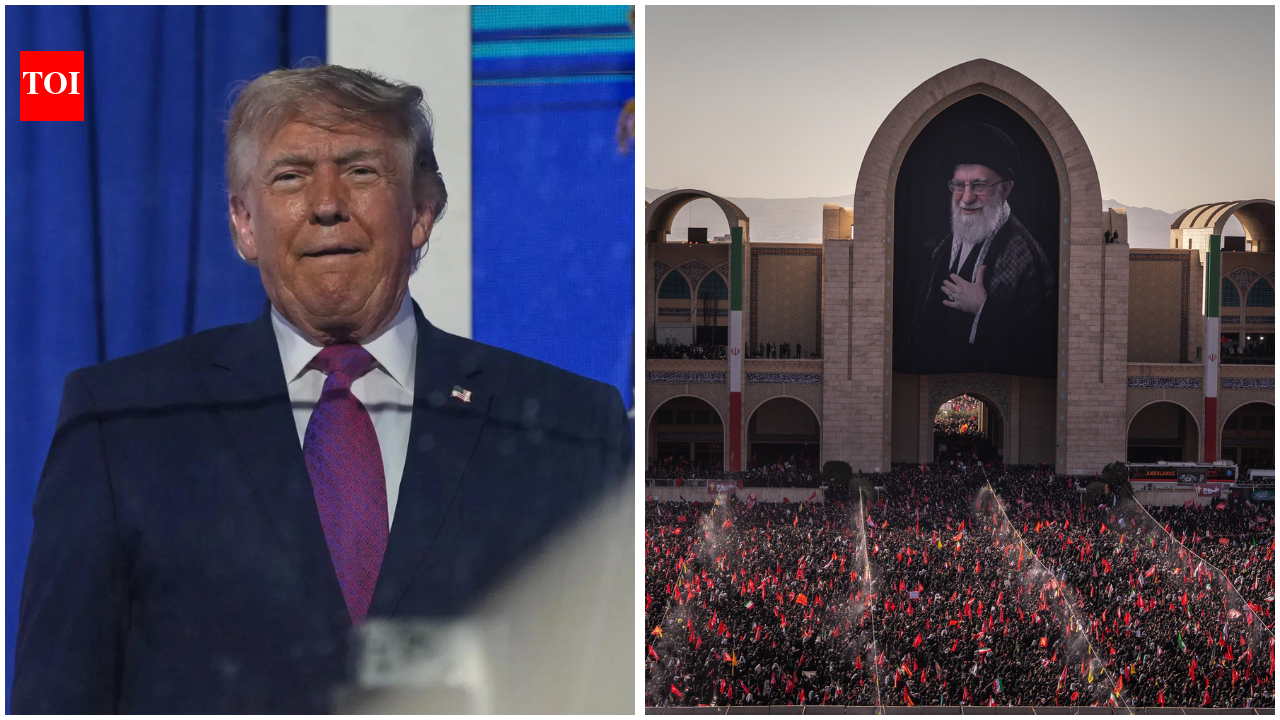
The summit came at a time when the U.S. has been embroiled in a war against Tehran and has sought to exert pressure on Beijing to help end the conflict, but analysts say a breakthrough is unlikely to emerge from the Beijing talks.
While Beijing has repeatedly played up its role as a global mediator, it has shied away from committing to making concrete efforts to end the war.

"Benign neglect or distraction because you're often in some other quagmire — from the perspective of a rational national actor in China – might seem like a pretty good option," said Allison, who compared Beijing's inaction in Russia's war against Ukraine: "President Xi has smiled but not done very much [in ending the war]."
Trump has expressed frustration with Tehran's proposals to wind down its nuclear program as part of a peace deal, with hostilities continuing in the region, threatening a fragile ceasefire agreement currently in place.
"The Chinese would agree to help to the extent that they can. [But] the United States must realize that there is only so much that China can do, and not more," said Gautam Bambawale, former Indian Ambassador to China, who does not expect a breakthrough from the Beijing summit.