2 months ago
42
2 months ago
42

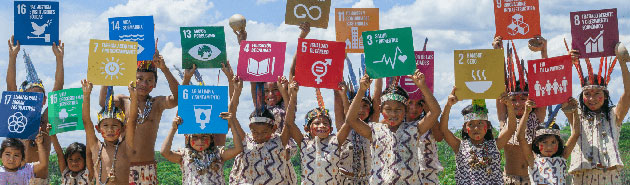
MUNICH / BRUSSELS , July 7 (IPS) - The 2030 agenda cum SDGs are due to be completed in 2030, with negotiations towards a follow-up agenda to begin formally at the UN General Assembly in autumn 2027. Many direct or indirect discussions have, however, already begun, e.g. pluri-laterally at BRICS and G20 meetings and the EU; as well as at the UN in connection with the Summit of the Future, the Doha World Summit for Social Development, the Beyond GDP report; or in fora such as the Hamburg Sustainability Conference. Think tanks and academics, too, are brainstorming on how best to re-ignite a genuine commitment to the SDGs and at the same time reflect on the future.
Therefore, it appears as the right moment to inject some thoughts contributing to chart a better course for the “beyond 2030” development agenda.
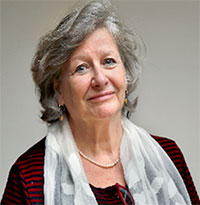 Gabriele Koehler
The case for a re-orientation of development agenda approaches
The international community first conceptualized a development agenda– the development decade – in 1960, and this approach has continued in various formats ever since, with poverty eradication decades, the MDGs and the SDGs. Towards the end of each such effort, the tragic verdict is that the aspirations are at best partially met.
Many observers are dismayed at the poor performance of the SDGs, with delivery on many targets underperforming or even regressing. Hence the need to analyse where and why the 2030 Agenda has not met its commitments. One argument is that they lacked analysis and skirted the sensitive issue of the structural causes of poverty and inequities. Political and economic power hierarchies are not addressed.
Another possible conclusion is that, like the preceding development agenda, the SDGs offer a global commitment, but this is not binding. SDG reporting is voluntary and anecdotal, and governments can easily “pretend” to be keen, but in reality, circumvent the required actions. The international community can duck away from its obligations to restructure global economic structures that play out against lower-income countries and socially excluded communities.
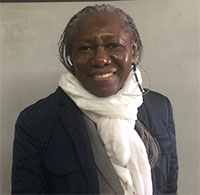 Catherine Mbengue
An additional lesson from successive development agendas is that the rights and interests of future generations have often remained implicit rather than serving as a guiding principle for accountability. Children and young people are among those most affected by poverty, inequality, conflict and environmental degradation, yet they have limited influence over the decisions that shape their lives.
Anchoring a post-2030 agenda in internationally recognised human rights obligations would help ensure that commitments to present and future generations are subject to regular review and accountability. The near-universal ratification of the Convention on the Rights of the Child provides a particularly strong foundation for such an approach.
A proposal
We therefore propose considering a new tack: attaching the next development agenda to the Human Rights Council (HRC). The conceptualisation, the negotiations, as well as the subsequent reporting and monitoring could make use of the well-established mechanisms of the Universal Periodic Reviews and the human rights conventions.
In HRC processes, governments report on those of the 9 core human rights conventions which they have ratified. The process includes a report by the country itself, findings from independent research by the Office of Human Rights, and where existent, by civil society. Each country must report periodically on those conventions they have adopted. Some of the human rights conventions, notably the Convention on the Rights of the Child (CRC) and Convention on the Elimination of All Forms of Discrimination against Women (CEDAW), enjoy near-universal ratification, providing one of the strongest globally agreed foundations for a rights-based development agenda beyond 2030.
Since 2008, the Human Rights Council moreover prepares integrated reviews of human rights-related outcomes of its member states’ decisions and policies in the format of Universal Periodic Reviews (UPRs). The review process examines how a country under review adheres to the UN Charter; the Universal Declaration of Human Rights; the conventions it has ratified, as well as national human rights policies and/or programmes, and applicable international humanitarian law. Three peer governments supplement and assess the report of the country under review, and independent human rights experts and civil society contribute their own assessment. All 193 member states of the United Nations participated in the first 3 rounds of UPRs. This shows their traction
The experience of the CRC reporting process also demonstrates how periodic reviews, independent expertise and civil-society engagement can strengthen implementation and accountability over time.
In our proposed adjusted approach to preparing a development agenda beyond 2030, the set of eleven ILO fundamental labour standards could supplement the human rights conventions, so as to incorporate decent work, living wages, the rights to social protection and to collective organising and bargaining. This would be in the same logic of making use of governments’ binding commitments.
And thirdly, to address the triple planetary crises, one would want to include the UN General Assembly resolution on the human right to a clean, healthy and sustainable environment, or the Nationally Determined Contributions under the Climate Conference of the Parties, and other mandatory processes to tackle climate change and ecological challenges. While less codified, these agreements too are binding on UN member states.
Prospects of a shifted development agenda logic
The idea of incorporating human rights into a development agenda is not new. It faced some oppositionwhen the SDGs were negotiated in the run-up to 2015. Nevertheless, at the operational level, a human rights monitoring tool, developed by the Danish Human Rights Institute, has been available since 2015, linking most SDG targets to human rights conventions. So, there would be accumulated experience to draw on.
Our hope is that shifting the ‘beyond 2030’ discourse and negotiations from the High Level Political Forum on Sustainable Development, convened under the ECOSOC, to the Human Rights Council (HRC), in combination with the ILO for example, could help create a new dynamic:
- • It could be more efficient, because governments could conflate the reviews of their voluntary SDG reports with the mandatory reporting processes.
• It could be more effective, because the HRC and the ILO oblige governments to react to and report on recommendations made at the respective reviews.
• It could be more honest and transparent because of the multiple viewpoints considered – governmental, academic, civil society, and UN.
• It could be more scientific, because part of the reporting on UN conventions is undertaken by specialists familiar with rigorous and independent academic standards.
Granted, it would be more painful, too, for those countries violating their human rights commitments. It would therefore not be easy to even launch this proposal. There may also be resistance from vested interests or established processes against moving “the SDGs” from New York to Geneva – and if climate is included – to Nairobi. And, of course, it could only function if the Human Rights Council, and human rights bodies and labour standards monitoring in each country, are properly and reliably funded.
Despite expected resistance to this idea, we observe a “magic moment”. We see so many vibrant processes on social and economic justice converging just now. Intellectual examples include the comprehensive compendium on Eradicating Poverty Beyond Growth: A Global Roadmap for a New Economy, the radical Global Justice Report, the multifaceted volume on policies for an Eco-Social Contract for Sustainable and Just Futures. Politically, the International Panel on Inequality and the Global Coalition for Social Justice, as well as the movement for tax justice carried by Brazil and South Africa, point to a hunger for fundamental change. In UN inter-governmental contexts, we have the Doha Declaration of the World Social Summit committing to a more just, inclusive, equitable and sustainable world. Shifting the development agenda to human rights arenas could therefor fit nicely into a long overdue momentum for global social justice within planetary boundaries.
Gabriele Koehler is a former UN staff member (ESCAP, UNCTAD, UNDP, UNICEF) and currently a senior research fellow with UNRISD and a member of various NGOs and NGO coalitions (Women Engage for a Common Future, Global Social Justice, Alliance for a Treaty on Business & Human Rights). She follows the UN80 and other UN processes, and has been writing, advocating and giving talks and academic lectures on the SDGs since long before their inception.
[email protected]
www.gabrielekoehler.net
Catherine Mbengue is an independent international consultant with more than four decades of experience in development cooperation, humanitarian action and human rights. A former UN Senior Official (UNICEF Representative and Senior Advisor), she currently advises governments, multilateral organisations and civil society and serves on several international boards working on child rights, social justice and institutional reform.
[email protected]
IPS UN Bureau
© Inter Press Service (20260707044026) — All Rights Reserved. Original source: Inter Press Service