1 hour ago
2
1 hour ago
2

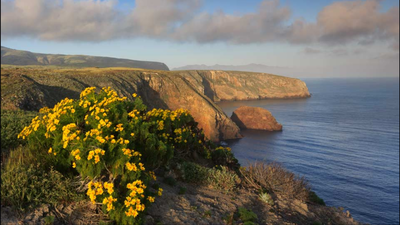
A federal jury in Los Angeles ordered the United States government to pay $12.7 million (£7.8 million) to a California family after it seized their 6,300-acre ranch on Santa Cruz Island.
The verdict, delivered in February 1999 after a three-week trial, ended a decades-long property dispute between federal park officials and attorney Francis Gherini, whose family had owned part of the island for more than a century. According to contemporary reporting by the Los Angeles Times, the jury spent about five hours deliberating before rejecting the government's long-standing valuation of the property.
The US government had initially offered $4 million for Gherini's share of the island before using eminent domain to seize the land in 1996. The final award was much closer to the $14.2 million valuation put forward by appraisers working for the family.
Ancestral history on Santa Cruz Island
The Gherini family's connection to Santa Cruz Island, the largest of the Channel Islands off the coast of Ventura, dates to the late 19th century. Justinian Caire, a French immigrant merchant and Francis Gherini's great-grandfather, acquired the island property in the 1880s.
Caire turned the large property into a major farming and ranching operation, with sheep, cattle, orchards and vineyards. He also built a wine-making business on the island.
Over the following generations, legal disputes divided ownership among different branches of the family. By the late 20th century, the Nature Conservancy had acquired the western 75 per cent of Santa Cruz Island. The eastern 25 per cent, covering about 6,300 acres, remained with Caire's descendants, including Francis Gherini and his three siblings.
Eminent domain and federal acquisition
The dispute over the eastern part of the island grew after Congress created Channel Islands National Park in 1980. Federal park officials wanted the entire island under public ownership so private operations could end and the area could be managed as one wildlife preserve. In the early 1990s, the federal government offered the four Gherini siblings about $4 million each to sell their interests. Three siblings accepted and sold their shares to the National Park Service.
Francis Gherini refused. He argued that the government was seriously undervaluing the property because of its rare coastal features, historic buildings and large stretch of ocean frontage. Gherini continued to run a commercial hunting business on the island, bringing paying clients to hunt wild sheep and pigs. Federal officials said the private hunting operation made public park management and conservation work more difficult.
Congress eventually passed special legislation allowing the government to acquire Gherini's remaining interest through eminent domain. The government formally took control of the 6,300 acres in November 1996 and deposited $4 million into a court account while both sides fought over the property's true market value.
Valuation dispute and court verdict
At the federal trial, government lawyers argued that $4 million was a fair price for the remote property.
They also pointed to the sales agreed to by Gherini's siblings. Federal appraisers compared the land with remote agricultural properties on the California mainland. The Gherini family's lawyers, including Francis Gherini's daughter Andrea Gherini, argued that those comparisons did not reflect the property's value.
Their appraisers said an entire island landscape with miles of undeveloped Pacific coastline could not be valued like ordinary farmland.
The jury ultimately agreed with the family and set compensation at $12.7 million. Gherini expressed relief after the verdict and told reporters he felt vindicated after years of pressure from federal officials. He said the legal fight had required major personal and financial resources to hire land-use specialists, historians and independent appraisers to prove the property's value.
Complete transition to national park status
The verdict allowed the National Park Service to take full physical and administrative control of the eastern part of Santa Cruz Island. After non-native livestock and introduced game animals were removed, federal resource managers began restoring native oak woodlands, island fox habitats and seabird nesting areas across the former ranch. Today, the 6,300-acre area once controlled by the Gherini family forms part of the public landscape of Channel Islands National Park.
It includes hiking trails, campgrounds and protected historic sites at Scorpion Ranch and Prisoners Harbor.