32 minutes ago
3
32 minutes ago
3

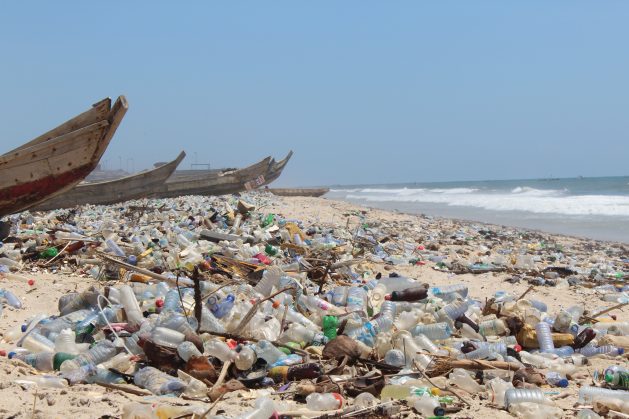 The choice is not between an unmanageably open meeting and a completely closed process. What matters is that observers have some direct line into the negotiations and can see that their expertise and proposals are genuinely considered. Credit: Albert Oppong-Ansah/IPS.
GENEVA, August 24 (IPS) - In 2022, the United Nations Environment Assembly mandated an Intergovernmental Negotiating Committee (INC) to develop a global, legally binding instrument addressing the full life cycle of plastics, from production and product design to disposal. After the resumed fifth session adjourned without consensus in Geneva in August 2025, the divided process moved into informal consultations before INC-5.4 in March 2027.
The exclusion of observers from the June 2026 Heads of Delegation meeting in Nairobi and the next meeting in Bangkok points to a forced separation between governments and observers during these decisive months. At the moment the negotiations most need scientific knowledge, practical experience, public scrutiny and political confidence, they are becoming less inclusive.
There should be no misunderstanding about roles. Governments negotiate treaties and take decisions; observers do not claim either function.
Meaningful observer participation is nevertheless a mainstream feature of United Nations environmental negotiations, not an optional courtesy or a privilege that must be earned by reorganizing civil society into a form administratively convenient to the Chair and Secretariat.
At the online consultation with observers on 14 July 2026, I personally asked Chair Julio Cordano whether there would be any opportunity for observers to participate face-to-face with governments in the pre-negotiations before INC-5.4.
His answer, although somewhat circuitous, was clear: there would not. The official roadmap currently places governments in informal in-person meetings while observers are offered separate webinars in which they may share their views with the Chair.
The webinars may be useful, but they are not participation in the negotiations. Observers speaking to the Chair while governments negotiate separately is consultation at a distance. Direct observer engagement with governments may therefore be almost entirely prevented until INC-5.4, with no certainty about how meaningful participation will be even then.
Bangkok is important, but it is not the fundamental issue. The question is whether the remaining process will rebuild trust and establish genuine engagement rather than maintain parallel tracks.
The Chair’s statement that INC-5.4 will follow previously agreed participation arrangements, including observers, is cautiously positive, but it does not replace clear modalities or direct engagement while the political package is being shaped.
None of this is intended as disrespect toward Ambassador Cordano. He inherited an exceptionally difficult negotiation, with a fractured text and a political divide between the High Ambition Coalition and the Like-Minded countries.
The June Heads of Delegation meeting reportedly produced a more constructive atmosphere, and confidential spaces for governments to test compromises are sometimes essential. But confidentiality and meaningful observer engagement are not mutually exclusive.
The Stockholm Convention negotiations set an admittedly high bar. Civil-society networks organized themselves, developed technical and policy positions and built working relationships with governments throughout the process.
The International Pollutants (formerly “POPs”) Elimination Network – IPEN – itself emerged at the first Stockholm Convention INC in 1998 as a self-organised public interest entity for engagement in such negotiations.
The Rotterdam and Stockholm Convention secretariats continue to recognize NGOs as important stakeholders and provide for their representation as observers at meetings of Convention bodies. These negotiations did not succeed ‘despite’ observer involvement; they benefited from the expertise, organization, implementation knowledge and political attention observers brought.
The plastics negotiations should aim to meet or exceed that standard, not retreat from it. Plastics are chemical products, made with chemical inputs, that generate enormous pollution and waste-management challenges. The negotiations belong within the chemicals and wastes tradition, where constructive observer participation has been part of both treaty development and implementation.
The UNEA mandate points in the same direction. Resolution 5/14 stressed the need for the widest and most effective participation possible, opened participation to relevant stakeholders consistent with applicable UN rules and requested UNEP to facilitate their participation and cooperation.
More generally, UNEP accreditation gives civil-society organizations observer status at UNEA and its subsidiary bodies, with opportunities for written and oral contributions. A process that progressively removes stakeholders from the settings in which substantive discussions occur diminishes the practical meaning of that mandate.
The Chair’s continuing emphasis on “organizing” and “rationalizing” observer participation is therefore understandable as an attempt to manage a large and diverse community at a particularly fraught point in the negotiations, but it becomes concerning when substantive proposals from major observer groups receive no meaningful response.
Better coordination may improve participation; it cannot be a prerequisite for access. Indigenous Peoples, scientists, waste pickers, workers, public-health organizations, environmental NGOs, consumer groups, local authorities and business coalitions have distinct mandates and cannot simply be compressed into a few convenient voices without losing the diversity that gives observer participation its value.
There is, however, a practical way forward. the process that the WHO Framework Convention on Tobacco Control has made a distinction between observers with “vested interests” (i.e. the tobacco companies and their associated interests) and the “public interest.” This possible approach has also been suggested during the negotiations, with no substantive response received.
Alternatively, UNEP already has a recognized Major Groups Facilitating Committee, composed of elected representatives of the nine Major Groups and supported by the UNEP Civil Society Unit, whose responsibility includes facilitating accredited civil-society participation in UNEP’s intergovernmental processes.
The Chair could ask this existing mechanism to invite each Major Group to nominate one or two organizations, selected for relevant expertise and balanced representation, to attend informal governmental meetings as silent observers or, where appropriate, to contribute at designated sessions.
This would resemble the approach used under the UN Framework Convention on Climate Change, where the secretariat contacts constituency focal points to nominate a limited and balanced number of observer representatives for smaller workshops and meetings.
The model is imperfect: UNEP’s Major Groups do not neatly encompass every constituency engaged in the plastics negotiations, and limited representation at informal meetings must not replace broad access at formal INC sessions. It would nevertheless remove the claim that observers have failed to organize themselves, place responsibility within an existing and recognized UNEP process, and avoid the Chair or Secretariat choosing preferred interlocutors.
The choice is not between an unmanageably open meeting and a completely closed process. What matters is that observers have some direct line into the negotiations and can see that their expertise and proposals are genuinely considered.
The present separation also carries financial and political risks. The INC has depended heavily on voluntary donor support. As of 25 March 2026, UNEP reported more than USD 40 million in contributions, including more than USD 7.2 million from Norway and approximately USD 2.5 million from Switzerland. Norway’s subsequent review and reported hold on aspects of its wider UNEP funding was already a warning that financing cannot be treated as politically unconditional.
No donor has announced that restrictions on observers will cause it to withdraw support. Donor governments may nevertheless ask why they should continue financing a process that repeatedly postpones decisions, accommodates the least ambitious actors and limits access for many of the organizations supplying evidence, implementation experience and public accountability. A process that loses legitimacy also places its financing at risk.
INC-5.4 is the final credible test of whether the UNEP process can produce a treaty reflecting the mandate agreed in 2022. The session cannot arrive after months of closed governmental discussions with observers presented with a largely completed political package. The Chair and Secretariat should clarify participation modalities now and establish structured, direct engagement with observers before March, using UNEP’s existing civil-society architecture if necessary.
If INC-5.4 produces another continuation or a lowest-common-denominator text stripped of meaningful lifecycle measures and effective controls on products, production and chemicals, high-ambition governments should be prepared to pursue an Ottawa-style diplomatic process.
That is not the preferred outcome; a strong global treaty concluded through UNEP remains the better course. But the UN process cannot demand political loyalty, donor financing and stakeholder expertise while progressively closing the door on those stakeholders.
Rebuilding trust with observers will not solve every substantive division in the plastics negotiations. It is, however, a necessary test of whether the process still intends to be ambitious, legitimate and capable of delivering an effective treaty. If that test cannot be met, countries serious about ending plastic pollution may need to create a different pathway.
Craig Boljkovac is Executive Director of Green Cross International and has more than 35 years of experience in international environmental policy and sustainable development. He is a co-founder of IPEN. He has participated in several sessions and related meetings of the global plastics treaty negotiations. The opinions expressed are his own.
© Inter Press Service (20260824155553) — All Rights Reserved. Original source: Inter Press Service