
 5 months ago
48
5 months ago
48

Sam GruetBusiness reporter

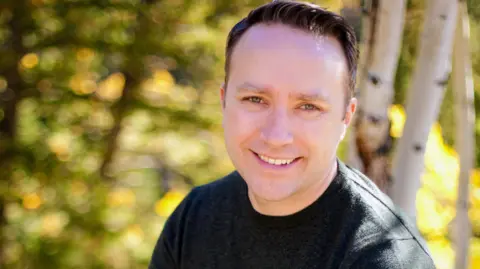 Greg Daily
Greg Daily's advertising firm is employed by some of the largest American firms
When Greg Daily found himself homeless as a teenager, becoming a successful entrepreneur seemed an impossibility.
Aged 19 back in 2001, for six months he slept wherever he could in Minneapolis.
Short of money and struggling to find long-term employment, Daily couldn't afford to pay rent. So he had to ask friends and acquaintances if he could sleep on their sofas. On a few occasions he had to make do with a kitchen floor.
Business, though, was in his DNA.
"My grandfather sold brooms out of the back of a van," he says, recalling riding with him as young boy, as they would travel to sell cleaning equipment.
It taught Daily a lesson from a young age: "Businesses feed families."
Now 43, his life today is a million miles away from when he had to go to sleep hungry on a friend's sofa.
Daily is the founder and boss of a Denver-based digital marketing firms called Science in Advertising. Launched in 2019, it serves businesses from members of the Fortune 500 list of the largest US companies, down to "mom-and-pop shops" – small, family-owned retailers.
It helps all these clients manage their online advertising, enabling them to reach additional customers through platforms such as Google, Facebook and Instagram.
Despite the business lessons gained from his grandfather, Daily admits that his family life was "broken" when he was growing up in Denver.
"My parents were divorced when I was young… I was raised by a single mother."
 AFP via Getty Images
Science in Advertising helps firms get their brands noticed on social media
When he was 10-years-old, his grandfather passed away, leaving his mother struggling to feed four children. To make money she'd sell clothes and jewellery, which Daily says was "a big part of what helped us survive".
As he reached adulthood, Daily moved around the US, spending six months in Texas with his grandmother, and six months with his father, before falling into couch surfing.
Travelling to Colorado for a construction job, Daily says the moment that changed his life was meeting his wife at a church. Twenty three years later they are still married.
Seeing that she was earning more money and working fewer hours, Daily decided to go back to college in 2008. He jokes that rather than it being "a romantic story" he realised that he needed qualifications to be able to earn more money.
After completing a journalism course at the Metropolitan State University of Denver he got a job on a local newspaper.
A few years later, with newspapers struggling in the face of smart phones and the internet, Daily moved to England to do a two-year creative writing diploma at Oxford University. "Here in the United States, print journalism was dying. I started thinking about how to write for businesses."
Upon his return to the US, his career in digital marketing for companies started.
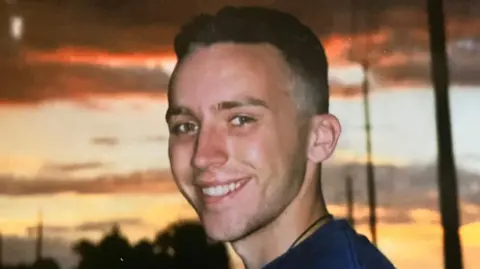 Greg Daily
Greg Daily had some tough times as a teenager
When preparing to launch Science in Advertising, Daily says that he and his wife worked out they had around six to eight months of savings before they would run out of money. "It was terrifying," he says. "I was in tears."
He believed he could do the work, what frightened him was everything else.
"There were so many questions I didn't have answers to," he says. "What if it doesn't work? What if I fail? What if I can't provide?"
Rather than ignoring that fear, Daily says he built his business around it, making one phrase, central to how he operates - "failure is always an option".
It is something he now repeats to his team, particularly when they are facing a high-risk decision. "If you operate as though failure isn't possible, the ship is going to blow up," he explains.
Instead, he accepts that things can go wrong and if they do it is all about limiting the damage. "Assume failure is real," he says. "Now go look for it. Now try to find it. Now reduce the risk."
He adds that as long as you can still feed your kids, some level of short-term financial loss "doesn't matter".
The business has, however, been successful, and grown its client base. Daily says he's particularly proud to be helping small, family-owned businesses like his mother's and grandfather's.
"I love seeing them be successful because that's what I am. That's my family. That's the background I come from," he says.
 AFP via Getty Images
In his early 20s Daily had the get-up-and-go to move to the UK to study at Oxford University
US digital marketing expert Shama Hyder says that succeeding in the sector is "not easy". "The industry is saturated, competition is fierce, and with AI, shifting platforms, and changing consumer behaviour, marketing is about to get significantly harder."
She adds: "When someone like Greg builds a thriving agency in this space, that deserves real recognition."
It's clear that family plays an oversized role in Daily's drive to succeed. But has the entrepreneurial spirit that he inherited from his grandfather and mother been passed down to his eight-year-old son?
"He is very engineering minded," Daily explains, "so, we recently invested a few hundred dollars to get him a 3D printer."
Together father and son are now watching online videos about people making money from selling 3D printed items.
Read more stories about US small businesses


