6 months ago
45
6 months ago
45

6 minutes ago
Catriona MacPheeand Mona McAlinden,BBC Disclosure

 BBC
BBC
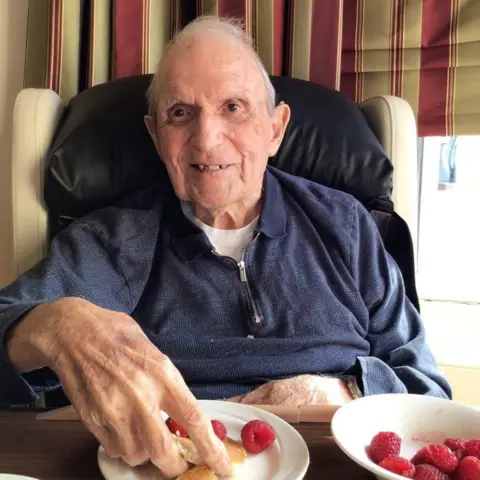
It took four-and-a-half months for Jack Kirkland's family to get his money back
Families have voiced their anger and frustration after spending months, and in some cases over a year, battling to get back thousands of pounds they were owed by a care home operator.
The relatives of 10 former residents say Morar Care Group withheld sums of up to £19,000, which had been paid as deposits when moving into the homes.
Some had to instruct lawyers and debt collectors and pursue taking a civil case against the operator, which runs a home which was at the centre of an undercover BBC investigation last year.
The operator described the allegations about contracts and fees as "incorrect and misleading".
All the families who spoke to the BBC were threatened with legal action by the care provider for taking part in the programme Disclosure: Cashing in on Care.
Lawyers representing the care homes wrote to them saying that the allegations were "clearly very serious" and were likely to cause "serious harm to our client" if they were broadcast.
It was subject to an improvement notice by the Care Inspectorate, and special measures were imposed.
The home has since changed its name to Morar Highland and is now rated adequate by the Care Inspectorate.
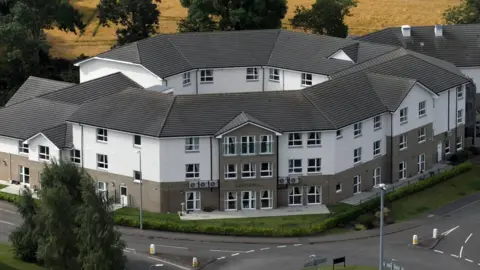
Castlehill Care Home in Inverness has changed its name
In the wake of the undercover investigation, the BBC was contacted by dozens of families with allegations about Morar homes, including new claims about financial problems for self-funding residents.
Some raised issues around reclaiming thousands of pounds in deposits, which the home calls "initial fees".
Self-funding residents have to pay most of their own care due to the amount of savings they have, rather than it being paid for by their local authority. There are about 11,500 people in Scotland in this position.
Wife paid 'phenomenal' fees
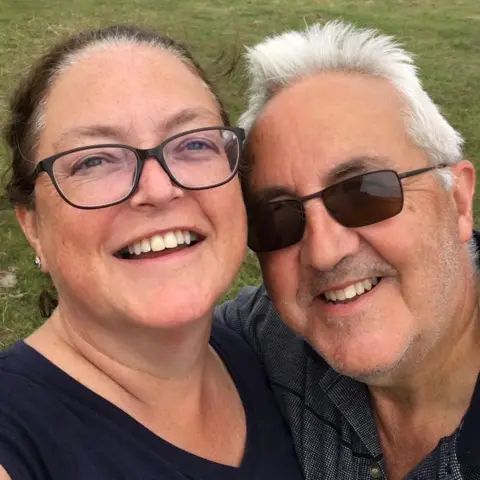
Victoria Hogg's husband Keith moved into a care home in 2021
Victoria Hogg's husband Keith moved into Morar's Musselburgh care home, Harbour House, in 2021 after being diagnosed with rapid-onset Alzheimer's at the age of 64.
"I paid £24,000 before Keith entered the nursing home - £16,000 as the deposit and one months' fees in advance," she said.
"It was a phenomenal amount of money."
Keith's health declined and he died in June 2023. His estate was owed just under £19,000 by the care home.
"We had a period of going backwards and forwards, and nothing happening," Victoria said.
Her solicitor also tried to engage with the care home, responding to new requests for documents that Victoria said they had not been asked for before and sending emails that got no reply.

Keith died in June 2023 after his health declined
"It was difficult," she said.
"I just wanted to close this down and I couldn't. I got to the point where I finally got angry, because I felt as though they were just stringing us along.
"It's a significant amount of money and it's not their money."
A year and a half after Keith died, with the money still outstanding, Victoria contacted The Times newspaper.
"I was angry and incredibly frustrated and I could see no other option," she said.
"Nothing about grieving your partner dying is nice, but you shouldn't have added complications."
Weeks after being contacted by the newspaper, the money was repaid in January 2025.
"I have never received an apology," Victoria said.
"For the most part, I didn't have issues with the care that my husband received. But I would never, ever recommend anybody to deal with Morar, ever."
Aunt was often found 'distressed'
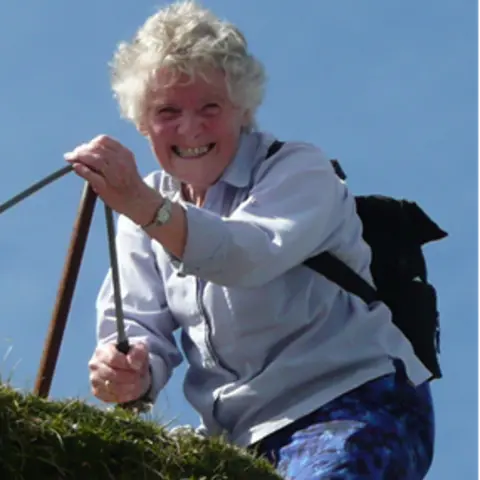
Caitriona MacMillan died in August 2023
Several families said they had concerns over care standards as well as the financial issues.
Retired nurse Jacqueline Banks complained to the Care Inspectorate about her aunt Caitriona MacMillan's treatment at Morar's Oakeshott House, in Stirling.
"They didn't give my aunt adequate pain relief at the end of her life," Jacqueline said.
"She was often found distressed when we went in to visit."
The Care Inspectorate upheld eight complaints about Caitriona's treatment at Harbour House, including two around issues with pain relief.
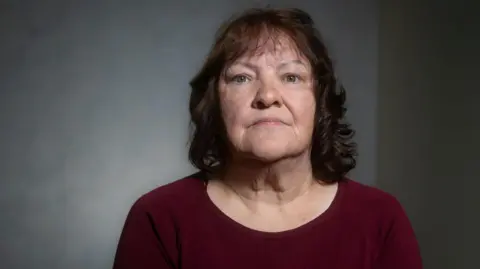
Jacqueline Banks complained about her aunt Caitriona MacMillan's treatment at Oakeshott House in Stirling
After Caitriona died in August 2023, Jacqueline instructed a debt collector to recover £9,600 owed by Morar.
"It was very, very, very difficult to pinpoint anybody who would take responsibility for this money," she said.
"I thought about maybe taking them down the litigation side of things but the solicitor suggested a debt collector."
The tactic worked. Almost a year after Caitriona died, the money was repaid.
"Families are being exploited at their most vulnerable time," said Jacqueline.
"What concerns me is, there must be elderly people in these homes who don't have families to fight their corner. So what's happening to them?"
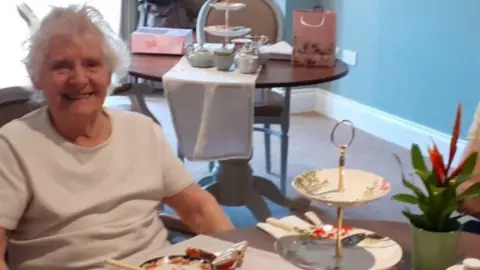
The Care Inspectorate upheld eight complaints about Caitriona's treatment
A spokesperson for the operator denied that residents faced unnecessary obstacles in getting their money back.
It said all residents, or their representatives, were given a contract with clear terms and conditions before they moved in. This included the circumstances in which refunds were available and the process for requesting them.
"As you would expect, before any refund can be issued, we must follow a process to ensure any funds are paid accurately and to the correct party," said the spokesperson.
"We have a clear, written policy that explains each step, including the necessary legal checks needed to confirm that a third party is entitled to receive the funds."
The operator said it was important that any outstanding fees for care were paid so that they did not have to be subsidised by other residents or local authority payments.
It told the BBC that morphine had been administered twice to Jacqueline's aunt Caitriona at the end of her life.
Freedom of information requests show that at least 25 families across four different council areas logged concerns about financial issues with Morar homes in the past three years.
They complained about deposits not being returned and confusing invoices.
In a letter to the Scottish government, one council described Morar's refund policy as "unnecessarily complicated" and added: "Our chief social work officer is particularly concerned for residents who lack capacity and do not have family members to manage this on their behalf."
Morar's contract with residents says any funds it holds will be returned if they move or pass away, but it does not say when it will be returned.
Guidance from the Competition and Markets Authority, the UK government business regulator, says deposits should be paid back within 28 days.
Jim Pearson, deputy chief executive at Alzheimer Scotland, described year-long delays as "appalling".
He said: "There is no reasonable excuse why that can't be done in a reasonable timeframe.
"I would suggest a reasonable timeframe would be a matter of weeks, maybe a month at the most."
The operator said "We act decisively where issues were identified, and continue to strengthen care, leadership and oversight."
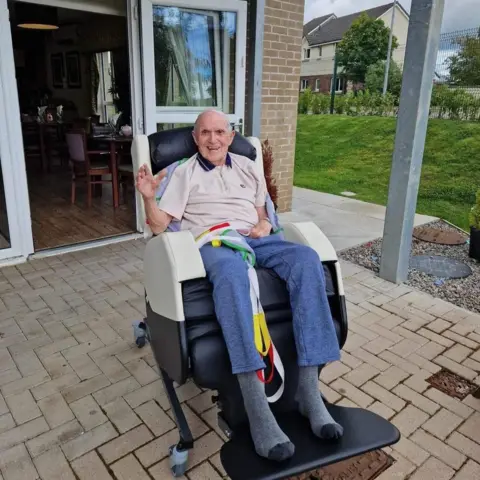
Jack Kirkland moved into Castlehill in 2022
Jack Kirkland, a former director of the Royal Bank of Scotland, moved into Castlehill in 2022.
He paid an initial fee of £15,000 to the care home, which was the equivalent of three months' fees.
After having major concerns about Jack's care, the Kirklands moved him to another home in December 2024.
They asked Castlehill for his money back but say they struggled to get straight answers.
His daughter-in-law Linda Kirkland, a former accountant, said this was "the final indignity".
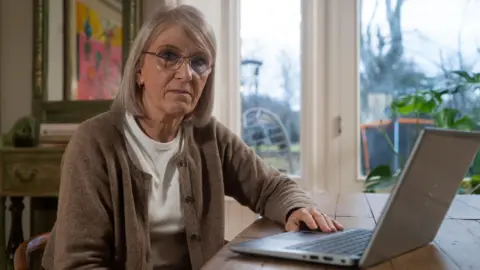
Linda Kirkland said the process left her angry and frustrated
"We started to pester and we were phoning, and we were going back and forward to the home," she said.
"This went on for months, and the process seemed to change every time you went to it.
"The frustration - you're so angry. The injustice of it really bites you."
It took four-and-a-half months for the Kirklands to get the money back. In the meantime, the Care Inspectorate upheld seven complaints about Jack's care at Castlehill.
A spokesperson for the operator said the safety, wellbeing and care of residents "is always our absolute priority" and it works "closely to uphold high standards of care."
Most of the families the BBC spoke to approached the Care Inspectorate and local authority social workers for help, but were told financial problems are not within either organisation's remit.
Others tried Trading Standards, Citizen's Advice and the Competition and Markets Authority, but found no organisation was able to help them.
Social care and its oversight is a devolved issue.
While the Local Government and Social Care Ombudsman can investigate financial complaints in England, there is no regulatory body or ombudsman that has a remit for financial complaints from self-funding residents in Scotland.
Former Scottish Public Services Ombudsman Rosemary Agnew has spent her 40-year career overseeing and regulating public services in Scotland.
She said people "shouldn't have to wait for something that is due" to them, and pointed to mechanisms that exist in the housing sector to ensure deposits are returned.
"It really comes down to access to justice if things go wrong," she said.
"But there should also be accountability for not just the things that have gone wrong, but putting it right. And something like care, then I think it requires some form of state oversight."
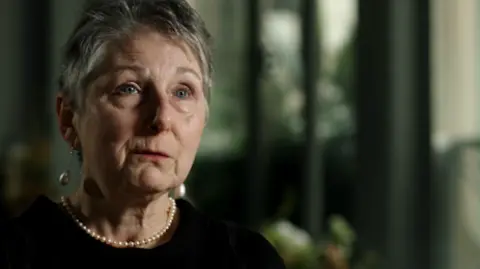
Rosemary Agnew is Scotland's former Public Services Ombudsman
Families who spoke to the BBC also want to see changes and the introduction of state oversight of financial complaints about self funding residents.
Jacqueline Banks said: "If there's no regulation, there's no accountability.
"Families shouldn't have to fight like this. It's caused a lot of anguish."
The BBC asked the Care Inspectorate if it would support moves to extend its remit to include financial conduct.
It said: "We are always willing to consider changes to our remit as determined by parliament."
We also asked the Scottish government about the gap in regulation.
Social Care Minister Tom Arthur said: "When a person is self-funding their care this becomes a contractual matter between the individual and their care home. However, this should be protected by consumer protection laws."
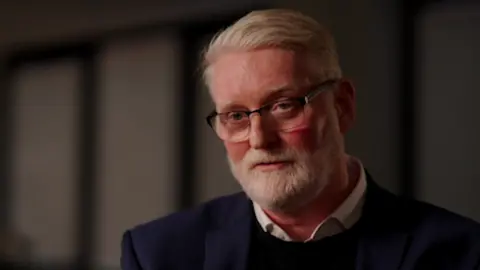
Jim Pearson from Alzheimer Scotland described year-long delays as "appalling"
Morar Care Group operates 18 homes in the UK, including nine in Scotland. All the financial complaints relate to its Scottish homes.
Co-owners Christopher O'Brien and Gary Sharp started out in construction before switching to running care homes around seven years ago.
While families struggled to get their deposits back, business has been booming at Morar headquarters over the past three years.
Internal documents say Morar's turnover is projected to grow from £29m in 2023 to reach £122.5m by 2030. It is planning to open four new care homes in the south of England this year.
The care provider said it denied historical allegations relating to contracts and fees.
A spokesperson added: "In the unusual situation where care has fallen short of the high standards we expect, we investigate this thoroughly and take appropriate and prompt action.
"Many of the allegations made by the BBC relating to care standards are untrue."
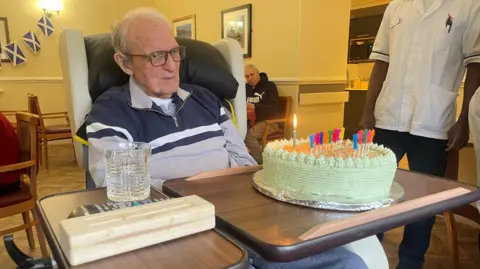
Jack recently celebrated his 95th birthday
Jack Kirkland is now living in a new care home, where his family say he is thriving. He recently celebrated his 95th birthday.
"He's doing really well," says Linda.
"He's well looked after. We do the quiz every day. Some days we've got to look stuff up, but he doesn't.
"He's a different person. He's aiming for the 100 - and there's no reason why he wouldn't get there."
Additional reporting by Jax Sinclair.