1 hour ago
2
1 hour ago
2

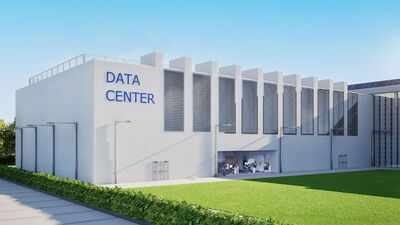
A proposed industrial campus in Bradley County, Tennessee, is putting economic development, energy demand and environmental protection on a collision course. The Wright family, owners of Wright Brothers Construction, wants to rezone and annex about 850 acres west of Interstate 75 and north of Old Lower River Road, close to the Hiwassee River.
Called Project River, the development could include a power complex fuelled by natural gas and woody biomass, along with a large industrial customer such as a data center. No data center operator has signed a contract, but developers say that is the most likely use. As reported by WUTC’s Scenic Roots, the project is approaching its first planning commission and city council votes while residents continue asking questions about water, noise, traffic, emissions and the river’s future.A major proposal in a rural settingProject River would transform land that is currently zoned for farming and agricultural use. The site is privately owned by the Wright family and lies near the Hiwassee River, a waterway important to recreation, wildlife and the identity of the surrounding community.The proposed campus has been described as an $11.3 billion investment that could create about 2,600 jobs and bring advanced industrial activity to Bradley County.
Developers say the project could support energy intensive manufacturing, robotics, semiconductor production or a data center. Although the public conversation has focused heavily on artificial intelligence and data processing, the final industrial customer has not yet been selected.That uncertainty is central to the debate. Residents are being asked to consider rezoning and annexation before knowing precisely what will operate on the land.
Developers have said a data center is the most likely option, but there is no confirmed operator or power customer at this stage. The project’s energy infrastructure would be built first, with the eventual customer determined later.Power at the centreThe plan calls for up to 1,500 megawatts of on site electricity generation. That would include a 500 megawatt woody biomass plant and two natural gas plants with a combined capacity of 1,000 megawatts.
A connection to the Tennessee Valley Authority grid would provide up to 360 megawatts for backup and periods of high demand.Developers describe the arrangement as a way to avoid shifting the project’s primary electricity demand onto local households and businesses. They say the campus would generate most of its own power and would not raise residents’ electricity bills.The proposed biomass facility would use pine trees and other woody material from the region.
Supporters say that could revive local forestry operations and create new demand for timber suppliers, truckers and skilled workers. The natural gas plants would provide dependable energy when renewable or biomass generation could not meet the campus’s needs.Critics question whether a project that relies on large natural gas plants and extensive biomass burning should be presented as an environmentally responsible development.
They are also seeking detailed information about fuel supply, emissions, ash disposal, truck traffic and the long term effects of operating such a large energy complex beside the river.Why residents are concernedAt public meetings, residents have raised concerns about the scale of the proposal and the limited information available before the first votes. Water, electricity, noise and environmental impacts have been recurring topics.The Hiwassee River is central to many residents’ concerns. People use the river for boating, fishing, swimming and recreation. Businesses along its shoreline depend on visitors, while nearby landowners worry that construction and industrial operations could change the character of the area.Residents have asked whether the project could affect groundwater, erosion, wildlife habitat and river water quality.
They also want to know how construction would manage stormwater and sediment, particularly on a large site near a major waterway.Developers have stated that the project would not use municipal water or draw water from the Hiwassee River for daily operations. They have also said there would be no intake or discharge pipe running into the river. Those assurances have not resolved all concerns, partly because detailed environmental and traffic studies were still pending when residents began asking questions.The data centre questionData centres have become controversial across the United States because of their enormous electricity requirements, cooling systems, construction footprints and potential noise. Project River has attracted similar scrutiny even though the developers say they do not yet have a data centre contract.A data centre is the most likely customer for the proposed 1,500 megawatts, according to project leaders.
The facility could support cloud computing, artificial intelligence or other high demand digital services. Such operations can bring investment and jobs, but they require reliable electricity around the clock and extensive supporting infrastructure.For residents, the uncertainty creates a trust problem. They want to know whether the community is being asked to approve a general industrial campus or a project designed primarily for a data centre.
The distinction affects questions about cooling, backup generation, noise, security, water use and future expansion.Developers have said the site could also host advanced manufacturing, robotics or semiconductor production. They argue that developing the power supply first gives Bradley County flexibility to attract a range of industries rather than depending on one tenant.What supporters seeSupporters view Project River as a potential economic turning point.
The proposal could bring billions of dollars in private investment, create construction and permanent jobs, increase the local tax base and support regional suppliers.The biomass plant could also create a new market for timber and forestry businesses. Supporters say the project could help maintain land based jobs and give local workers opportunities without requiring them to move away.Union representatives have expressed support for the project, pointing to the skilled construction and power plant jobs it could create.
The economic argument is especially important in communities seeking higher paying employment and new industrial investment.Developers also say that the campus would be built in phases over about five years. That would spread construction activity over time and allow studies, engineering work and permitting to proceed in stages.For supporters, the project represents a chance to prepare Bradley County for industries that will require substantial electricity.
They argue that data processing, advanced manufacturing and artificial intelligence are becoming important parts of the national economy, and rural areas should not be excluded from those opportunities.What opponents fearOpponents are not convinced that the potential benefits outweigh the risks. They worry about converting agricultural land into a large industrial complex and placing heavy infrastructure close to the Hiwassee River.Noise is another concern. A power campus and data centre could operate continuously, creating a steady industrial sound that residents say could affect homes, marinas and recreational areas. Construction traffic and ongoing deliveries may also increase pressure on local roads.Some residents question whether promised jobs will go to local workers or whether the project will rely on specialised employees recruited from elsewhere.
Others want guarantees that public services, emergency response and roads will be able to support the development without placing hidden costs on taxpayers.The lack of a confirmed end user has intensified these concerns. Residents say they need complete information before local governments approve zoning and annexation changes that could be difficult to reverse.The planning processThe Wright family has applied to the City of Cleveland to rezone and annex approximately 850 acres.
The site is west of Interstate 75 and north of Old Lower River Road NW. The first votes from Cleveland’s planning commission and city council are expected later in September.Before construction can begin, the project would need to pass through additional review. Environmental, ecological, geological and traffic studies are expected to play important roles. The site’s proximity to the river means stormwater management and erosion controls will be particularly important.Rezoning would change the legal framework governing the land. Annexation would bring it into the city’s jurisdiction, affecting planning, services and future development decisions. That is why residents are treating the first votes as significant even though they would not immediately authorise every stage of construction.Public meetings have become an important part of the process, but some attendees have criticised the format.
At least one meeting required residents to submit questions in advance, and some said their questions were not answered directly. Developers scheduled another meeting at the PIE Center in Cleveland to continue presenting the proposal and responding to concerns.A test of transparencyProject River’s future may depend as much on public trust as on engineering. Large developments require technical studies, but communities also need clear and timely information.
Residents want to know who will own and operate the power facilities, what emissions are expected, how fuel will be transported, how water will be managed and what happens if the anticipated data centre never arrives.Developers have said they are not hiding the possibility of a data centre and that the project was designed with one in mind. They also emphasise that other industrial customers remain possible. That distinction may be legally important, but it does not eliminate the need for detailed public discussion.Trust is particularly difficult when a project is announced at enormous scale before all contracts and studies are complete. Supporters see flexibility and future opportunity. Opponents see uncertainty and a risk that local officials will approve infrastructure before residents understand its full consequences.What happens nextThe immediate next step is the local review of rezoning and annexation. Residents, developers, environmental groups, unions and elected officials are expected to continue making their cases before the first formal votes.If the proposals advance, the project would move into more detailed planning and environmental review. If they are rejected or delayed, the developers may need to revise the design, identify a confirmed industrial customer or provide additional studies.Regardless of the outcome, the debate has already changed the conversation about Bradley County’s future. Project River has raised questions about how rural communities should evaluate data centres, how power intensive industries should be located and how economic development can coexist with river protection.For residents near the Hiwassee, the central issue is simple. They want to know whether the promised jobs and investment can be delivered without sacrificing the waterway, quiet and rural character that make the area home. Project River is now moving toward the votes that may determine whether that question leads to a new industrial era or a demand for a different plan.