
 6 months ago
54
6 months ago
54

Hayley ClarkeEducation reporter

 Getty Images
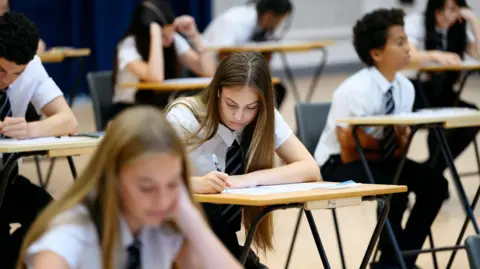
Teachers have voted to oppose the introduction of a new compulsory reading test for Year 8 pupils in England at the National Education Union's annual conference in Brighton.
The government has said the tests would be introduced by the end of the current parliamentary term, in 2029.
The Department for Education (DfE) said tests and assessments were "vital tools for identifying where pupils need extra support, ensuring no child is left behind".
Daniel Kebede, general secretary of the National Education Union (NEU), said he welcomed the commitment to tackling a decline in reading, but that introducing a mandatory test "undermines the very aim it seeks to achieve".
The proposed tests would aim to check pupils' progress two years into secondary school.
During a debate on the issue at the conference on Monday, NEU member Holly Williams, from Kent, said "more testing is not the solution".
She said a Year 8 reading assessment would increase pressure on pupils at a point in their education when confidence matters most, and that it would narrow the curriculum and erode teacher autonomy.
She added that a test "does not make a child fall in love with stories".
Other delegates raised concerns that more testing would mean students in England would have to sit official tests too regularly, and that it would risk adding more stress and anxiety for pupils, in particular those with special educational needs and disabilities (SEND).
The proposed changes would mean most pupils in England sitting national tests in seven years of their school education:
- Reception - Baseline assessment of literacy, communication, language and mathematics skills
- Year 1 - Phonics screening check
- Year 4 - Times tables check
- Year 6 - Key Stage 2 tests, known as SATs, in English and Maths
- Year 8 - Proposed reading tests
- Year 11 - GCSEs and other Level 2 exams
- Year 13 - A-levels, T-levels and other Level 3 national exams
Members also voted to pass an amendment to the motion at the conference, which called for the union to survey secondary school members to see whether they would be willing to boycott the tests.
The amendment also called for increased funding for libraries in schools.
Commenting on the passing of the motion at the conference, Kebede said a mandatory Year 8 test would divert time away from teaching a broad, balanced and content-rich curriculum, and urged the government to "urgently rethink these proposals".
A DfE spokesperson said: "Too many children start secondary school without the foundations needed to succeed, particularly white-working class children and those with SEND.
"That's why we're introducing a mandatory reading test in Year 8 so we can ensure these pupils are getting the support they need to be on track ahead of their GCSEs."
The government first announced its plans for a statutory Year 8 reading assessment in schools, to assess fluency and comprehension, in autumn 2025.
Education Secretary Bridget Phillipson said at the time that the tests would help to make sure no child "can slip through the cracks".
Data from the tests would be made available to the DfE and schools' watchdog Ofsted, ministers said, but would not be published for individual schools to be used as a measure.
Teaching unions had previously raised concerns that the tests could be used as a measure in future and that schools already monitor reading progress.
It comes amid concern that a quarter of Year 6 pupils are not meeting expected reading standards and the English GCSE pass rate has slipped.
This year is also the national year of reading, a UK-wide campaign "designed to inspire more people to make reading a regular part of their lives", amid ongoing debates on screen time and a potential social media ban for under-16s.


