21 minutes ago
1
21 minutes ago
1

CIVICUS discusses Sweden’s new migration laws with John Stauffer, legal director and deputy executive director of Civil Rights Defenders, a Swedish civil society organisation that acts as a civil rights watchdog at home and supports human rights defenders in repressive contexts worldwide.
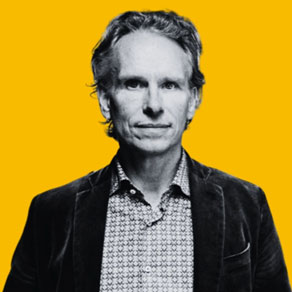 John Stauffer
Immigration has dominated the campaign ahead of Sweden’s general election on 13 September. In June, the centre-right government, which depends on a far-right party to govern, pushed three changes to migration laws through parliament, all of which took effect in July. People with asylum status can no longer obtain permanent residence, residence permits can now be revoked over conduct that is not criminal, and public agencies must report undocumented people to the police.
What are the main changes to Sweden’s immigration laws?
The biggest change is that permanent residence will no longer be available for people with asylum status. Under the new rules, they will only be granted temporary residence permits.
This is being paired with a new law on ‘good behaviour’ for some categories of migrants, which lets the authorities refuse or revoke a permit over conduct that is not necessarily criminal, such as unpaid debts or undeclared work. And it does not only apply to new applications. Permits already granted can be reviewed too.
Citizenship has been tightened along the same lines. Habitual residence requirements have risen from five to eight years and applicants now have to provide proof of income and pass a knowledge test, including a language test. In relation to citizenship, the requirements on ‘good behaviour’ have become stricter.
Then there is the law on information sharing between government authorities, known as the snitch law. It obliges officials who handle benefits, debt enforcement, pensions, prisons and probation, taxes and unemployment services to report undocumented migrants to the police.
All this arrives at the same time as the European Union (EU) Migration Pact, which Sweden has implemented through national legislation. It came into force on 12 June and has tightened the conditions further. It is a package of 10 laws that harmonises how asylum claims are handled across the EU, with faster procedures for people considered unlikely to qualify for protection. In implementing the pact, Sweden has gone further than necessary to limit the rights of asylum seekers, for example on access to legal representation in proceedings. An expressed goal of the government is to have the most restrictive asylum laws possible under EU law.
Who is most affected by these laws?
Asylum seekers, people without citizenship and undocumented migrants are those most hit by these laws, but their reach is wider than it looks.
Under the snitch law, healthcare staff and teachers are not obliged to report undocumented migrants, but they may end up doing so indirectly. If you give birth in a hospital, the hospital must notify the tax authority that a child has been born, and the tax authority is then obliged to pass that on to the police. We already see that undocumented migrants avoid contact with healthcare providers, which severely impacts their right to health.
Then there are young people who have lived in Sweden their whole lives, with parents who came, for example, as asylum seekers. They will be assessed under the new regime once they turn 18 and, if they are seen not to have grounds for a residence permit of their own, they may be sent to a country where they have never lived.
Ultimately, the broader effect of these laws is to erode trust. Asylum seekers and, more broadly, people with a migrant background lose confidence in government authorities. That confidence has always been a cornerstone of our democracy, and one we have been proud of. Once that trust goes, it is not just the government that loses out. It is Swedish society as a whole.
What does this mean for freedoms of assembly and expression?
The good behaviour law means we are no longer all equal before the law. Something a Swedish citizen can say or do without any legal consequence can cost a residence permit holder their right to stay.
What makes this worse is that nobody knows exactly where the line falls. Legal scholars have described these laws as very broad, vague and difficult to apply in practice, so people have no way of telling in advance what might be used against them.
That uncertainty produces a chilling effect on people’s willingness to use their rights. Permit holders who are not citizens are withdrawing from public debate. They stop voicing their views and stay away from protests, because they fear that joining a pro-Palestine march or a climate protest, for example, might cost them their permit. We are, in fact, creating a two-tier system where the lives of non-citizens will be characterised by uncertainty and limited access to rights, while citizens enjoy full rights.
What’s driving these changes?
Sweden used to have comparatively liberal migration laws, but since large numbers of asylum seekers arrived in Europe in 2015, immigration laws have become more and more restrictive. This has intensified particularly since the current centre-right government came to power four years ago with the support of a far-right party, and with the stated goal of reducing the number of asylum seekers and making more migrants leave Sweden, voluntarily or by force. Agreements with repressive regimes to receive their citizens, repatriation grants and measures that will make the lives of migrants in Sweden more uncertain are means to achieve these goals.
The government has been building a narrative that connects migration to rising rates of violent crime. Using that as a justification, it has tried to build strong support for stricter migration policies and at the same time has pushed more repressive policies to combat crime, including greater possibilities to revoke residence permits for migrants who have committed crimes, including less serious crimes.
As we approach the September election, it remains to be seen whether people truly support this model. The largest opposition party, the Social Democrats, have, however, supported many of the new immigration policies. What a left-wing government would mean for asylum seekers is still to be seen. Other countries, particularly France and Germany, are also watching to see how it plays out, and some may adopt similar measures if they see results they regard as positive.
What can civil society do?
Civil Rights Defenders works to influence national legislation and the public debate, to shift how migration is understood and give a more nuanced picture of it. We currently do not have the capacity to generally support asylum seekers and migrants through legal advice, but other organisations do. However, we engage in strategic litigation, taking cases to oversight bodies, courts and the European Court of Human Rights to shape how these laws are implemented.
But our resources are limited, and they are about to be stretched much further. One consequence of the way Sweden is implementing the EU Migration Pact is that the legal support asylum seekers are entitled to through the public scheme has been cut back drastically. The people who lose that support will turn to us and other organisations for support, and Swedish civil society doesn’t currently have the capacity to meet their needs.
CIVICUS interviews a wide range of civil society activists, experts and leaders to gather diverse perspectives on civil society action and current issues for publication on its CIVICUS Lens platform. The views expressed in interviews are the interviewees’ and do not necessarily reflect those of CIVICUS. Publication does not imply endorsement of interviewees or the organisations they represent.
GET IN TOUCH
Website
Facebook
Instagram
LinkedIn
SEE ALSO
Europe: a race to the bottom on migrants’ rights CIVICUS Lens 21.Aug.2026
Migration: Cruelty as policy CIVICUS | 2026 State of Civil Society Report
Italy: ‘White supremacist concepts are entering mainstream political discourse on migration’ CIVICUS Lens | Interview with Eleonora Celoria 22.Mar.2026
© Inter Press Service (20260828163418) — All Rights Reserved. Original source: Inter Press Service