1 hour ago
1
1 hour ago
1

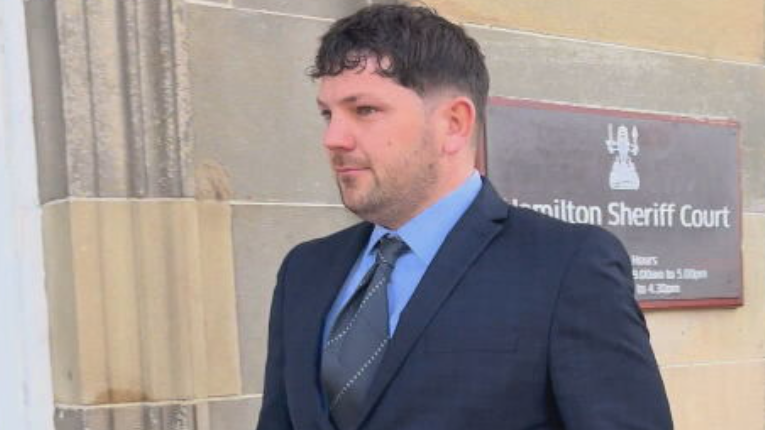
Skipper Tom Nicholson Jr was given a community sentence for failing to provide adequate food and rest to foreign crew
By
Scotland social affairs correspondent
A skipper for a fishing company embroiled in modern slavery allegations has been sentenced to 300 hours of community service for what a sheriff described as "Dickensian" conditions aboard his boat.
Tom Nicholson Jr, 38, admitted failing to provide adequate food, rest or training to five workers from Ghana while he captained the Sea Lady in the English Channel in 2017.
All five men were later rescued by police and recognised by the UK Home Office as victims of modern slavery.
Nicholson, 38, was given the maximum sentence and will be fitted with an electronic tag as a direct alternative to custody.
Foreign fishermen previously told a court how they resorted to scavenging for food from a vessel's catch and devising secret rotas for sleep while working under Nicholson Jr.
Disclosure: Slavery at Sea
19.08.2024
Nicholson Jr worked for his father's company TN Trawlers, based in Annan.
In 2024, a BBC investigation found that 35 men who worked for the company were later recognised as modern slavery victims.
Gershon Norvivor was one of the Sea Lady crew named on Nicholson's indictment.
Because the skipper pled guilty during his trial, Norvivor was unable to give evidence.
The 43-year-old - who still works as a fisherman in Scotland - was one of nine men who took part in the BBC documentary Slavery at Sea which revealed trafficking allegations at TN Trawlers.
Speaking this week, he said: "To survive, it was very hard.
"The food they brought on board was not enough. In three or four days, the food was finished.
"You can't even leave the work and go to eat. If you leave, the skipper started shouting."
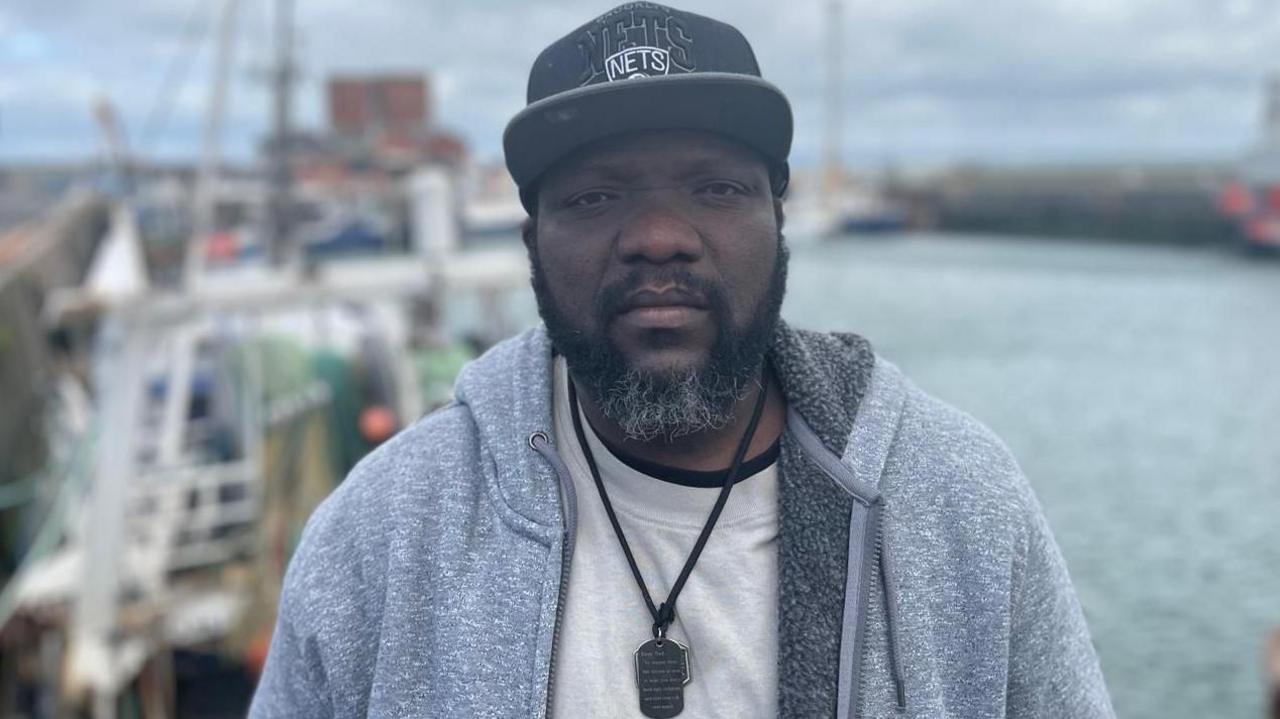
Gershon Norvivor was one of five Ghanaian fishermen involved in the case
He added: "Because you don't know anywhere, who are you going to complain to?
"I said, 'Are we in prison or what? Because it seems like we are in prison'."
Norvivor was later identified as a victim of modern slavery after being entered into the National Referral Mechanism (NRM) by police in 2017.
He said: "I feel good for people to know that this is what is going on in the fishing industry."
Nicholson Jr pled guilty after three days of evidence at Hamilton Sheriff Court in June.
Augustus Mensah - who also featured in the BBC documentary - told the court he had arrived to work for the company in September 2017.
On the Sea Lady, he said he worked around the clock and had "no rest", instead devising a "secret rota" that allowed the crew to sleep in short shifts.
He said food was short and they resorted to eating octopus and fish caught in the harvest.
"It impacted my health, my mental health," he said.
"My body deteriorated and I almost died on board."
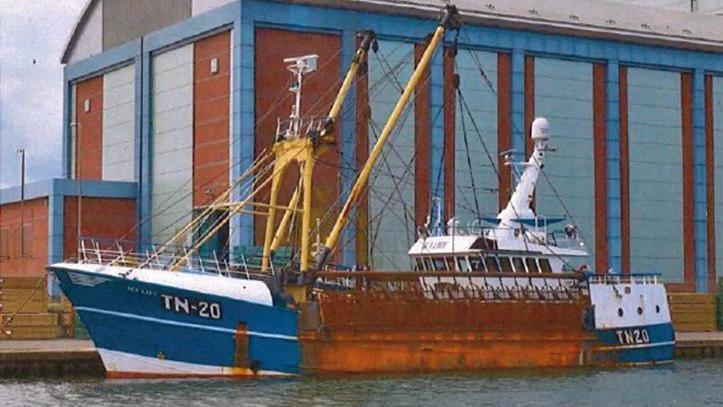 Image source, COPFS
Nicholson Jr skippered the Sea Lady in 2017
In December 2017, Mensah suffered a head injury while aboard the Sea Lady and was taken to shore at Portsmouth, where he later complained to police.
His colleague Joshua Amissah also told the court of the lack of food and rest.
When asked if he'd complained about the working conditions, Amissah said: "[The skipper] told me that I was a slave.
"He said that his father had told him that any black person he worked with, he must treat that person as a slave."
The crew members were later recognised as victims of modern slavery.
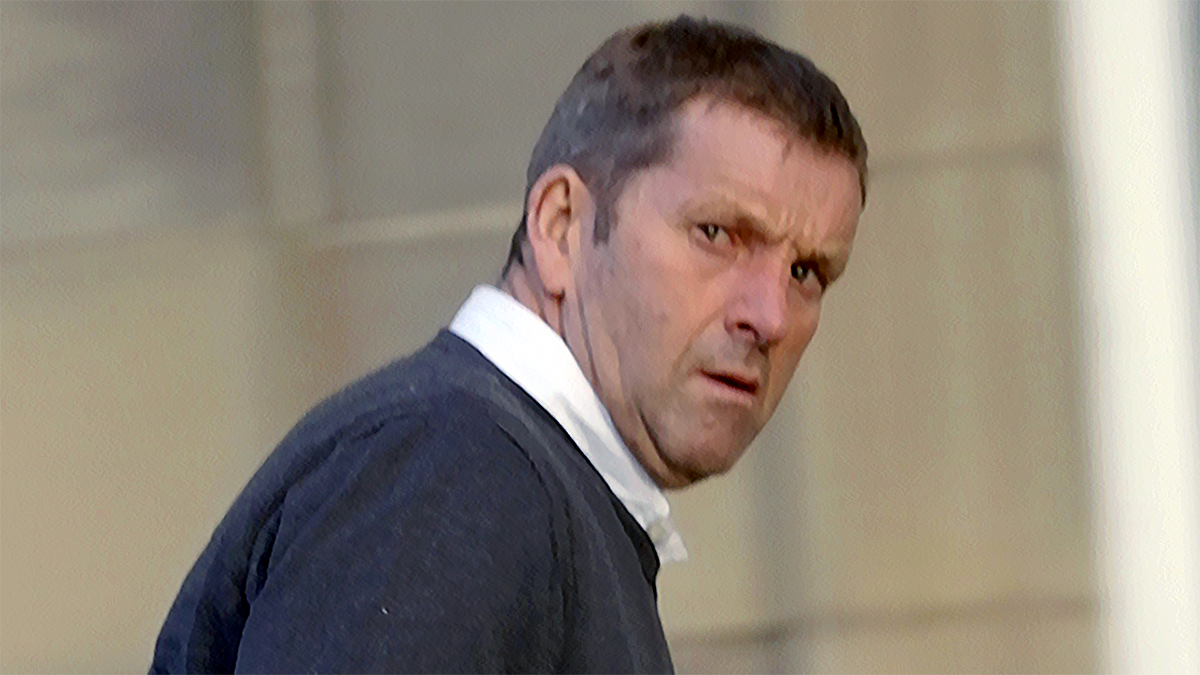
Thomas Nicholson breached a Trafficking and Exploitation Risk Order
Prosecutor Sineidin Corrins, of the Crown Office and Procurator Fiscal Service (COPFS), said: "These men showed commendable courage in coming forward to provide difficult testimony in court.
"Their accounts detailed the harrowing and completely unacceptable conditions they were forced to endure under the captaincy of Tom Nicholson.
"And those testimonies helped to ensure he was convicted of a serious offence."
She added: "They suffered significant trauma while he was in charge of the vessel and responsible for their well-being and safety.
"Tom Nicholson has now been brought to account by the court for his offending conduct."
Father fined for breaching order
This is the latest development in a long-running saga involving TN Trawlers and allegations of modern slavery throughout the 2010s.
In August 2024, a three-year investigation by Disclosure and File on 4 featured testimony from former TN workers from Ghana, India and the Philippines.
The men alleged mistreatment while working aboard vessels in the Annan-based fleet.
The BBC identified 35 foreign men who worked for TN Trawlers and who were later recognised by the UK Home Office as victims of modern slavery.
In October 2024, another group of fishermen from Ghana were awarded £20,000 each in compensation by the UK government.
The crew were rescued in 2020 from the scallop-trawler Olivia Jean, also owned by TN Trawlers.
In June, company owner Thomas Nicholson – father of Tom Nicholson Jr – was fined £2,700 for breaching a Trafficking and Exploitation Risk Order (Tero).
It was the first conviction of its kind in Scottish legal history.
Nicholson had been served with the Tero – which placed restrictions on his business activities – while he was the focus of a Home Office-led inquiry into human trafficking.
TN Trawlers had denied any allegation of modern slavery or human trafficking and said its workers were well-treated and well-paid.