1 hour ago
4
1 hour ago
4

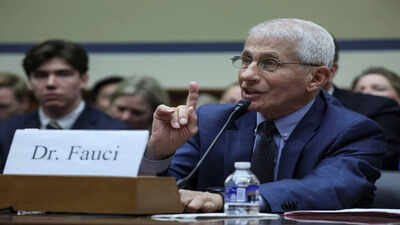
Fauci diaries released by Sen. Rand Paul reveal COVID origin doubts, evolving Trump ties: Report
There are diaries that become part of a particular zeitgeist. The Holocaust had two. On one side, you have The Diary of a Young Girl by Anne Frank, which captured the horrors of the Holocaust through the eyes of a young Jewish girl.
On the flipside, you have Mein Kampf, which the man who unleashed the Holocaust wrote while imprisoned and which became a bestseller after he rose to power, showing that there is no such thing as bad publicity. And now we have another “diary” that might be described as a zeitgeist of our times: Dr Anthony Fauci’s notes.For the uninitiated, Dr Anthony Fauci served under Donald Trump as one of the lead members of the Coronavirus Task Force and would later become Chief Medical Advisor to Joe Biden, making him one of the most prominent faces of the American response to Covid-19.Fauci was everywhere during the pandemic. He stood beside Trump at White House briefings, explained epidemiology on Sunday talk shows and repeatedly found himself trying to translate rapidly changing science into sentences understandable to an anxious public. To his admirers, he was “America’s doctor”. To his critics, he became the patron saint of lockdowns, masks and vaccine mandates.That public image is now being examined through Fauci’s own private record.
Senator Rand Paul, Fauci’s most persistent congressional adversary, has released more than 1,100 pages of Fauci’s typewritten notes. Paul claims they demonstrate a divide between Fauci’s private thinking and public statements. Fauci, who retired from government in 2022, declined to comment to The New York Times and is scheduled to testify before Paul’s Senate committee on July 29.The papers contain diary entries, emails, scientific briefings, epidemiological data and press clippings.
They are also incomplete. The released package jumps from November 30, 2021, to May 31, 2022.They offer no great confession or final answer about Covid’s origins. What they provide is something messier: science being worked out in real time, political decisions being made amid incomplete evidence, and one of the world’s most famous doctors recording every compliment along the way.Here are the five biggest revelations.
1. Engineered virus?
The most politically significant entries concern the origin of SARS-CoV-2.On January 26, 2020, Fauci wrote that Wuhan’s Huanan market was probably an “amplifier” rather than the original source of the outbreak. He still believed the virus had crossed naturally from animals into humans. Rand Paul cited this as evidence that Fauci privately knew the market-origin theory was weak, although Fauci made the same “amplifier” argument publicly in an interview weeks later.
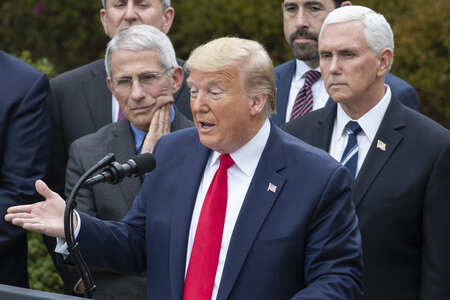
Washington: President Donald Trump, accompanied by Dr. Anthony Fauci, director of the National Institute of Allergy and Infectious Diseases, left, and Vice President Mike Pence, right, speaks during a news conference about the coronavirus in the Rose Garden at the White House, in Washington. AP/PTI(
The more important entry came on January 31.Jeremy Farrar of the Wellcome Trust contacted Fauci along with evolutionary biologist Kristian Andersen. According to Fauci, scientists were concerned that mutations around the virus’s furin cleavage site “could not have occurred naturally” and might have been “deliberately inserted”. An accidental laboratory release was considered more likely than an intentional one.Fauci responded by assembling leading virologists and evolutionary biologists for a conference call on February 1. Those present included Francis Collins, Christian Drosten, Eddie Holmes, Andrew Rambaut and Robert Garry.“There was not total agreement about the likelihood of deliberate insertion,” Fauci wrote. Two participants believed the features could have emerged naturally. The others considered deliberate insertion possible and felt the question deserved investigation.In a later entry, Fauci remembered the division slightly differently, writing that “about half” believed the virus could have been constructed while the other half favoured natural emergence. That does not tally perfectly with his contemporaneous February account, which described only two scientists as firmly convinced of a natural origin.Several participants later studied the genome more closely and concluded that natural emergence was the stronger explanation.
Their work became the influential Proximal Origin of SARS-CoV-2 paper.The diary therefore establishes that leading scientists initially treated laboratory manipulation as a serious possibility. It does not establish that the virus was engineered or that it escaped from a laboratory. Scientific opinions can evolve as evidence accumulates. The legitimate question is whether the initial uncertainty was adequately communicated to the public.
2) The School Closure Conundrum
In a 2022 ABC interview, Fauci said he had “nothing to do” with the decision to close schools. His diary presents a more complicated picture.On March 15, 2020, Fauci recorded a conversation with New York mayor Bill de Blasio. “I spoke with Bill de Blasio and convinced him based on what I was saying publicly and my conversation tonight to close the NYC schools,” he wrote.Fauci also recommended closing bars and restaurants. De Blasio, according to the entry, said he would act on that recommendation.Fauci then spoke to Ann O’Leary, chief of staff to California governor Gavin Newsom. He wrote that Newsom had decided to close California’s schools, bars and restaurants “based on my TV appearances today and yesterday”.
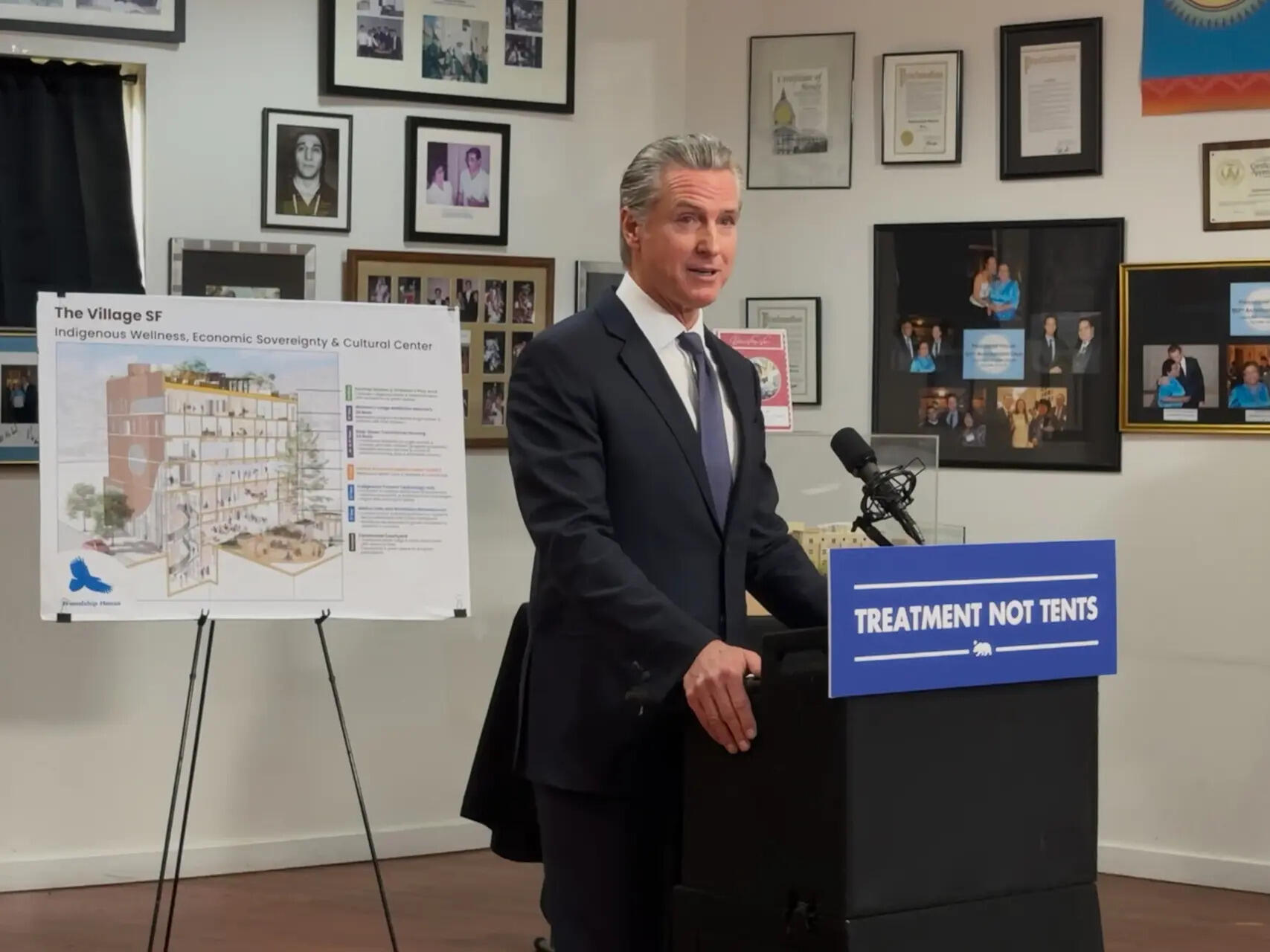
Fauci then spoke to Ann O’Leary, chief of staff to California governor Gavin Newsom. He wrote that Newsom had decided to close California’s schools, bars and restaurants “based on my TV appearances today and yesterday”.
The next day, federal guidelines reflecting what Fauci described as his push for “more aggressive mitigation” advised closing schools in communities experiencing transmission.Fauci did not possess the legal authority to close American schools.
Those decisions were made by governors, mayors and local school authorities. His advice, however, plainly carried enormous weight. Saying that he had “nothing to do” with closures erases the influence his own diary records.Context remains essential. In March 2020, New York was approaching a catastrophic wave, hospitals feared being overwhelmed, testing was inadequate and officials knew little about how efficiently children transmitted the virus.
Later evidence about educational loss, mental health and the comparatively lower risk to children was unavailable when the first decisions were taken.
The revelation concerns Fauci’s subsequent description of his role. He may not have ordered the closures, but the diary indicates that he advised and encouraged political leaders to impose them.
3) 'Bad Influenza"
On February 8, 2020, Fauci spoke to former CDC director Tom Frieden.
The two believed that the confirmed global case count dramatically understated the real number of infections because mild and asymptomatic cases were being missed.A bigger denominator would produce a lower fatality rate.Fauci wrote that Covid appeared to behave like “a bad influenza” in its transmissibility and that the case fatality rate might be “more like 0.2-0.3% rather than 2.0%”.Roughly a month later, Fauci told Congress that the reported mortality rate was around 3 per cent.
Once undetected cases were considered, he said, the figure would probably settle at “somewhere around 1 per cent”, making Covid approximately ten times more lethal than seasonal influenza.Paul and other critics view the discrepancy as evidence that Fauci privately believed the virus was considerably less dangerous than he publicly suggested.The diary raises a legitimate question, although it does not by itself prove deception.
The 0.2-0.3 per cent figure appears to have been an informal working estimate during an early telephone conversation. By March, outbreaks in Italy, Iran and elsewhere had provided more evidence about severe disease and death.There was also widespread confusion between the case fatality rate and the infection fatality rate. The former measures deaths among confirmed cases. The latter attempts to include every infection, including unrecognised ones.
Fauci labelled his private estimate a case fatality rate even though his reasoning incorporated unknown infections, making it closer to an infection fatality estimate.Officials had to communicate risk while the denominator itself was largely invisible. The diary shows that Fauci privately considered a wider range of possibilities than his crisp public warnings sometimes conveyed.
4) "Operational Incompetence"
The diary portrays the early American response as a collection of agencies trying to assemble an aircraft after take-off.On February 27, 2020, Fauci wrote that health secretary Alex Azar was so frustrated by the “operational incompetence” of the CDC that he asked Fauci to consider possible replacements for director Robert Redfield.Fauci himself complained about faulty CDC test kits, restrictive testing criteria and the absence of clear operational leadership. At one stage, the government reportedly possessed more tests than the nasal swabs required to administer them.The Trump White House added political pressure. Before Fauci announced positive remdesivir trial results, Trump reportedly told him: “Be enthusiastic, Tony. Be optimistic, we need to open up the economy.”Fauci replied: “I told him that I would tell it like it is.”
Bethesda:President Donald Trump drives past supporters gathered outside Walter Reed National Military Medical Center in Bethesda, Md.. Trump was admitted to the hospital after contracting COVID-19. AP/PTI Photo
White House officials subsequently restricted some of his television appearances. A communications official, Fauci recorded, admitted that they had been “holding me back”.
His fights with Peter Navarro over hydroxychloroquine and Scott Atlas over herd immunity reflected the widening gap between Trump’s desire for normality and the medical team’s assessment of continuing risk.The Biden administration treated Fauci with greater respect, but institutional disagreement remained. He criticised the CDC’s booster recommendations as “overly careful, slow, rigid”. He also complained that an eight-month booster interval had been chosen largely for logistical reasons before being presented as if it were dictated by science, calling this a “fixation on messaging”.In 2022, Fauci accused White House Covid coordinator Ashish Jha of promoting himself on television while excluding Fauci, Rochelle Walensky and Vivek Murthy.The same government machinery was capable of astonishing speed. On January 11, 2020, vaccine researcher Barney Graham ordered vaccine constructs “using credit cards”. By January 14, his team was working with Moderna. The diary records both scientific agility and administrative dysfunction living inside the same system.
5) 'Sexiest Man Alive'
The New York Times described the diary as presenting a portrait of Fauci “obsessed with himself”. That judgement sounds harsh until one encounters page after page recording flattering profiles, awards, celebrity encounters and public adulation.“For better or worse, I am becoming an international celebrity,” Fauci wrote in March 2020.After a favourable front-page profile, he went further: “It is not hyperbole to say that today I am the most famous and talked about person in the country and one of the most recognizable” people in the world.The diary records Fauci merchandise, bobbleheads, doughnuts bearing his face and petitions to name him the “Sexiest Man Alive”. He wrote fondly about celebrities including Julia Roberts, Barbra Streisand and Joan Baez.Streisand called him for vaccine advice. Fauci told her he listened to her music through Alexa, only to discover that she did not know what Alexa was. He later accidentally called her and played her own music through the device.
“She absolutely loved it!” he wrote.Julia Roberts introduced him at an awards ceremony. Fauci described her as “charming, natural, fun and amazingly beautiful”, adding that she gasped when his image appeared. The vanity is difficult to miss. So is the price of that fame. Fauci and his family received threats. Strangers photographed his home. Discussions about killing him appeared on the dark web, and he required a permanent security detail. His wife and daughters were harassed as masks, vaccines and school closures became political identities.
Fame amplified his public-health message and turned him into the human embodiment of every pandemic grievance. The bobblehead and the death threat were products of the same transformation.