
 2 months ago
40
2 months ago
40

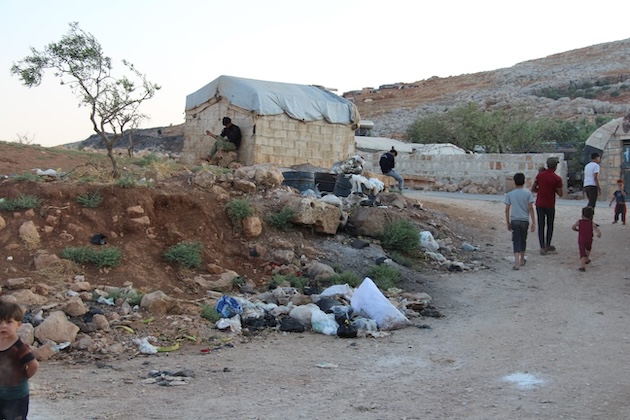 Displaced and traumatised by war, Syrians now face mental health crises. Credit: Sonia al-Ali/IPS
IDLIB, Syria, May 22 (IPS) - The protracted years of conflict in Syria have inflicted profound scars that transcend physical destruction, permeating the psychological well-being of millions.
There has been a marked surge in mental health disorders and suicide rates, positioning psychiatric care and psychosocial support services as some of the most critical and urgent healthcare requirements for the population.
According to UNICEF, approximately 7.5 million children in Syria require humanitarian assistance. Successive cycles of violence and displacement – compounded by a devastating economic collapse, severe deprivation, disease outbreaks, and catastrophic earthquakes – have left hundreds of thousands of children vulnerable to long-term physical and psychosocial repercussions.
Ten-year-old Walid* is haunted by recurring nightmares and intrusive thoughts after witnessing his father’s death in a landmine explosion while they were tending their farmland in northern Syria.
Speaking through tears, his mother recounts the tragedy. “We returned home following the liberation of the area from the Assad regime. My husband went to inspect our land and trees when a landmine detonated, killing him and injuring my son. Since that day, Walid has struggled with psychological trauma and what the doctor described as a state of clinical depression.”
Similarly, Salwa al-Abed, a 29-year-old woman from Damascus, endures a comparable struggle. Having spent approximately three years in the detention centres of the former Syrian regime – where she saw nothing but darkness and heard only the echoes of torture – she remains burdened by the psychological fallout of her incarceration.
Reflecting on the root of her suffering, she says, “The period of my detention was the most harrowing time of my life. We were subjected to relentless, merciless torture daily; we lost all sense of time, unable to distinguish day from night. Following my release, I spiralled into a state of severe clinical depression.”
Salwa withdrew into complete isolation, severing ties with her family, friends, and colleagues. She lived like a prisoner in a small room – absent-minded and despondent – until the day she found herself before a mental health professional.
Her family had introduced him under the guise of a close friend, convinced of his ability to extricate her from her condition. Salwa was initially unaware of the gravity of her psychological crisis; however, her recurring sessions with the specialist marked a pivotal turning point, signalling the beginning of a therapeutic journey to overcome profound psychological disorders.
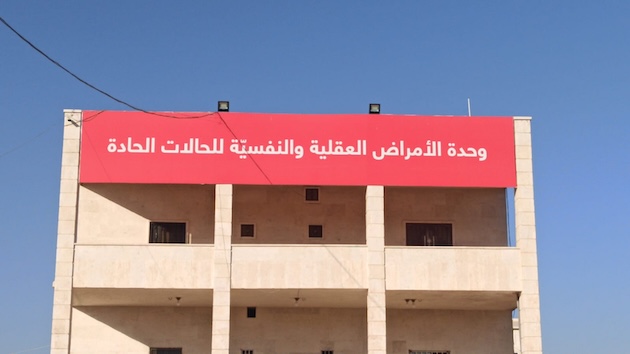 Mental health facilities and practitioners are few and far between. Credit: Sonia al-Ali/IPS
Social Stigma and Public Perception
Many psychiatric patients are paralysed by the fear of being labelled “insane” or “weak”, a direct result of the deep-seated social stigma surrounding mental illness within Syrian society.
Alaa al-Rashid, a 42-year-old specialist in psychological counselling, confirms that Syria has seen a significant spike in mental disorder rates across all demographics in recent years. Ongoing livelihood and economic crises, along with the cumulative repercussions of prolonged war, displacement, and systemic instability, fuel this surge.
Al-Rashid elaborates, “Those most vulnerable to psychological disorders include persons with disabilities, survivors of detention, and those who have lost immediate kin to the war.”
He further warns of the dangers of seeking improper treatment, noting that some patients turn to practitioners of the occult or resort to substance abuse—measures that exacerbate the illness and often lead to addiction.
“Specialised psychiatric treatment centres in Syria are critically scarce and insufficient,” al-Rashid adds. ” However, the primary challenge is not merely service provision but encouraging patients to seek help. Prevailing social norms view mental illness as a source of shame, driving many into silence. Consequently, we ensure that psychological sessions remain strictly confidential, focusing on rebuilding self-confidence and empowering individuals to confront the effects of trauma.”
Al-Rashid also notes that psychiatric patients often suffer from acute social isolation. As society retreats from and fears interacting with them, their sense of loneliness and despair intensifies. This alienation hinders the recovery process and negatively impacts their psychological and social stability.
He concludes by emphasising that mental illness is not a moral failing or a disgrace but a medical condition akin to any physical ailment. It is imperative to highlight mental health as a fundamental human right, no less vital than physical well-being.
Al-Rashid further notes that mental health awareness and education campaigns are essential to raising public consciousness and dismantling the myths associated with psychiatric conditions. These initiatives must focus on providing empirical information regarding the nature of psychological disorders, their treatability, and the vital importance of early intervention. Such campaigns, he suggests, should be integrated into schools, universities, and community centres.
The Search for Psychiatric Care: An Added Burden
The Syrian healthcare system suffers from an acute shortage of specialised psychiatric personnel, compounded by a limited number of facilities capable of providing adequate psychological support and clinical treatment. This deficit particularly affects rural areas and displacement camps, forcing many afflicted individuals to either abandon treatment entirely or seek non-medical alternatives.
Ghosoun Hegazi, Head of the Mental Health Division at the Directorate of Health, says that, “Traumatic factors have compounded over years of conflict and existential stressors. Consequently, the provision of mental health services has become an indispensable pillar of primary healthcare, rather than a secondary or elective service.”
Regarding the number of psychiatric professionals in northern Syria, he notes, “There are currently only two specialised psychiatrists in the Idlib Governorate, supplemented by eight residents specialising in psychiatry. This figure is entirely disproportionate to the population size and the escalating humanitarian needs,” Hegazi says.
To put these numbers in perspective, the global average stands at approximately 13 psychiatrists per 100,000 people. In low-income countries, this ratio plummets to fewer than 0.1 per 100,000, starkly illustrating the chasm in specialised human resources in the region.
As for inpatient hospitalisation, Hegazi noted the existence of a Mental Health Unit in Sarmada, north of Idlib. The facility contains a mere 15 beds for inpatient care, allocated as 10 for men and five for women. This capacity remains drastically insufficient for the volume of cases that require admission and specialised clinical management. In addition to this unit, there are a few scattered centres providing basic psychosocial support services.
According to Hegazi, the most prevalent mental health conditions in Syria include depression, anxiety disorders, and Post-Traumatic Stress Disorder (PTSD), alongside sleep disorders and chronic stress. Children and adolescents are among the demographics most susceptible to these conditions due to early trauma exposure and the erosion of fundamental security. Furthermore, women are disproportionately affected by intersecting socio-economic pressures and the loss of primary breadwinners, while working-age youth face significant psychological strain driven by systemic unemployment and instability.
A 2025 UNICEF report corroborates the severity of this crisis, noting that one in five individuals who have lived through war or conflict within the past decade suffers from depression, anxiety, bipolar disorder, or schizophrenia.
The lack of facilities and the fear of seeking help are likely to impact Syria’s ability to reach the goals of SDG 3.4 which targets non-communicable diseases and mental health and aims to reduce premature mortality from non-communicable diseases, including death by suicide, by one-third through prevention and treatment and the promotion of mental health and well-being.
Escalating Suicide Rates in Syria
The deteriorating state of psychiatric patients, compounded by multifaceted economic and social stressors, has intensified risk factors associated with suicidal behaviour. This is further exacerbated by the lack of access to mental health services, sparking profound concerns regarding a potential surge in cases if early intervention and psychosocial support frameworks are not significantly fortified.
A 23-year-old* from Aleppo survived a suicide attempt following a war-related spinal injury that left him paralysed and unable to pursue his education or employment. Consequently, he succumbed to severe psychological trauma.
His mother describes their harrowing reality. “My son suffers from hallucinations and auditory disturbances, yet he adamantly refuses treatment. We endure this gruelling situation without the ability to convince him otherwise; he insists he is perfectly healthy and rejects all assistance. His condition deteriorates with every passing day.”
She further noted that Hassan attempted to end his life by ingesting a lethal quantity of medication, surviving only after emergency hospitalisation. She emphasised that her son is socially withdrawn, suffers from near-daily episodes of vocal outbursts, and has become heavily dependent on sedatives and narcotics.
According to data from the “Syria Response Coordinators”, there has been a marked increase in suicide rates throughout 2024. Across Syria,104 completed suicides and 87 attempted suicides were documented. Specifically, in northwestern Syria, the team recorded 37 deaths by suicide and 21 attempts since the beginning of 2024 — a 14% increase compared to the same period in the previous year.
Mental illness continues to ravage Syrian society in silence, fuelled by delayed clinical intervention and persistent social stigma. The war that fragmented the nation has not only decimated physical infrastructure and bodies but has also permeated the collective psyche, leaving behind a generation burdened by profound internal scars that remain exceedingly difficult to heal.
*Names have been removed to protect identities.
Note: This article is brought to you by IPS Noram in collaboration with INPS Japan and Soka Gakkai International in consultative status with ECOSOC.
IPS UN Bureau Report
© Inter Press Service (20260522142912) — All Rights Reserved. Original source: Inter Press Service


