2 months ago
65
2 months ago
65

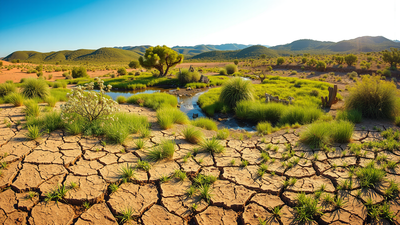
Saudi Arabia has restored one million hectares of degraded land and planted more than 159 million trees, marking one of the biggest milestones under the Saudi Green Initiative since it began in 2021.
The programme, which now aims to rehabilitate 40 million hectares and plant 10 billion trees across the kingdom, has grown restored land to a million hectares in under five years. Officials from the United Nations Convention to Combat Desertification have called the achievement proof that large-scale land restoration is possible even in some of the driest parts of the world, positioning Saudi Arabia as a working example for other water-scarce nations facing worsening drought and desertification.
How the Saudi Green Initiative reached one million hectares
The Saudi Green Initiative was launched in 2021 as part of the kingdom's broader Vision 2030 plan, with a long-term goal of rehabilitating 40 million hectares of degraded land and planting 10 billion trees. According to the Saudi Green Initiative, growing 10 billion trees is treated as equivalent to restoring more than 74 million hectares of land over the coming decades, since the plan combines afforestation with wider ecological rehabilitation across arid zones.
The progress has been steady rather than sudden. The programme restored and expanded to 250,000 hectares by 2024, then crossed the one million hectare mark in early 2026. Officials have already set the next target at 2.5 million hectares of restored land by 2030, supported by projects that make use of dam water and rainfall harvesting to keep newly planted areas alive through the dry season.
Why the million hectare milestone matters globally
UNCCD described the achievement as evidence that large-scale land restoration is achievable even in water-scarce environments, at a time when droughts are intensifying, and land degradation is affecting close to half the global population.
The organisation's executive secretary said the milestone sends a clear signal that with the right policies, science and long-term commitment, countries can turn environmental pressure into an opportunity for resilience rather than a permanent setback.The timing is significant too. Saudi Arabia is preparing to take part in the seventeenth session of the Conference of the Parties to the UNCCD, due to be held in Mongolia in August 2026, and the restoration milestone gives the kingdom a concrete example to point to as global negotiators discuss how to speed up land recovery and drought resilience worldwide.
Tree planting and afforestation targets across the kingdom
Tree planting has been central to the Saudi Green Initiative from the start, and the numbers involved are large by any measure. As detailed by Saudi & Middle East Green Initiatives, individual projects range from planting millions of trees along highway networks to restoring rangelands across dozens of sites, with some efforts irrigated using treated wastewater rather than fresh water supplies. Several urban greening projects have also been rolled out in cities including Riyadh, where new parks and green spaces are being created alongside large scale tree planting drives.These smaller, localised initiatives feed into the national total. Officials have said the coordinated approach across government departments, private companies and non profit groups has been key to reaching the one million hectare mark faster than earlier projections suggested, since resources and expertise are being pooled rather than duplicated across separate projects.
What the Saudi Green Initiative aims to achieve by 2030
Beyond land restoration and tree planting, the Saudi Green Initiative sits within a wider set of environmental goals for the kingdom.
Saudi & Middle East Green Initiatives notes that the plan also includes generating half of Saudi Arabia's electricity from renewable sources by 2030 and protecting a larger share of the country's terrestrial and marine areas. The land restoration work is meant to run alongside these energy and conservation targets rather than as a standalone project.For a country long associated with oil production, the Saudi Green Initiative has been framed by officials as evidence that environmental restoration and economic development do not have to work against each other. Whether the kingdom can maintain this pace through to its 2030 and later targets remains to be seen, but the jump from 250,000 hectares in 2024 to one million hectares in 2026 suggests the programme has picked up real momentum.
With 2.5 million hectares set as the next milestone, the coming years will show whether Saudi Arabia can keep scaling up land restoration at a rate that matches its stated ambitions.