2 months ago
31
2 months ago
31


 BBC
BBC
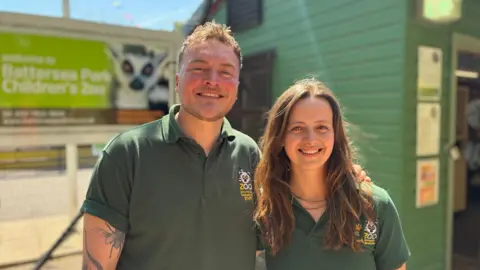
Battersea Park Children's Zoo manager and head keeper are 'cheerleaders' for endangered native species
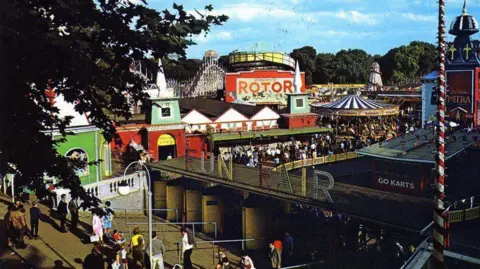
The first animals at Battersea Park Children's Zoo lived in a fun fair.
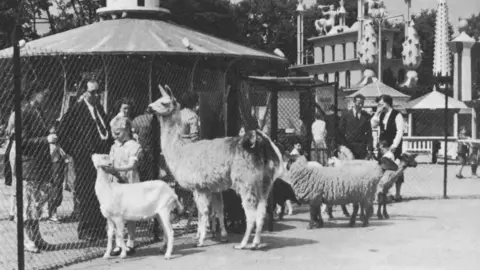
If 1950s families were dizzy from the helterskelter and gallopers, they could unwind with the sheep, rabbits, coatimundi (a raccoon-like mammal) and llama.
The zoo was part of Battersea Park's transformation into a pleasure gardens for the Festival of Britain, a post-war celebration of arts, science and technology.
Much has changed in the 75 years since and now the tiny zoo is a powerhouse in animal conservation, welcoming rare kittens, kids and piglets.
 Battersea Park Children's Zoo
Less animal conservation, more funfair in 1951 - but Battersea Park Children's Zoo still uses the same entrance
 Battersea Park Children's Zoo
Londoners met the llama when Battersea Park Children's Zoo opened in 1951
Today's visitors to Battersea Park Children's Zoo use the same entrance as they did in 1951, only without the bright lights and go karts.
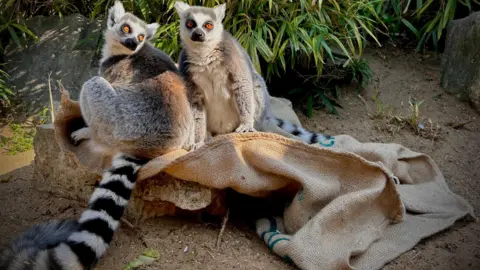
A troop of ring-tailed lemurs greets them on the other side.
You might get a "hello" (or lorry reversing sound) from Barry, the African grey parrot.
Off to the right is a mob of meerkats and on the other side, some black and white goats that are rarer than giant pandas.
"A big part of what we do is talking about farm animals and domestic breeds, which for a lot of young children is their first experience of animals," said zoo manager Jamie Baker.
 Battersea Park Children's Zoo
The resident ring-tailed lemurs are supported through the European breeding programme
The zoo has teamed up with the Ealing Wildlife Group and helped to release 3,000 harvest mice back into the wild in west London, as featured on the David Attenborough programme Wild London.
Rodents and goats may not be so exciting as tigers and pandas - but this zoo wants to raise their profile.
Baker said: "They often get missed by the general public but they're struggling for all the same reasons - habitat loss, the unsustainable way that humans live and our impacts on their environment.
"It's been really important for us to promote those animals to the public and be their cheerleaders."
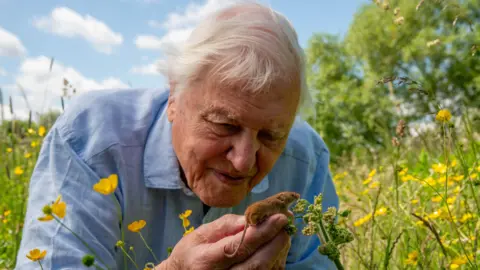 BBC/Passion Planet
The zoo collaborated with Ealing Wildlife Group to release harvest mice, as featured on the David Attenborough programme, Wild London
The focus on native rare breeds came from the Heap family, which runs the New Forest Wildlife Park.
They stepped in when changes to animal welfare legislation and budget cuts at Wandsworth Council threatened to close the zoo in 2003.
Thousands of people signed a petition to save it.
It reopened in 2005 with new animals and updated enclosures.
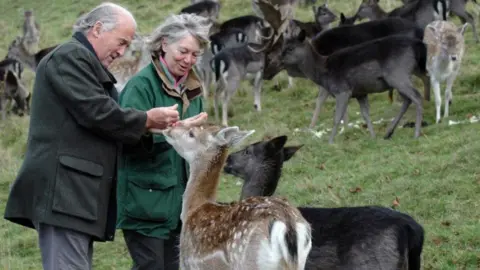 Battersea Park Children's Zoo
Roger and Carol Heap rescued the zoo in 2004 and their son, Ed, is the general manager
Head zoo keeper Lizzy Humphries is in charge of caring for the 100 animals at the zoo, and gives me a tour of their conservation successes.
We can just make out stripy ears in the dappled shade inside the Scottish wildcat enclosure.
This is the UK's last remaining wild feline and only found in the Cairngorm mountains - sometimes called the Scottish tiger.
The zoo's female cat, Skye, has just had a litter of kittens.
"The breeding programmes from UK zoos became absolutely vital to their success.
"They're critically endangered and a few years ago there were only 50 left in the wild," said Humphries.
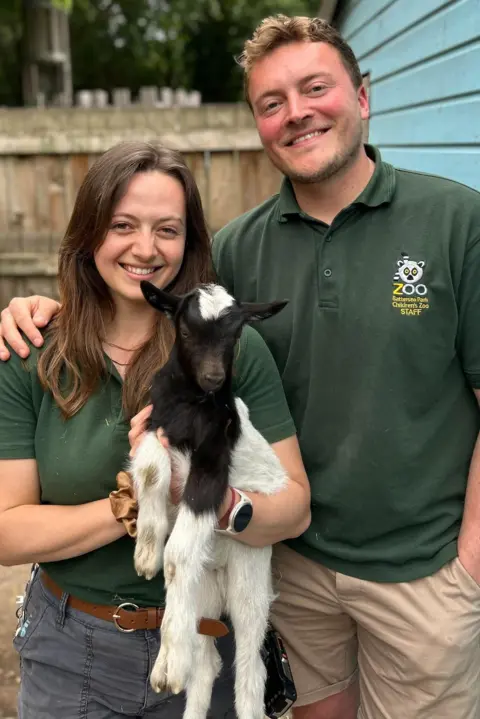 Battersea Park Children's Zoo
A new arrival at the zoo - a bagot billygoat born in May, who will father the next generation of this rare breed, when he grows up
Humphries snaps off some branches from the shrubbery to tempt the flighty herd of bagot goats over to us in their enclosure.
Five kids were born this spring and one of them is so perfectly formed, he was signed up on sight as a registered breeding billy goat.
He will sire the next generation of this native breed - serious kudos for Lizzy's small team.
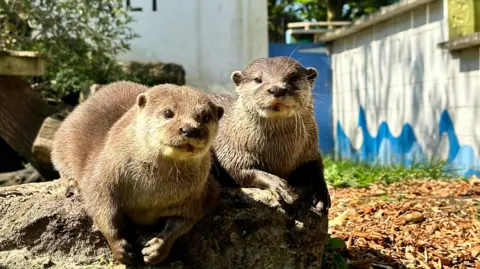 Battersea Park Children's Zoo
Otters might look cute but their bite is stronger than a lion's
Modern-day conservation comes in unexpected forms. Humphries leads me to the otter pond where another keeper, is throwing crustaceans into the water for Daisy and Daley.
As they crunch through crab shells, Humphries points out that an otter's bite, pound for pound in body mass, is significantly stronger than a that of a lion.
"The leading cause of decline in the Asian short clawed otter is the exotic pet trade," Humphries said, and added that behaviour on social media perpetuates the poaching of them.
A seemingly innocent like or share of otters "wearing hats, wearing clothes, wrapped in blankets, holding hands with humans, being stroked" encourages poachers to trap wild animals for the illegal pet trade.
One of their summer campaigns is called ShareSavvy, which encourages us to think critically about the images of animals we see online.
 Battersea Park Children's Zoo
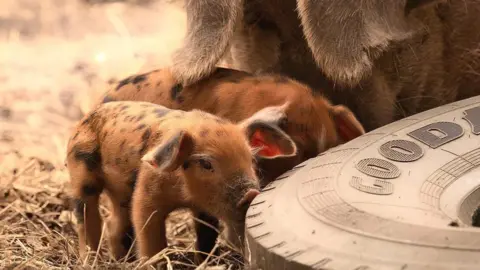
The are fewer than 350 Oxford sandy and black pigs in the world
Into their 75th year, the "hidden gem" of a zoo is promoting animal protection from its tiny two-acre site by the River Thames.
As Baker said: "It's a very different place to when we first opened, but one that we can proudly say is really involved in education and conservation of animals in the UK and overseas - and part of a community that is not just around the Battersea area, but also London and further away."