49 minutes ago
3
49 minutes ago
3

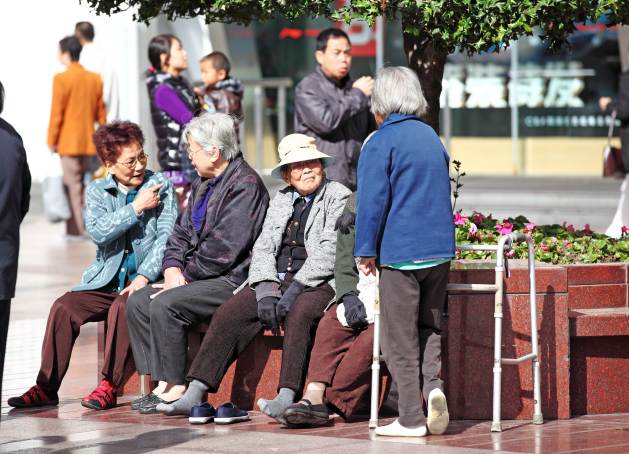 Despite the overall trend toward older populations, substantial differences in age structures exist among countries. Credit: Shutterstock.
PORTLAND, USA, September 1 (IPS) - The age structures of populations vary considerably across countries. Some countries have relatively young populations, with large proportions consisting of children and adolescents. Other countries have much older age structures, with a substantial proportion of people aged 65 years or older.
The world’s current population of approximately 8.3 billion has a median age of about 31 years. This is substantially higher than during much of the 20th century, when the global median age was generally below 25 years. The world’s median age was 22 years in 1950, declined to 20 years in 1970, and then increased to nearly 25 years by 1999.
Population ageing is expected to continue worldwide in the coming decades, The median age of the world’s population, currently about 31 years, is projected to increase to approximately 36 years by 2050.
Despite the overall trend toward older populations, substantial differences in age structures exist among countries.
In 2026, approximately 50 countries and territories have populations with median ages of 21 years or younger, reflecting highly youthful age structures. At the other end of the age spectrum, a similar number of countries and territories have median ages of 42 years or older, indicating comparatively old populations.
These wide differences in median age illustrate the striking demographic diversity among countries and the contrasting social and economic challenges associated with youthful and older populations.
Most countries with highly youthful populations are located in Africa. For example, the Central African Republic, Chad, the Democratic Republic of the Congo, Mali, Niger, and Somalia have median ages of 16 years or younger.
In contrast, countries with comparatively older populations are concentrated primarily in Europe and East Asia. France, Germany, Italy, Japan, the Republic of Korea, Spain, and Switzerland, for example, have median ages of 42 years or older. The highest median ages – about 50 years – are found in Italy and Japan (Table 1).
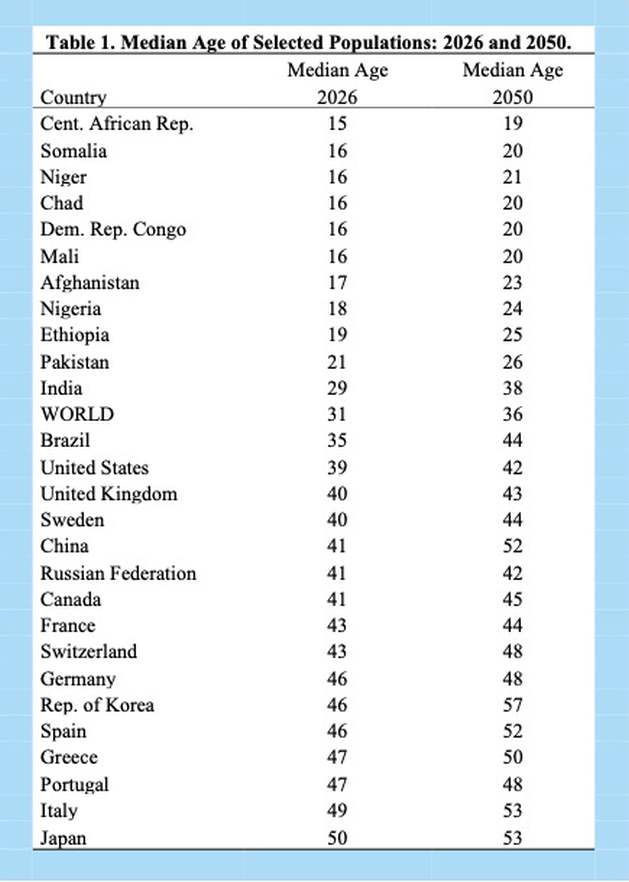 Source: United Nations.
In addition, the median age is expected to rise in virtually all countries, in both more developed and less developed regions. By 2050, for example, the median ages of several countries – including China, Italy, Japan, the Republic of Korea, and Spain – are projected to reach 50 years or more.
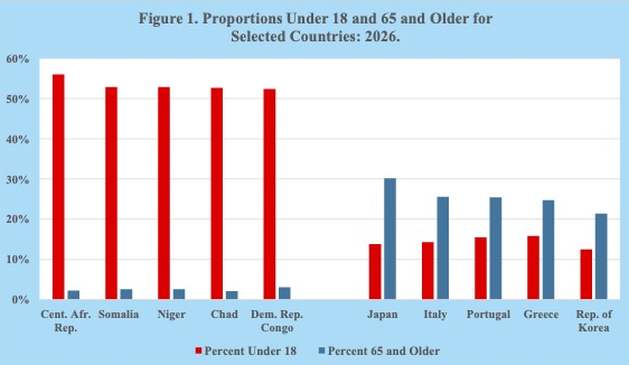
The substantial variations in age structures of national populations are also evident in the proportions of people under age 18 and those aged 65 and older.
Once again, countries in which approximately half or more of their population is below age 18, while only a few percent are aged 65 years and older, are concentrated primarily in Africa.
In 2026, for example, 56% of the population in the Central African Republic is under age 18, while the corresponding proportions are approximately 53% in Chad, the Democratic Republic of the Congo, Niger, and Somalia. In each of these countries, only about 3% of the population is age 65 years and older.
In contrast, many developed countries – including Greece, Italy, Japan, Portugal, and the Republic of Korea – have much older population age structures. In some of these countries, such as Italy and Japan, approximately 14% of the population is under age 18, while nearly twice that proportion – between 25% and 30% – is aged 65 years and older (Figure 1).
 Source: United Nations.
The ongoing changes in countries’ population age structures will have far-reaching implications, particularly for population growth, labor markets, employment, education, healthcare systems, retirement programs, and long-term care.
Many developing countries have relatively young populations and, because of their age structures and population momentum, generally experience relatively high rates of population growth. In contrast, countries with comparatively older populations tend to have slower rates of population growth, with many developed countries already experiencing population decline.
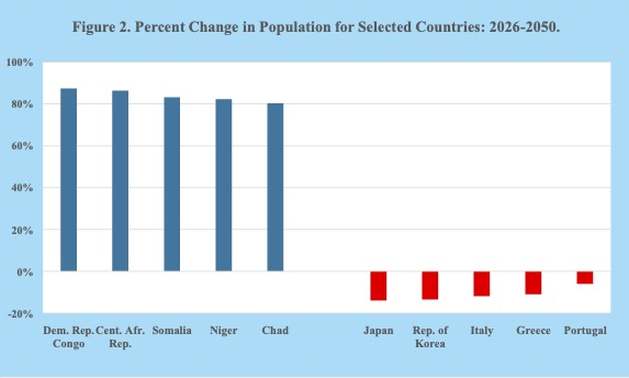
By midcentury, several African countries with particularly young age structures are expected to experience particularly rapid population growth. For example, the populations of Chad, the Central African Republic, the Democratic Republic of the Congo, Niger, and Somalia are projected to increase by more than 80%.
Such rapid population growth can pose major challenges to social and economic development, particularly in providing adequate education, employment, housing, healthcare, and other essential services. Governments will need to expand infrastructure and public services rapidly simply to keep pace with the growing number of people.
Countries with young and rapidly growing populations may also face greater difficulties in reducing hunger and inequality, advancing women’s rights, expanding access to healthcare, creating decent employment opportunities, preventing social unrest, and addressing internal conflicts.
These demographic pressures underscore the importance of government policies that strengthen human capital, create productive employment, expand social services, and improve infrastructure. Such measures will be essential for ensuring that rapidly growing populations can achieve sustainable improvements in their living standards.
The slow pace of socio-economic development, high rates of unemployment, and limited educational and employment opportunities for many young people are contributing to social unrest, discontent, and political upheaval.
As a result, increasing numbers of young men and women seek to emigrate to developed countries in search of employment, greater security, and better prospects for themselves and their families. While many use regular migration channels, others increasingly resort to irregular migration, including unauthorized entry, overstaying visas, or seeking asylum and refugee protection.
In several African countries, including the Democratic Republic of the Congo, Sierra Leone and Liberia, half or more of the population reportedly would like to emigrate to another country, typically in Europe and North America. These migration aspirations reflect not only economic motivations but also broader concerns about employment opportunities, personal security, governance, and prospects for the future.
Nigeria, Africa’s most populous nation, provides a particularly striking example. Approximately half of its population reportedly would like to leave the country and resettle abroad, preferably in an English-speaking country. Economic hardship, unemployment, limited opportunities, and insecurity have contributed to this strong desire to emigrate. Many Nigerians have already moved abroad through regular migration channels, while others have undertaken irregular journeys or sought asylum and refugee protection.
The persistence of such strong migration aspirations in many less developed countries highlights the close relationship between demographic pressures, socioeconomic conditions, and international migration. Where large youthful populations confront limited employment, educational, and economic opportunities, migration can become an increasingly attractive option for seeking a better future.
Unauthorized migration has consequently become a major political issue in many destination countries. Governments in numerous migrant-receiving countries have introduced or strengthened measures to deter unauthorized migration, including increased border enforcement, arrest and detention of unauthorized migrants, deportation, and the return of people who have entered without authorization or overstayed their visas.
At the same time, the demographic circumstances of migrant-sending and migrant-receiving countries differ considerably. Many less developed countries have relatively young populations and high rates of demographic growth, whereas many developed countries have substantially older age structures and are expected to experience population decline over the coming decades. By 2050, for example, the populations of countries such as Italy, Japan, and the Republic of Korea, are projected to decline by approximately 13% (Figure 2).
 Source: United Nations.
These contrasting demographic trends are likely to increase the economic and political importance of international migration. As many developed countries with ageing and declining populations face growing labor shortages, countries with youthful populations continue to have large numbers of young people entering the labor market, often in excess of available employment opportunities.
The consequences of population ageing are becoming increasingly significant for a growing number more developed countries and are also emerging as an important concern for some less developed countries as well. These demographic changes are prompting governments to reconsider existing economic and social policies, programs, and benefits in order to adapt to population realities.
Population ageing, combined with increasing longevity, is reducing the number of workers available to support each retiree while increasing the fiscal burden on the working-age populations that finances pensions, healthcare, and other age-related government programs.
Longer lifespans also mean that many older men and women may outlive their personal savings or retirement benefits. As longevity continues to increase, pension systems are paying benefits for substantially longer periods than anticipated when many of these systems were established during the 20thcentury.
Consequently, governments are facing growing pressure to reform retirement systems, healthcare services, and long-term care programs to ensure their financial sustainability while maintaining adequate support for ageing populations.
In addition to placing greater strains on government finances, the rising costs of medical treatment and care for growing numbers of older persons are placing increasing pressures on family budgets, capacities, and expectations.
Financing and providing long-term care for older persons is a major challenge for societies and families. In many countries, public provision for long-term care remains inadequate or largely unavailable to significant proportions of the population. At the same time, the growing number of older men and women is placing increasing stress on traditional safety nets, including families, friends, and local communities.
Powerful and largely irreversible demographic trends are driving population ageing, with growing numbers and proportions of people – especially women, who typically live longer than men – spending more years in old age. These trends will have profound implications for the organization and financing of societies.
The contrasting age structures of populations in developing and developed countries require significant social and economic adjustments. Countries with youthful populations need to expand education, employment, healthcare, and other services to meet the needs of growing numbers of young people. In contrast, countries with substantially older populations must prepare for rising demands on pension systems, healthcare, and long-term care.
In light of these demographic realities, governments need to revamp policies and programs affecting their populations. Unfortunately, many governments appear to be postponing these necessary adjustments. The longer governments delay adapting policies and programs to changing demographic conditions, the more difficult and costly the consequences are likely to become for their populations.
Joseph Chamie is a consulting demographer, a former director of the United Nations Population Division, and author of many publications on population issues.
© Inter Press Service (20260901132125) — All Rights Reserved. Original source: Inter Press Service