52 minutes ago
5
52 minutes ago
5

 Image source, PSNI
Jonathan Creswell took his own life in 2024 while on trial for the rape and murder of 21-year-old Katie Simpson
ByHayley Halpin
BBC News NI
A Police Service of Northern Ireland (PSNI) investigation into an allegation of indecent exposure made against Jonathan Creswell in 2016 was inadequate and failed the victim, the Police Ombudsman has found.
Creswell took his own life in 2024 while on trial for the murder of 21-year-old Katie Simpson in 2020, which he had denied.
The Police Ombudsman said it subsequently received a complaint from a woman raising concerns about how police dealt with a report she made that Creswell exposed himself to her.
In a statement, the PSNI said "the actions of the officers involved did not meet the expectations of the PSNI or the victim".
Creswell was a showjumping trainer and the partner of Katie's sister.
The indecent exposure complaint, made in January 2016, said the incident happened at a horse yard in October 2015.
Police Ombudsman director of investigations, Nikki Davis, said "police failed the complainant, both as a woman and as a victim".
"Indecent exposure is a serious crime and can indicate a potential for escalating sexual offending, so it is important that reports are robustly investigated," Davis said.
She said that "unless reports of sexual offences are properly investigated, victims will be less likely to come forward, offenders will remain free to reoffend, and efforts to combat violence and sexual offending against women and girls will be undermined".
What did the Police Ombudsman find?
The Police Ombudsman said shortcomings in the police investigation included that the officer initially assigned to the case recorded only one witness statement during the four months she was in charge.
No statements were obtained from three other witnesses, including a potential eyewitness.
A second officer subsequently allocated to the case did not get any further statements, and neither officer listened to a recording of an allegedly threatening voice message sent by Creswell, the Ombudsman said.
It added that the file submitted to the Public Prosecution Service for Northern Ireland (PPS) by the second investigating officer was also inaccurate.
The file stated Creswell was known to police only for motoring offences, whereas he had previously been jailed for violent offending against a woman.
It also incorrectly stated that there was no outstanding evidence and no other witnesses in the case.
The PPS then directed there was insufficient evidence to prosecute but advised if Creswell was interviewed about the allegation in future, the file could be resubmitted for further consideration, according to the Ombudsman.
 Image source, PA Media
The Police Ombudsman's director of investigations said "police failed the complainant"
The Police Ombudsman said when interviewed by its investigators, the police officer initially assigned to the case said she would have obtained the outstanding witness statements if she had kept ownership of the investigation.
The second officer, who was allocated the case five months after the initial allegation, said he had not been instructed to get any further evidence and believed his role to have been in a monitoring capacity, according to the Ombudsman.
The officer said he had not considered Creswell's previous violent offending to be relevant to the case.
"Indecent exposure is a non-contact sexual offence and a form of sexual violence, so the prior conviction was entirely relevant and should have been disclosed to the PPS," Davis said.
"It is widely acknowledged that police should be looking at behavioural patterns across incidents and seeking to identify where repeat offending might indicate escalating risk. That clearly did not happen in this case."
What else did the Police Ombudsman find?
The Police Ombudsman also found the officers had made inadequate enquiries to locate and interview Creswell.
It said although police had received information that he might be living in County Donegal and travelling regularly to Northern Ireland, the officers did not contact An Garda Síochána (Irish police) to check whether they might be able to assist in finding him.
They also failed to provide adequate updates to the complainant about progress on the case, the Ombudsman said.
The officers had, however, attempted to contact Creswell by phone, visited an address associated with him, made enquiries relating to his equestrian background and placed alerts on police systems about two vehicles linked to him, according to Davis.
What has the Police Ombudsman recommended?
The Police Ombudsman submitted a misconduct file to the PSNI, recommending the two officers should be disciplined for failing to properly investigate the case and not providing adequate updates to the complainant.
The Ombudsman said after considering the file, the PSNI determined the issues identified would be better addressed by taking measures intended to improve the officers' conduct.
Police Ombudsman investigators were unable to complete their enquiries into a separate allegation involving a different police officer who retired during the course of the investigation.
The complainant believed the officer was trying to stop her from talking to the media, the Ombudsman said.
Before retiring the officer provided a statement that he had called her to advise of the intended police response to a media query, and about how information about the case could be reported and used.
Although the complaint to the Ombudsman's Office was initially closed, a fresh investigation was started after further correspondence from the complainant.
The PSNI said it noted Wednesday's announcement from the Ombudsman.
"In this case, the actions of the officers involved, did not meet the expectations of the PSNI or the victim," a spokesperson said.
"We are committed to providing a victim-centred approach, and to learn from cases where our investigative processes have fallen short.
"We will continue to co-operate fully with PONI [the Police Ombudsman] in relation to any complaint."
What happened to Katie Simpson?
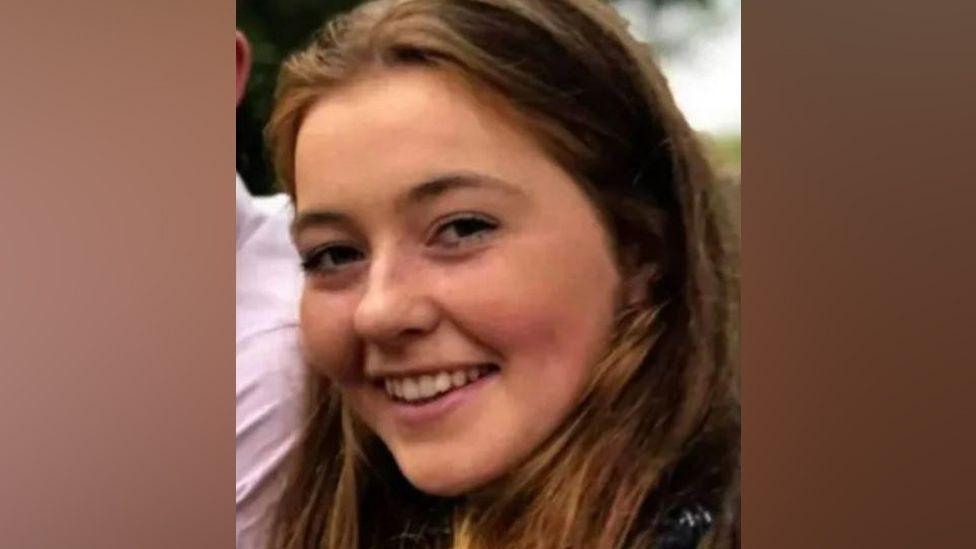 Image source, Family handout
Katie Simpson died in August 2020
Katie died six days after being admitted to hospital in Londonderry in 2020. Her death was initially treated as suicide.
Creswell was later charged with her murder. He took his own life one day after the trial began in April 2024.
A review, published in May 2026, into how Katie's death was handled found "institutional misogyny" and "systemic failures" within the PSNI.
The Katie Simpson review, commissioned by the Department of Justice, found "not one officer thought seriously about abuse/control" in the initial police investigation.
The PSNI said it acknowledged the review and apologised to Katie's family.