42 minutes ago
1
42 minutes ago
1

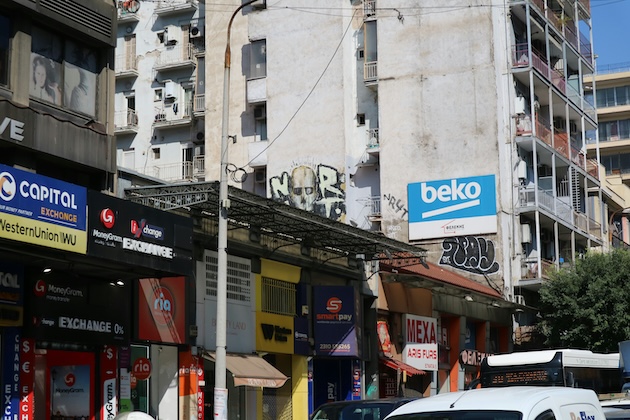 A new report, Sending Money Home, released this week, asserts that remittances have become the world's largest and most resilient source of household finance. Credit: Jeong Yunji/Unsplash
BULAWAYO, Zimbabwe, September 18 (IPS) - Migrants now send home more money than foreign aid, and this is pulling rural families out of poverty, according to the International Fund for Agricultural Development (IFAD).
A new report, Sending Money Home, released this week, asserts that remittances have become the world’s largest and most resilient source of household finance during overlapping economic, environmental and geopolitical shocks.
“Those who receive remittances become more resilient in the end, but what we have seen and is most staggering is that remittances continue to dwarf any flow back to low- and middle-income countries,” said Pedro de Vasconcelos, manager of the IFAD Financing Facility for Remittances (FFR) and lead author of the report.
“What we have seen is that both Official Development Assistance (ODA) and Foreign Direct Investment (FDI) combined add to a figure less than what migrants do in sending small amounts on a regular basis back home,” De Vasconcelos said in response to a question from IPS.
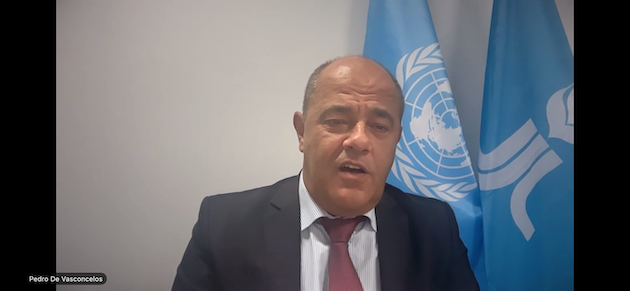 Pedro de Vasconcelos, manager of the IFAD Financing Facility for Remittances (FFR) and lead author of the report, Sending Money Home. Credit: Busani Bafana/IPS
“What is striking, and more importantly, any crisis that is thrown at it, migrants are the first responders because we are talking about their families; they are the first ones to support in addressing hardships and realities of the family back home.”
De Vasconcelos noted that remittances were a tremendous contribution hidden in plain sight at global proportions because families in low- and middle-income countries will receive approximately US$3.6 trillion between 2026 and 2030.
According to the OECD, overseas development aid from the world’s richest nations to poorer countries fell by 23.1% in 2025 to $174.3 billion, while the World Bank indicates that FDI flows to developing economies reached approximately $877 billion to $901 billion in 2025, and net inflows of about $379 billion specifically for low- and middle-income countries were recorded.
According to the report, remittances into the low- and middle-income countries have since 2016 increased by 94%, outpacing both population growth and emigration, as an estimated 220 million migrants and diaspora members support 1.1 billion relatives, meaning roughly one in six people worldwide are connected through remittances.
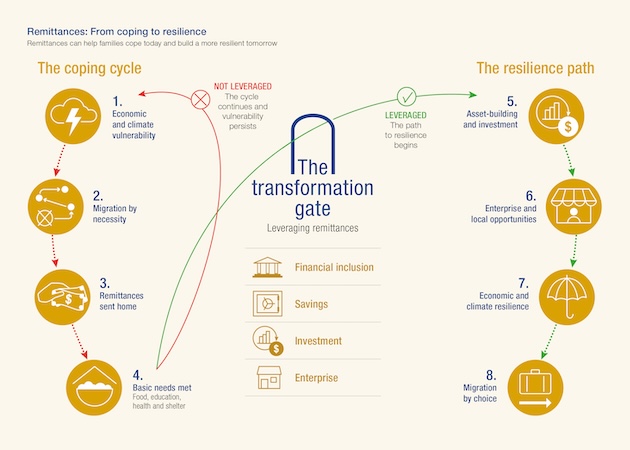 Remittances: From coping to resilience. Credit: IFAD
Bigger and Growing
The report shows that remittance inflows rose from US$375.6 billion in 2016 to US$728.6 billion in 2025, with five countries receiving nearly half of all remittances. India received the most at US$150.7 billion, followed by Mexico with US$64.4 billion, the Philippines with US$41.6 billion, Egypt with US$41.5 billion and Pakistan with US$40.5 billion.
Nigel Brett, Director, Sustainable Production, Markets and Institutions Division (PMI) at IFAD, highlighted that ten years ago the average remittance amount was $200 sent on a regular basis. That figure has increased not only in frequency but also in amounts to between $400 and $450 on the global average.
“Migrants are much more aware of the daily lives of their families, and remittances remain a lifeline,” he said, observing that fees for sending money on average were still high at 6.4%, which was far from the SDG target of 3%.
“While digitalisation has made a big impact, more has to be done to reduce the cost of remittance fees,” Brett said, noting that the high fees have been influenced by other factors such as the lack of greater competition, technology, foreign exchange margins and infrastructure around payments.
Securing Food, Health Care and Coping with Climate Change
Studies by IFAD have shown that about $22 billion has been invested in agrifood systems in rural areas, suggesting that when offered the opportunity, remittance families will invest in livelihoods, said Brett.
“What is needed is more data, making it crucial for governments to better understand the realities of remittance recipients to understand the impact in rural areas,” Brett said.
Noting that remittances strengthen households’ capacity to absorb shocks by helping them to cope and recover, emerging research shows that remittances can finance short-term adaptation measures and contribute to longer-term resilience, particularly when combined with access to financial services, markets and infrastructure, as well as supportive public policies, the IFAD report said.
For example, in Senegal, 73 per cent of remittance-receiving households adopted an agricultural risk-management strategy, compared with 22 per cent of households without remittances. Recipients were also nearly twice as likely to save, strengthening their ability to manage losses without resorting to more damaging coping strategies.
In Bangladesh, Burkina Faso, Ethiopia and Ghana, remittances have helped households prepare for and withstand climate shocks. In the Western Sahel and northern Kenya, they have supported investment in drought-resistant seeds, small-scale irrigation and, in Burkina Faso, wider adoption of soil and water conservation techniques.
IFAD is an international financial institution exclusively focused on transforming rural economies and the lives of rural people.
President of IFAD, Alvaro Lario, in a statement said as remittances help families meet their basic needs, they are also building financial growth and resilience to shocks. He noted that the potential benefits of remittances are “greatest when families have access to affordable and trusted financial services, together with the knowledge, freedom and appropriate options to use their resources according to their own needs and aspirations”.
Recommendations to Reduce Costs and Expand Financial Access
The report recommended that government and development sectors should create conditions for remittances and diaspora investment to advance sustainable development.
“The question on the importance of remittances in comparison with ODA is that in terms of volume, the answer is yes, remittances are four times larger than ODA, but they are no substitutes, as they serve an entirely different purpose,” he said. “Remittances are private money sent by migrants to support families, and ODA is public money financing public goods such as roads and markets that families cannot finance on their own. We need both, and while very different, they can reinforce and complement each other.”
Furthermore, the report recommends the building of enabling and inclusive markets, modernisation of proportionate regulation and strengthening of connectivity, agent networks and cash-out liquidity so that digitalisation does not exclude families who still depend on cash.
While the private sector was urged to deliver affordable, inclusive and resilient services for migrants, families and diaspora investors, it was also called upon to ensure that these services are affordable, transparent and trusted. In addition, the private sector should also partner with governments, development organisations and civil society to provide accessible financial and digital education for migrants and remittance recipients while offering insurance, savings, credit, and investment mechanisms tailored to rural remittance-recipient households and their enterprises, helping them prepare for, respond to, and recover from climate-related shocks.
Key findings:
- Asia and the Pacific remains the centre of the global remittance economy, receiving US$384.9 billion, or 53 per cent of the total covered by the 10-year report.
- Latin America and the Caribbean recorded the fastest growth; remittances to the region increased by 132 per cent over the decade, reaching US$168.6 billion.
- Remittance inflows to Africa rose by 86 per cent, to US$124.2 billion.
- In 23 countries, remittances represent more than 10 per cent of gross domestic product. In nine countries, remittance inflows exceed the total value of exports of goods and services.
IPS UN Bureau Report



© Inter Press Service (20260918081147) — All Rights Reserved. Original source: Inter Press Service