1 hour ago
3
1 hour ago
3

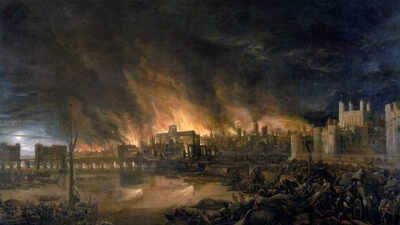
The Great Fire of London in 1666 left thousands homeless.(Photo: @MrJamesCosgrove)
On this day in 1666, the Great Fire of London began on Pudding Lane. It destroyed around 13,200 houses and left about 100,000 people homeless.The sudden loss of so many homes created a severe shortage across the city and pushed up rents in areas that escaped the fire.
Displaced families moved into temporary settlements, crowded into surviving neighbourhoods or left London.
100,000 homeless as makeshift settlements spread
The fire destroyed four-fifths of the City of London and 436 acres of built-up land. Around 100,000 people were left without homes.Thousands moved into fields outside the devastated City, where they lived in tents, huts and other temporary shelters. According to the London Museum, the City also rented out fields so displaced residents could build temporary homes.Moorfields was among the areas where temporary settlements developed. The settlements persisted for years before authorities ordered temporary structures in such areas to be removed.
Surviving homes became suddenly more expensive
The destruction sharply reduced the supply of available homes. Demand increased in neighbourhoods that had escaped the fire, sending rents higher.Diarist Samuel Pepys recorded on September 7 that £150 was being offered for a property that had earlier rented for £40 a year.
Ten days later, Thomas Bromfield wrote that houses were "ten times dearer" than before the disaster.The shortage also changed where Londoners lived. Wealthier residents moved into areas including Houndsditch and Shoreditch, while others accepted smaller and more crowded accommodation.Contemporary writer Samuel Rolle described residents struggling to find enough space to live and work. Some residents also left London after Charles II encouraged other towns to accommodate those who had lost their homes.
Fire Court decided who paid to rebuild
Rental contracts created another hurdle for reconstruction. Most house rental contracts made tenants responsible for repairs and rebuilding.Some tenants also remained liable for rent even after the properties they occupied had been destroyed. With thousands of buildings awaiting reconstruction, these obligations led to disputes between landlords and tenants.A special Fire Court was created to settle such cases and held its first session on February 27, 1667.
Judges could decide who should pay for rebuilding and could cancel existing contracts where necessary.The court provided a way to settle lease disputes as reconstruction continued. This helped remove one of the legal obstacles facing landlords and tenants after the fire.
New laws changed what Londoners could build
The fire also changed how properties could be rebuilt. Charles II ordered new buildings to use brick or stone instead of timber and called for wider streets.The First Rebuilding Act followed on February 8, 1667. It set rules for construction materials, building heights and the number of storeys permitted in different types of properties.Further regulations followed as reconstruction gathered pace. Building materials, heights and street widths came under tighter public control.
Property rights kept London on its old map
The destruction created an opportunity to redesign parts of London, but existing property rights limited how far planners could go.
Major changes to the street layout would have required authorities to resolve existing ownership and leasehold interests.Thousands of residential and commercial properties also needed to be rebuilt quickly. Cost, ownership rights and the need for rapid reconstruction favoured rebuilding on the existing layout.By 1676, almost all of the damaged area had been reconstructed, according to the London Museum. Many properties returned to their previous uses as brick and stone increasingly replaced timber.
Fire insurance emerged from the rebuilding shock
The fire also exposed the financial risk faced by property owners and occupiers. A destroyed building could leave them responsible for the full cost of rebuilding.Fire insurance was not available when the disaster struck, so householders had to finance reconstruction themselves. That began to change as London's property market recovered.In 1680, developer Nicholas Barbon established the Fire Office, an early specialist fire-insurance business. It gave property owners a way to transfer part of the financial risk from future fires rather than bear the entire rebuilding cost themselves.