1 hour ago
3
1 hour ago
3

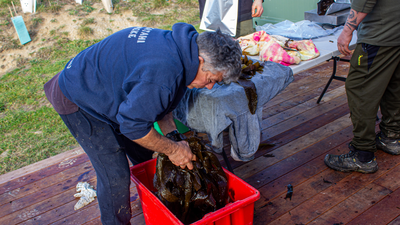
Five new marine reserves now protect 308 square kilometres of Otago coastline (Image: Edward Carver/Mongabay)
Along New Zealand’s Otago coast, a new approach to marine conservation is putting Indigenous knowledge and government authority side by side. On July 1, 2026, five new marine reserves came into force across 308 square kilometres of coastal waters, creating the country’s first group of marine reserves to be jointly managed by Māori and the government.
The network, known as Te Au Roa o Te Rakihouia, was developed through more than a decade of work involving Kāi Tahu and government agencies. The reserves provide full no-take protection for important marine habitats, including rocky reefs, kelp forests, seabed environments and offshore canyons. What makes the initiative particularly significant is its governance model: Kāi Tahu and New Zealand’s Department of Conservation share decision-making responsibilities and work alongside a joint marine ranger team.
As reported by Ocean Economist, the model represents a different way of approaching marine protection, combining formal conservation systems with Indigenous stewardship and local knowledge.
Five new marine reserves now protect 308 square kilometres of Otago coastline
The five reserves form a new protected network along Otago’s southeastern coast and came into force after being gazetted on May 28, 2026. Together, they cover 308 square kilometres of coastal marine habitat and provide full no-take protection, meaning activities such as fishing and other forms of extraction are prohibited within the reserves.
The protected areas include a range of underwater environments that support marine species and coastal ecosystems, from rocky reefs and kelp forests to seabed habitats and offshore canyons.
The creation of the network is particularly notable because New Zealand had gone more than a decade without establishing a new group of marine reserves. The reserves are intended not simply to draw lines on a map but to give vulnerable marine ecosystems areas where natural processes can continue with fewer pressures from human activity.
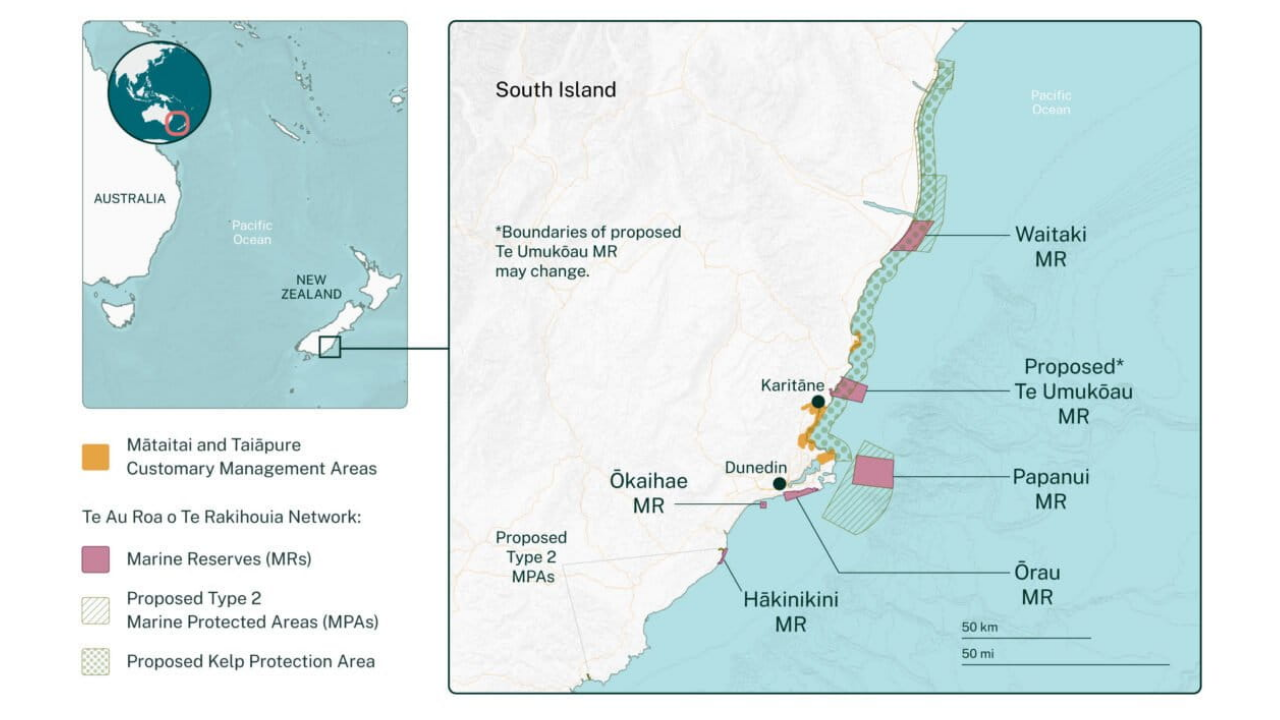
Marine reserves and management areas in southeast New Zealand, South Island (Image: GEBCO; Department of Conservation, New Zealand Government)
Kāi Tahu and the government will share responsibility for the waters
The most distinctive part of the initiative is what happens after the protected areas are established. Rather than leaving management entirely to a government conservation agency, the reserves are jointly managed by Kāi Tahu and New Zealand’s Department of Conservation. The arrangement brings Indigenous and government authority into a shared decision-making framework. The model also includes a joint marine ranger team, giving the partnership a practical presence on the water rather than limiting collaboration to policy discussions.
The approach reflects the role of Māori communities as long-standing guardians of their coastal environments, while bringing that knowledge together with the statutory responsibilities and resources of the Department of Conservation. Ocean Economist described the arrangement as an innovative governance model, highlighting how the two parties will work together to manage the reserves.
The marine network could reshape how New Zealand protects its coastal ecosystems
The Otago reserves arrive at a time when marine ecosystems face growing pressure from human activity and climate-related changes.
Protecting areas from extraction can give fish, seabed communities and kelp ecosystems greater opportunity to recover, while creating protected spaces where ecological processes can continue with less disturbance. The initiative also carries significance beyond the five reserves themselves.
Its shared-management structure could provide a model for future conservation projects where Indigenous communities have an established relationship with the environment being protected. New Zealand’s Department of Conservation has already described marine protection elsewhere as a way to support tangata whenua in their roles as kaitiaki, or guardians, of marine environments. For Otago, the immediate goal is healthier protected waters. But the longer-term experiment is equally important: whether conservation can become more effective when those responsible for protecting ecosystems also share authority over how that protection is carried out.