2 months ago
41
2 months ago
41

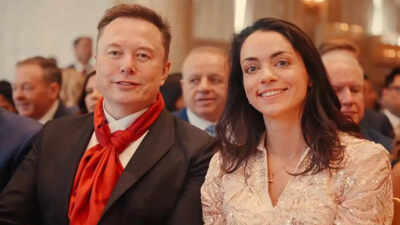
Elon Musk has once again found himself at the centre of a public debate over his views on race and immigration after firmly rejecting allegations of racism during a recent interview with The Economist.
The billionaire entrepreneur, who has frequently drawn criticism for his comments on immigration and demographic changes in Europe, defended himself by pointing to his personal life. Musk said his partner is half-Indian, that they have four children together and that one of his sons has a middle name inspired by Indian scientist Subrahmanyan Chandrasekhar. He argued that these personal connections, along with the diversity within his companies, contradict claims that he is racist.
Elon Musk rejects racism allegations, cites half-Indian partner
During the interview, Musk was asked why many critics consider some of his public comments to be racist. He rejected the allegation by referring to his family."My partner is half-Indian and I have four children with her. One of them was named after a famous Indian physicist. So I would say I'm not racist," Musk said.The remarks came as he defended himself against criticism over previous statements on immigration, multiculturalism and demographic changes in Western countries.
Musk was referring to Shivon Zilis, a Canadian technology executive at Neuralink. Zilis has Indian roots through her mother, who is of Punjabi Indian descent, while her father is Canadian. Born and raised in Canada, she studied economics and philosophy at Yale University before building a career in artificial intelligence and venture capital.She joined Neuralink in 2017 and now serves as an executive at the brain-computer interface company, where she has played an important role in its technology development.
Musk cited their relationship and their four children as part of his response to allegations of racism.
Why is Subrahmanyan Chandrasekhar significant?
The scientist Musk referred to is Subrahmanyan Chandrasekhar, one of the most influential astrophysicists of the twentieth century. Born in Lahore in 1910, then part of British India, Chandrasekhar won the 1983 Nobel Prize in Physics for his pioneering research on the structure and evolution of stars.He is best known for the Chandrasekhar limit, which defines the maximum mass a white dwarf star can attain before collapsing under its own gravity.
The discovery laid the foundation for modern understanding of neutron stars and black holes and remains one of the most important contributions to astrophysics.According to Musk, his son's middle name, "Sekhar", was chosen as a tribute to Chandrasekhar.
Why was Musk accused of racism
Musk's comments came amid continuing criticism over his posts on X and his public statements on immigration, free speech and demographic change in Europe.Critics argue that some of his remarks reinforce anti-immigration narratives or unfairly target minority communities.
Advocacy groups and political commentators have also accused him of promoting divisive rhetoric, particularly in relation to debates surrounding Europe and the UK.Musk has repeatedly denied these accusations, saying his concerns relate to public safety, integration and democratic values rather than race or ethnicity.
Musk points to diversity at his companies
Musk also defended his record by highlighting the diversity within his businesses.He said his companies employ senior executives from a wide range of racial and ethnic backgrounds and argued that this demonstrates there is no racism within their leadership.Tesla, SpaceX, Neuralink and xAI collectively employ tens of thousands of people across multiple countries, which Musk said reflects an inclusive workplace rather than one shaped by racial discrimination.