1 hour ago
5
1 hour ago
5

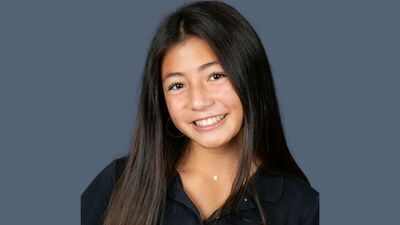
Bailey Quinn FrankPhoto credit: Society for science
When Bailey Quinn Frank learned that scientists can identify species from genetic material left behind in the environment, she saw an opportunity to apply the same idea to public health.
The eighth-grader from Pine Crest School in Fort Lauderdale designed a simple air sampler using small fans and filter paper to collect airborne bacterial DNA. Her goal was to explore whether an inexpensive device could support health surveillance in rural communities, where access to advanced diagnostic tools and disease-monitoring systems is often limited. Her project earned her a place among 30 national finalists in the 2026 Thermo Fisher Scientific Junior Innovators Challenge, according to the Society for Science.
A question rooted in access to care
Bailey’s interest in health surveillance grew from learning about environmental DNA, or eDNA, a technique that captures genetic traces from soil, water, or air to determine which organisms are present in a given area. She connected that concept to the challenge of tracking diseases as they spread, especially in places where laboratories and medical infrastructure are scarce. Rural communities often face fewer resources for testing and monitoring, which can delay detection of bacterial threats.
She wanted to know whether a sampler built from inexpensive materials could collect enough airborne DNA to identify bacteria. If so, such a tool could offer a low-cost way to support early warning systems in areas that lack sophisticated equipment. Bailey’s approach reflects a broader principle in public health: the most useful solutions are often those that can be deployed where need is greatest and budgets are smallest, as per the report.Her project also draws on personal experience. Bailey has celiac disease, and she has said that living with the condition helped her develop empathy for others who face health challenges from a young age, according to Society for Science. That empathy, combined with a strong interest in the human body and medicine, shaped the direction of her research.
Building a sampler from fans and filter paper
Bailey’s device was deliberately simple in design. She attached small fans to pieces of filter paper, creating a setup where air could be pulled through the fan and across the paper.
As the air passed through, any DNA or bacteria suspended in it would be caught by the filter, leaving a sample that could be analysed later. As per the report, she collected two indoor air samples and one outdoor sample using this method. After collection, Bailey purified the DNA from the filter papers and transferred part of each sample to petri dishes to grow the bacteria she had captured.
Over the course of a week, she recorded the number of bacterial colonies and attempted to identify them based on their growth patterns.For a more precise analysis, Bailey sent her best samples out for 16S rRNA sequencing, a technique that identifies bacteria by reading a specific region of their genetic code. This step allowed her to compare the bacterial communities found indoors and outdoors with greater accuracy than colony counting alone could provide.
What the air samples revealed
The results showed a clear difference between indoor and outdoor environments. Indoor air samples contained a greater variety of bacterial genera and more bacteria associated with humans.
This makes sense given that indoor spaces are shaped by human presence, with skin cells, breath, and everyday activity contributing to the microbial makeup of the air.Outdoor samples, by contrast, showed bacteria originating from soil, water, air, and plants. The diversity in the outdoor sample reflected the wider range of sources contributing to that environment. Bailey’s findings suggest that even a simple fan-and-filter setup can capture meaningful differences in bacterial communities across settings.These results are promising for the idea of low-cost surveillance. If a basic sampler can distinguish between indoor and outdoor bacterial profiles, it may be possible to adapt the same approach to detect specific pathogens or monitor changes in air quality over time. Bailey hopes that systems like hers could one day help people in rural areas conduct their own surveillance for bacteria, the report suggested.
Why rural health surveillance matters
Health surveillance is the ongoing process of tracking diseases and health threats within a population.
It helps officials respond quickly to outbreaks, understand patterns of illness, and allocate resources where they are needed most. In urban areas with dense medical infrastructure, this process is often well supported by hospitals, laboratories, and public health agencies.Rural communities can face significant gaps in that infrastructure. Fewer clinics, longer travel distances, and limited access to diagnostic equipment can make it harder to detect and respond to health threats early.
A low-cost air sampler that captures bacterial DNA could offer one way to fill that gap, providing a simple tool that does not require a full laboratory to operate.Bailey’s work fits into a larger conversation about making health technology more accessible. The most effective surveillance tools are often those that can be built, maintained, and used by the communities that need them. Her project points toward that kind of practical, community-centred innovation.
A finalist among the nation’s young researchers
The 2026 Thermo Fisher Scientific Junior Innovators Challenge selected 30 finalists from a nationwide pool of middle-school students. Bailey’s project, titled Designing an eDNA Sampler To Provide Health Surveillance Through the Detection and Identification of Bacterial Pathogens in Rural Communities, earned her a place in that group.Finalists are scheduled to travel to Washington, DC, from October 23 to 28 for Finals Week.
In addition to presenting their research, students will take part in team challenges that test collaboration and critical thinking. Every finalist receives a $500 cash award and competes for more than $100,000 in prizes.Being named a finalist is a significant achievement for Bailey, particularly given the practical and socially relevant nature of her work. The competition rewards students who can identify real problems, design thoughtful experiments, and communicate how their findings could benefit others.
Bailey’s project does all three.
Skills beyond the science fair
Bailey’s interest in health and technology is supported by her involvement in the Technology Student Association, an organisation that has helped her build skills in areas such as community service, medical technology, career preparation, and leadership. She has said that the organisation has been instrumental in developing her technical abilities and confidence.Outside of science, Bailey is also an artist who works in digital media, watercolour, fabric, and clay.
She has said that her experience with celiac disease taught her empathy for others who feel different from their peers, and that this has shaped how she approaches both art and science. That blend of creativity and compassion is evident in the way she frames her research around helping underserved communities.For now, Bailey’s sampler is a prototype built from everyday materials, but its potential is clear. By combining accessible hardware with genetic analysis, she has shown that meaningful health surveillance does not always require expensive equipment. Her work offers a hopeful example of how young innovators can address gaps in public health with tools that are simple, affordable, and grounded in community need.