1 year ago
39
1 year ago
39

Israel has launched the largest attack on Iran in decades, in a move raising fears that the wider region could be plunged into a destabilising conflict.
Tehran vowed harsh retaliation on Friday after Israel said it had targeted nuclear facilities, ballistic missile factories and military commanders in cities across Iran at the outset of what it warned could be a prolonged military assault, dubbed Operation Rising Lion.
“We are at a decisive moment in Israel’s history,” Israeli prime minister Benjamin Netanyahu said. Describing the attack as a “a targeted military operation to roll back the Iranian threat to Israel’s very survival”, he warned that it would “continue for as many days as it takes to remove this threat”.
IDF Spokesman Brig. Gen. Effie Defrin said that around 200 Israeli Air Force aircraft dropped 330 munitions on around 100 targets in total.
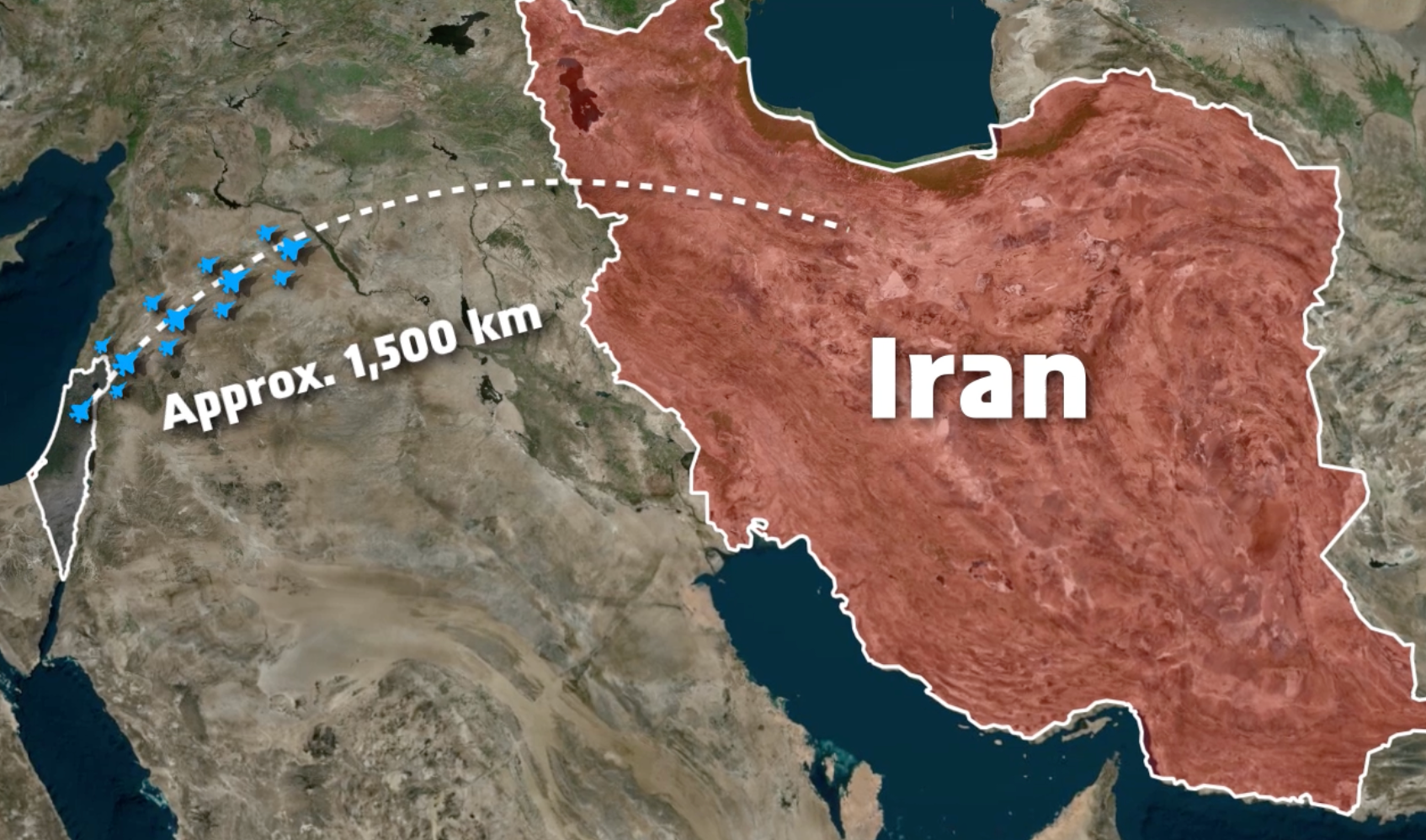
Attacks took place in several locations across Iran and involved drones and fighter jets. The map below shows some of the locations where the strikes took place.
According to the IDF, the opening phase of the assault involved Israeli aircraft destroying air defence and detection systems in western Iran, including surface-to-air missile launchers.
At the same time, the Mossad also conducted a series of covert sabotage missions targeting Iran’s air defence systems. This involved building a drone base near Tehran, a security source told the Times of Israel.
The below graphic published by the IDF shows the 1,500km path taken by Israeli fighter jets to reach Iran and strike targets.
As Iran retaliated with a salvo of 100 drones, Jordan’s military said it had intercepted a number of missiles and drones that entered its airspace and which had been likely to fall in Jordanian territory, including populated areas.
As sirens reportedly sounded in Amman, civilians on the ground in Baghdad told The Independent that they initially believed Iraq was under attack as they heard explosions overnight.
Tensions in the region were already roiling after 20 months of war in Gaza, sparked by Iranian-backed Hamas’s attack on Israel on 7 October 2023. Since the attack, Israel has also decimated the Lebanese group Hezbollah, an ally and key pillar of Iran’s Axis of Resistance that also includes Hamas.
Condemning Israel’s strikes, a Hezbollah official said that the group – whose leadership has been largely killed in Israeli attacks – would not unilaterally launch its own attack on Israel in response.
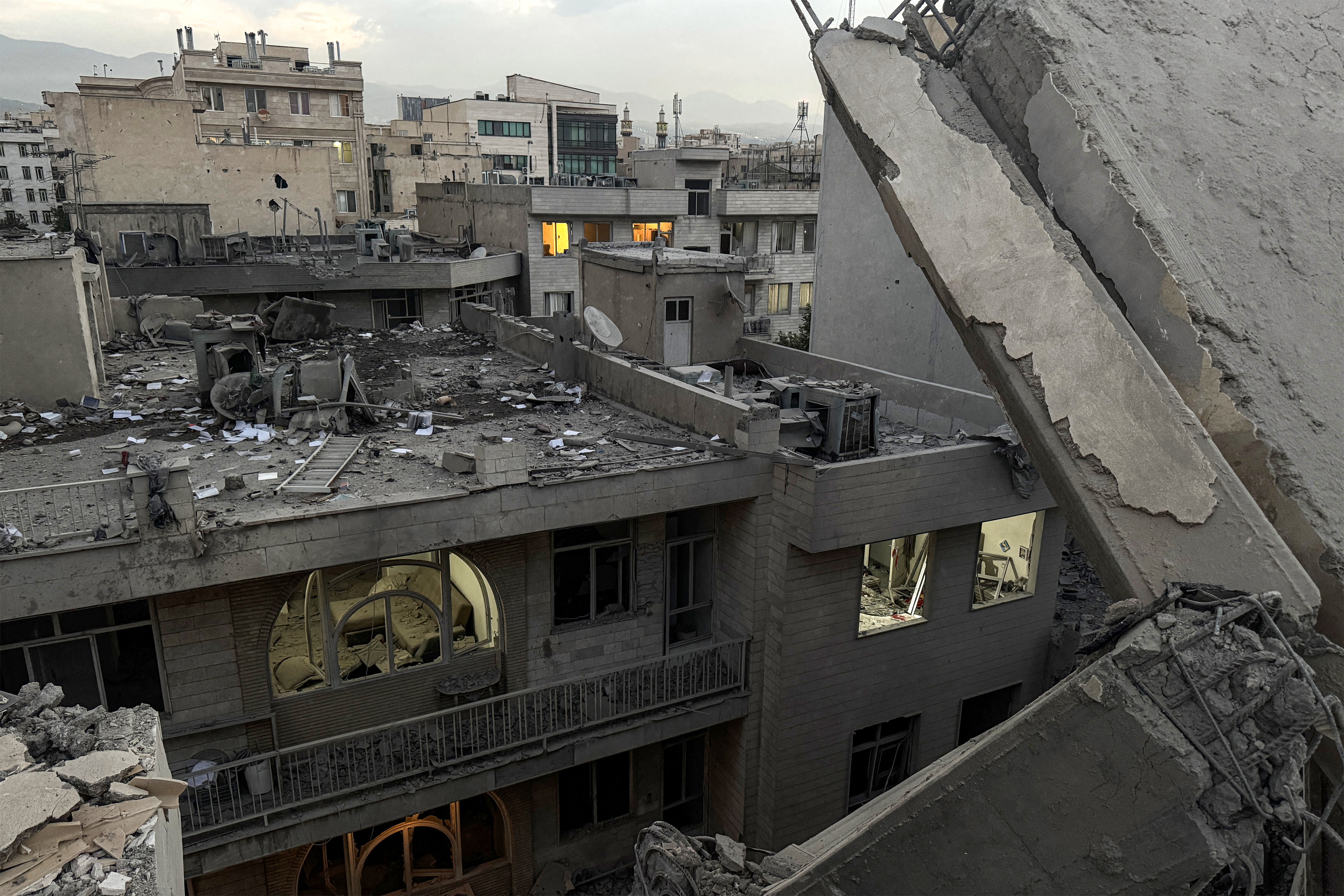
However, Israel’s latest attack on Iran – the largest since the 1980s Iran-Iraq war – will raise fears of all-out conflict between the region’s most powerful militaries and a destabilising wider escalation, with concerns that US military sites and shipping in the Persian Gulf could become targets.
With Donald Trump having also threatened to strike Iran if stuttering talks over its nuclear programme fail, Iran’s defence minister Aziz Nasirzadeh warned on Wednesday that it would retaliate by hitting US bases in the region if Iran was subjected to strikes.
Reuters reported on Wednesday that the US was preparing a partial evacuation of its Iraqi Embassy and would allow military dependents to leave locations around the Middle East due to heightened security risks, with the State Department authorising voluntary departures from Bahrain and Kuwait.
The US has a military presence across the major oil-producing region, with bases in Iraq, Kuwait, Qatar, Bahrain and the United Arab Emirates. Iraq, a rare regional partner of both the US and Iran, hosts 2,500 US troops, although Tehran-backed armed factions are linked to its security forces.
The map below illustrates how Israel’s conflict with Iran extends well beyond the borders of both countries. A potential regional war could envelop Iraq, Kuwait and Bahrain if Iran decides to retaliate against US bases in the Middle East.
Tensions inside Iraq have heightened during the Gaza war, with Iran-aligned armed groups in the country repeatedly attacking US troops. However, attacks have subsided since last year.
Iran’s main nuclear enrichment facility in Natanz was damaged in the attack, but investigations have not shown any radioactive or chemical contamination outside the site, the country’s atomic energy organisation said.
“I woke up to deafening explosion. People on my street rushed out of their homes in panic, we were all terrified,” said Marziyeh, a 39-year-old from Natanz. Explosions were also reported in Tehran and other cities including Bandar Abbas, Arak, Isfahan and Kermanshah.
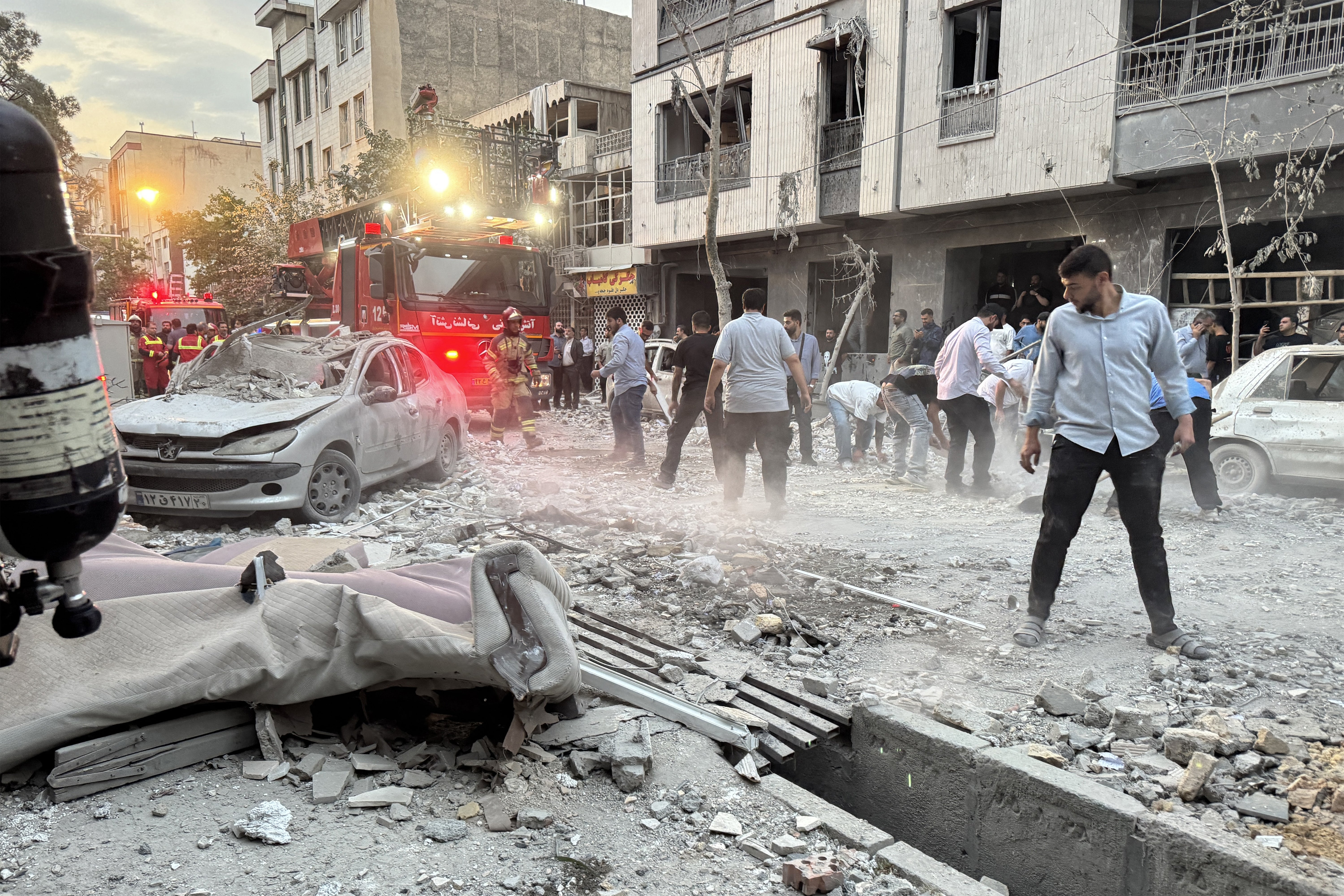
Further Israeli strikes were reported on Friday at Iran’s military airport in Tabriz, with state news agency Fars reporting that around 10 locations in the East Azerbaijan province had also been targeted.
As Tehran retaliated on Friday morning, Israel said it was working to intercept 100 drones which had not yet reached Israel. But at around 9am BST, Israeli media said an order to citizens to remain near protected areas had been lifted, suggesting that most or all the drones had been neutralised.
Iran fired hundreds of drones and ballistic missiles at Israel in two attacks last year in response to Israeli strikes, rattling the Israeli public but causing only modest damage after being intercepted in a major defensive operation by Israel, Jordan, the US, Britain and France.
While the shape of Iran’s retaliation on Friday remained unclear, Tehran previously launched missiles and drones from Syria, Iraq and Lebanon, as well as its own territory, as illustrated below:
While Hezbollah indicated on Friday that it would not respond to Israel’s attack on Iran, the Tehran-allied regime of Bashar al-Assad in Syria has also been toppled since Iran’s major attack on Israel last April.
However, there are fears that Iran-aligned paramilitaries in Syria could use this moment to attack Israel and derail the rebirth sought by the nascent rebel-led administration established after the fall of Assad December.
Additional reporting by agencies