1 hour ago
4
1 hour ago
4

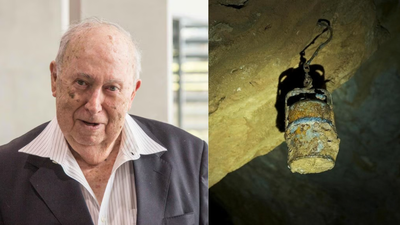
Professor Brian O’Brien and the carbide lamp he lost inside an Australian cave in 1953. Image: ABC
Brian O’Brien was 19 when he entered the Yarrangobilly Caves in New South Wales in December 1953 with fellow caver Fred Stewart, but a short exploration turned into a three-day fight for survival.
The pair became separated inside East Deep Cave, and O’Brien eventually lost the carbide lamp that was his only source of light after slipping and falling. He spent about 74 to 75 hours underground with little food and only a small amount of water before rescuers found him. O’Brien later became a NASA scientist and worked on lunar dust experiments carried aboard Apollo missions. His abandoned lamp remained inside the cave for decades.
In 2021, two students discovered it about 60 metres underground, still hanging from a rocky ledge, before a volunteer caving team recovered it in 2026.
A short cave trip turned into a 75-hour survival ordeal
O’Brien and Stewart were members of the Sydney University Speleological Society and had travelled to Yarrangobilly after finishing their university examinations. On December 15, 1953, they explored West Deep Creek Cave before deciding to have a quick look inside East Deep Creek Cave on their way back to camp.
As their carbide lamps began running low, they started making their way towards the entrance, but O’Brien stayed behind to investigate another section.
He became disoriented and was left alone in an unfamiliar part of the cave. His lamp eventually failed, leaving him in darkness. During his attempt to find a way out, he hooked the lamp onto a rock wall, then slipped and fell and could no longer locate it. He eventually heard rescuers after about 75 hours underground.
The lost lamp remained in the cave for decades
O’Brien survived his ordeal, but the lamp stayed behind in the cave. For decades, it became a small but memorable part of his story, particularly because he continued to want it recovered. O’Brien's daughter, Ros O’Brien, told ABC that her father never stopped looking for the lamp and always wanted to bring it back. Brian O’Brien died in 2020 at the age of 86, meaning he did not live to see the object found. The NSW National Parks and Wildlife Service later said the lamp remained undiscovered for more than 70 years, while the exact location of the object was eventually identified by a new generation of cavers.
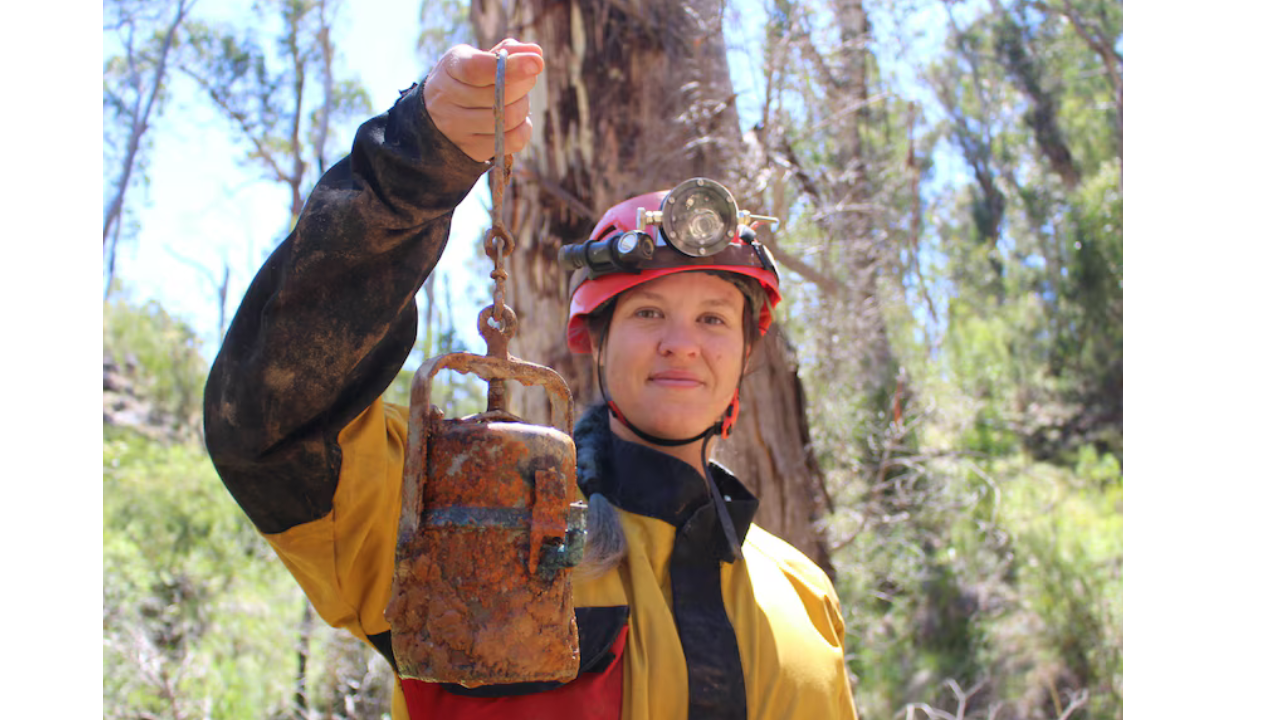
Britanny Meers who recovered the lamp
Two students spotted the lamp 68 years after it was lost
The lamp was finally spotted in 2021 by Brittany Meers and her friend Lachlan Bailey, who were students and exploring the cave as cavers. They found the relic roughly 60 metres underground, where it was hanging from a high ledge. At the time, they did not immediately understand its historical significance and left it in place. The discovery later became known within the caving community, prompting discussions about how it could be safely recovered while respecting the cave environment and the O’Brien family's wishes.
The finding came 68 years after O’Brien had lost the lamp during his 1953 ordeal, creating the second chapter of a story that had begun more than six decades earlier.
Volunteer cavers spent two hours reaching it in 2026
Four volunteer cavers, including Meers, returned to the cave in 2026 to retrieve the lamp under a recovery mission coordinated with NSW National Parks and Wildlife Service. The route was difficult, with the team squeezing through narrow spaces and scrambling across challenging sections in temperatures that could fall to about 5 degrees Celsius.
Although the lamp was only about 100 to 150 metres into the cave in a straight line, the obstacles made the journey considerably more difficult.
After about two hours underground, the group reached the lamp and successfully removed it from the rock where it had remained since 1953. The object was reportedly in remarkably good condition, with surprisingly little corrosion after more than seven decades underground.
The teenager became a NASA scientist and the lamp will now be displayed
The recovered lamp became an unexpected link between two very different parts of O’Brien's life. After surviving his cave ordeal, he went on to become a prominent space scientist specialising in lunar dust. An Australian government citation records that O’Brien served as a NASA principal investigator, invented the Apollo Dust Detector Experiment and developed experiments that were deployed on Apollo missions including Apollo 11, 12, 14 and 15.
His family has entrusted the recovered lamp to NSW National Parks and Wildlife Service, which plans to preserve and display it at Yarrangobilly. Ros O’Brien and her son Bobby Cafagna travelled from Perth to witness the recovery, with the family describing the moment as a fitting end to a story that began when a 19-year-old became lost in the darkness