1 month ago
41
1 month ago
41

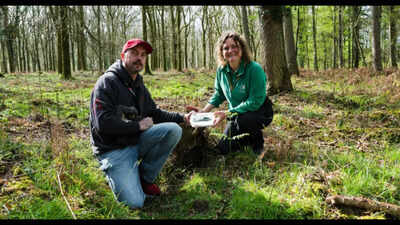
A routine walk through one of England’s ancient forests led to an extraordinary archaeological discovery when a man and his dog came across an axe head believed to be around 3,400 years old.
What initially looked like an unremarkable object lying in the landscape was later identified as a relic from Britain’s Bronze Age, a period that transformed how prehistoric communities made tools, weapons and other objects. According to the BBC, researchers believe the axe dates from between 1400 B.C.E. and 1275 B.C.E. That places it within a crucial period of Britain’s prehistoric past, when communities were increasingly skilled at working with metal.
The accidental discovery also demonstrates how ancient artefacts can remain concealed in familiar landscapes for thousands of years before resurfacing in the most unexpected circumstances. For archaeologists, the object offers a tangible connection to people who lived and worked in Britain more than three millennia ago.
A chance walk led to an extraordinary archaeological discovery
The discovery happened during an ordinary walk through an ancient English woodland, where the man was accompanied by his dog.
While moving through the forest, he noticed an object that appeared unusual enough to investigate. What followed was the identification of an artefact that had survived from prehistoric Britain, making the casual find far more significant than it first appeared. According to the BBC, the axe head was eventually recognised as dating to the Bronze Age.
Such discoveries are particularly valuable because archaeological evidence is often scattered across landscapes, with many objects remaining buried or hidden for centuries.
The circumstances of this discovery also underline the unpredictable nature of archaeology. A simple walk can sometimes reveal evidence of human activity that predates recorded history by thousands of years, transforming an otherwise ordinary stretch of woodland into a place of archaeological interest.
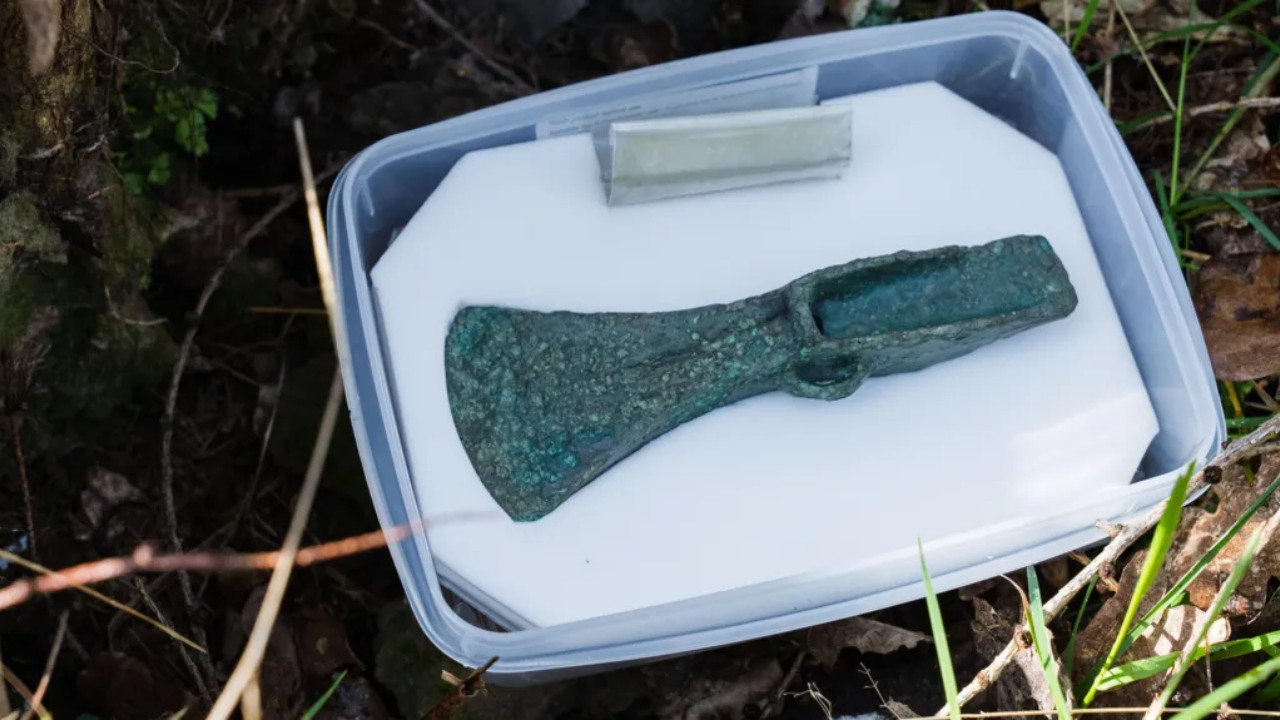
Researchers date the axe to between 1400 and 1275 B.C.E. Image: Forestry England
Researchers date the axe to between 1400 and 1275 B.C.E.
Researchers have dated the axe head to between 1400 B.C.E. and 1275 B.C.E., meaning it was made around 3,400 years ago.
That places the object firmly in Britain’s Bronze Age, a time when the use of metal was becoming an important part of everyday life. The date also gives archaeologists a clearer idea of when the axe was made and used. It belongs to a period when Bronze Age communities were producing bronze objects for a range of purposes, including tools and weapons.
As bronze is mainly created using copper and tin, this material represents a great progress from many stone implements which were invented before.
It was possible to shape it in a number of ways and to create durable items, such as axes. These facts prove that there existed great skill of Bronze Age people in using metal.
The Bronze Age transformed how prehistoric people made tools
This axe gives an insight into the extent of technological advancement that occurred in Britain during the Bronze Age. Prior to the invention of bronze, tools were created from natural sources like stone, bones and woods. Metalworking enabled them to create better and more useful tools and weapons.
Creating the bronze axe was quite an ordeal. People needed access to copper and tin, as well as the knowledge to heat, mix and shape the metals.
The skills involved suggest that Bronze Age communities had developed a good understanding of metalworking and passed those techniques between generations. Because of this, the axe is more than just an old tool. It is evidence of the knowledge and craftsmanship that existed more than 3,000 years ago.
Its discovery could also offer clues about how people used the surrounding landscape, although there is still no way to know exactly why the axe was left where it was found.
How this 3,400-year-old axe offers a glimpse into ancient Britain
The discovery shows just how much of Britain’s past can still be hiding in places people pass through every day. The axe had remained in the landscape for around 3,400 years, surviving changes in the environment until it was spotted during a routine walk.
For archaeologists, findings such as these are a valuable source of information on how people used to live, work and make tools back in the Bronze Age. The identity of the owner of the axe, as well as reasons why the axe ended up being buried where it was discovered will probably remain a mystery; however, the type of material and its construction will provide some information on the time.
This is also an example of how ancient history does not necessarily reveal itself in famous places of archaeological excavations. The finding could have been made in a forest, a field or a walkway. For the man and his dog, it was simply an unexpected find. For researchers, it is a small but fascinating piece of Britain’s Bronze Age story.