1 hour ago
3
1 hour ago
3

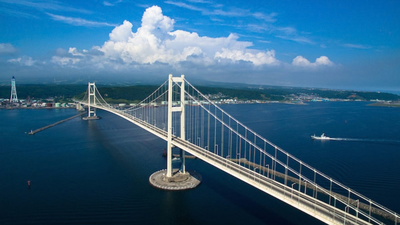
When engineers in Japan began work on the Hakucho Ohashi Bridge in Hokkaido in the 1980s, they faced an unusual problem beneath the water. The foundations for the bridge's two main towers had to be built on a soft seabed about 14 to 17 metres underwater.
Instead of filling the construction area with conventional sand or soil, engineers developed a self-hardening slurry made partly from coal fly ash, an industrial waste product. The material was placed underwater inside steel cofferdams to create artificial islands that became working platforms for the bridge's tower foundations. The unusual approach reduced pressure on the cofferdams while allowing the material to harden underwater.
The bridge opened in 1998, and subsequent research found that the coal-ash material continued gaining strength for more than a decade.
Japan faced a difficult foundation problem beneath the sea
The Hakucho Ohashi, also known as the Muroran Bay Bridge, was planned across the entrance to Muroran Port in Hokkaido. Its main span stretches 720 metres, while the complete bridge is 1,380 metres long. Construction of the bridge began in 1985, and the completed structure opened to traffic in June 1998.
The locations selected for the bridge's main towers presented a major construction challenge. The seabed was about 14 to 17 metres below the water surface and consisted of soft ground.
Engineers needed to create a working platform around each tower foundation before excavation and construction could begin. A conventional approach would have involved filling the enclosed area with large quantities of sand or other material.
However, the weight of conventional fill would have generated substantial pressure against the steel cofferdam surrounding the construction area. Engineers therefore searched for a material that could be placed underwater, flow into the enclosed space and eventually harden.
Coal fly ash became the unusual building material
The solution was a slurry containing coal fly ash, volcanic ash, cement and seawater. Fly ash is the fine powder collected from the exhaust gases of coal-fired power stations.
Instead of treating the fly ash as waste requiring disposal, engineers incorporated it into a self-hardening construction material. The slurry could be pumped into the underwater cofferdams and allowed to harden in place. The resulting artificial islands were about 67 metres in diameter and provided working platforms for construction of the bridge's two main towers.
The quantities involved were substantial. Between October 1988 and January 1989, engineers placed approximately 53,600 cubic metres of slurry into one of the cofferdammed areas.
The mixture contained about 46.1 gigagrams of fly ash, 22.2 gigagrams of volcanic ash and 2.6 gigagrams of cement. The unusual material effectively turned industrial waste into solid construction ground beneath the sea. Once the slurry had hardened sufficiently, workers could excavate through the artificial island and construct the tower foundation.
The mixture reduced pressure on the temporary structure
The engineering properties of the slurry were central to the project.
A 1992 paper published in the Journal of Materials in Civil Engineering found that the self-hardening material generated substantially lower lateral earth pressure against the cofferdam than conventional sandy fill. That reduced the forces acting on the temporary steel structure and helped limit bending and displacement. The material also generated heat as it hardened.
Researchers reported that the temperature inside the slurry remained above 10°C during construction, even under winter conditions, helping the material develop strength.
This allowed the artificial island to serve as a stable working platform while engineers excavated the required area and constructed the massive concrete foundation of the bridge tower. The approach also provided a large-scale use for fly ash and volcanic ash, converting materials that would otherwise have required disposal into part of the construction process.
The coal-ash material kept gaining strength
The unusual material continued to attract scientific attention after the bridge foundations had been completed.
Researchers carried out long-term investigations into the hardened slurry to determine how its properties changed with age. One of the most striking findings was that its unconfined compressive strength continued increasing for more than 10 years after placement. The continued strengthening was linked to hydration reactions within the material.
Researchers also found that the long-term strength development depended on the characteristics of the coal ash used in the mixture.
The findings demonstrated that the hardened slurry did not simply reach its final strength shortly after construction. Its internal reactions continued for years, gradually increasing its strength. By the time the bridge construction was completed in the late 1990s, the artificial islands had already served their primary purpose: giving workers a solid platform from which to build the main tower foundations over the soft seabed.
The bridge has stood for more than two decades
The Hakucho Ohashi Bridge opened to traffic in 1998. It is 1,380 metres long and has a 720-metre central span, making it one of the major suspension bridges in eastern Japan. The bridge has continued to serve road traffic around Muroran for more than 25 years. Maintenance work over the decades has included repairs to sections of its pavement and deck protection. The coal-fly-ash foundation method remains one of the unusual engineering features of its construction.
What began as a solution to a difficult underwater foundation problem transformed industrial waste into an engineered material capable of creating solid ground beneath the sea. Coal fly ash, volcanic ash, cement and seawater were mixed into a self-hardening slurry, placed inside underwater cofferdams and turned into artificial islands. Those islands provided the working ground needed to construct the bridge's massive tower foundations. Decades after the material was placed beneath the waters of Muroran Bay, the bridge continues to stand above it, making the project an unusual example of industrial waste being transformed into the ground on which major infrastructure was built.