2 months ago
39
2 months ago
39

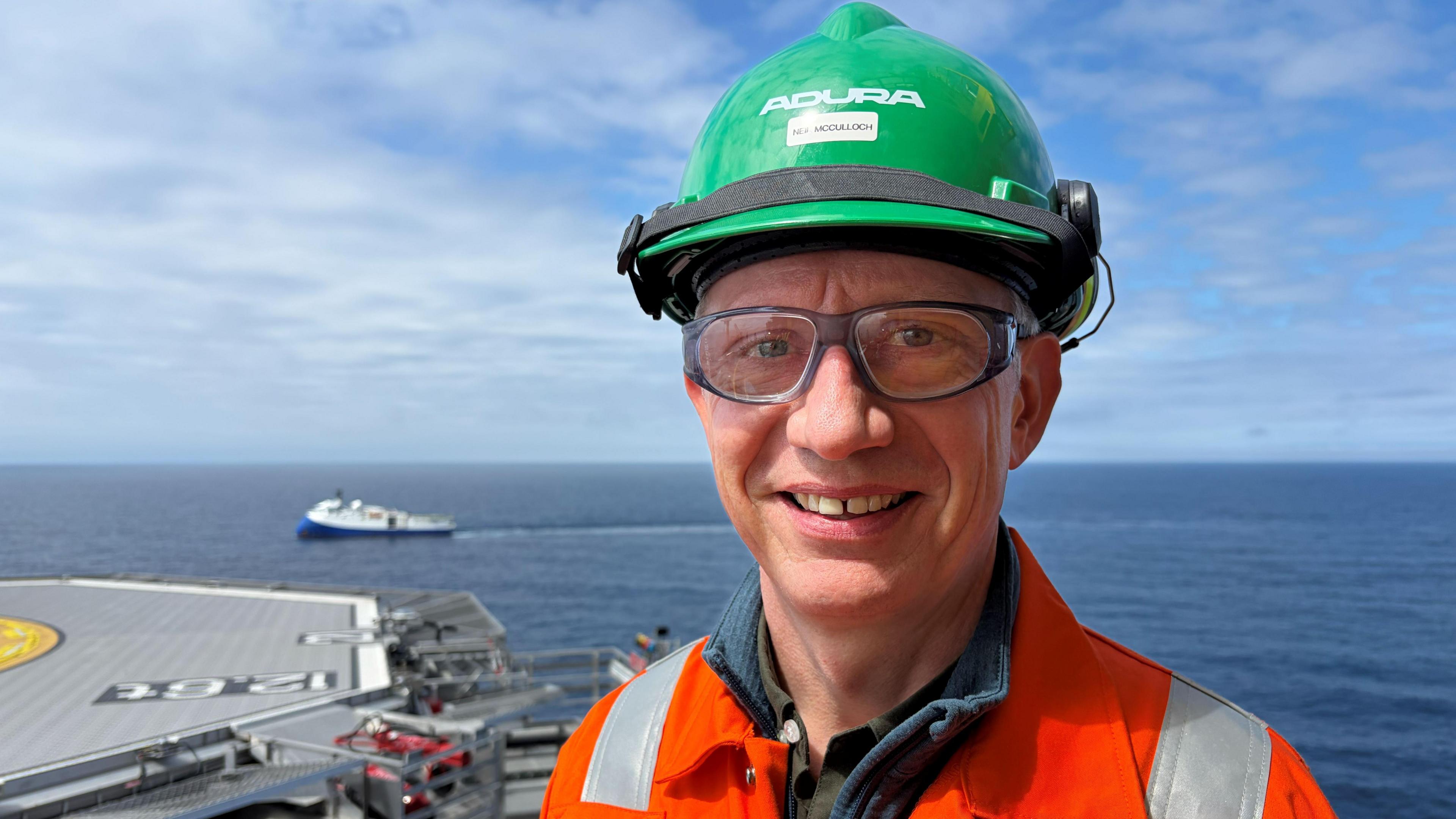
Adura chief executive Neil McCulloch says the UK would have limited options in the event of "a gas supply emergency"
The owners of the Jackdaw gas platform in the North Sea say it is "hyper critical" that the UK government approves production to avoid the risk of domestic supply shortages this winter.
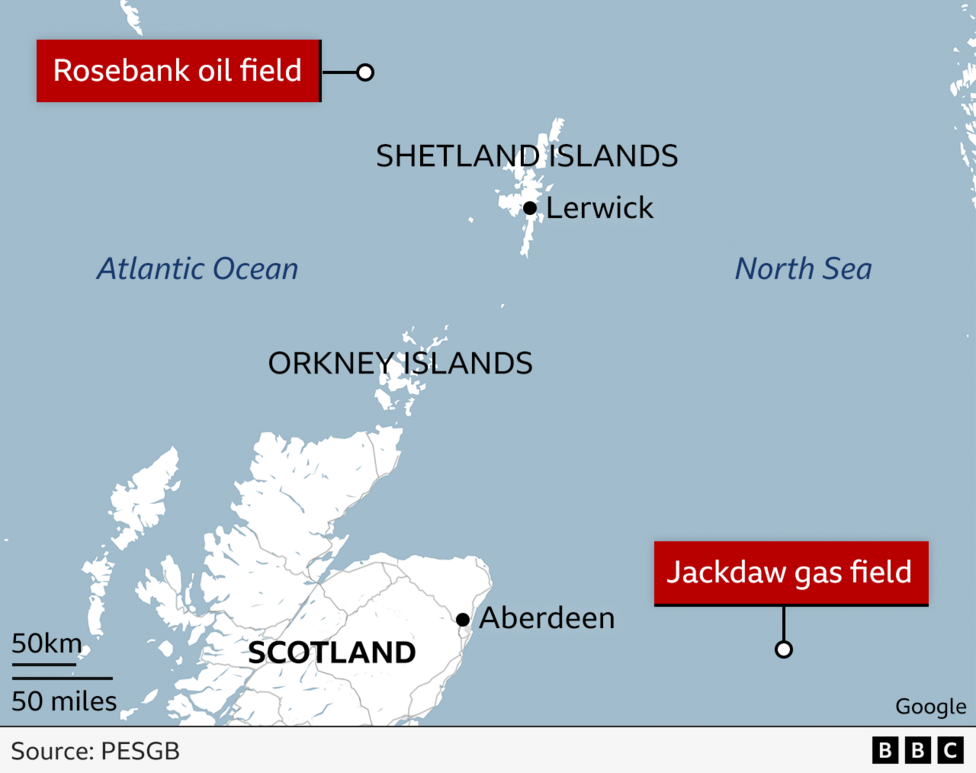
Speaking to BBC News at the field 150 miles east of Aberdeen, Adura chief executive Neil McCulloch said the project was in its final stages and could meet six per cent of the UK's gas needs from 1 October.
The industry regulator is considering revised applications for production at Jackdaw, and Adura's Rosebank oil field west of Shetland, after a court ruled that both had been unlawfully approved.
Environmental campaigners say this summer's deadly and record-breaking heatwaves demonstrate the need to tackle climate change by rejecting both projects.
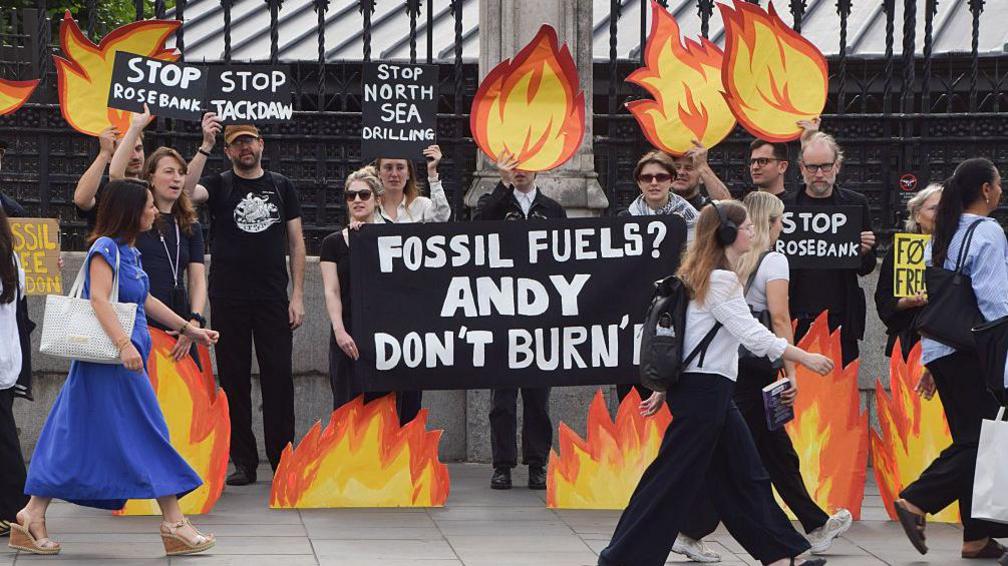 Image source, Getty Images
Campaigners in London last week urge Andy Burnham not to open the North Sea to new projects
But McCulloch said with only about eight days of gas storage, the UK would have limited options in the event of "a gas supply emergency."
He said this could come in the form of a prolonged period of still, cloudy weather which impeded the generation of wind and solar power, or hostility from "foreign threat actors".
BBC News has been given exclusive access to Jackdaw which is undergoing final checks and tests to be ready for production in the event of government approval being granted.
The "business-as-usual" atmosphere is somewhat surreal given the uncertainty hanging over the project, which has so far cost around £1.5bn according to Aberdeen-based Adura, a joint venture between Shell and the Norwegian state energy firm Equinor.
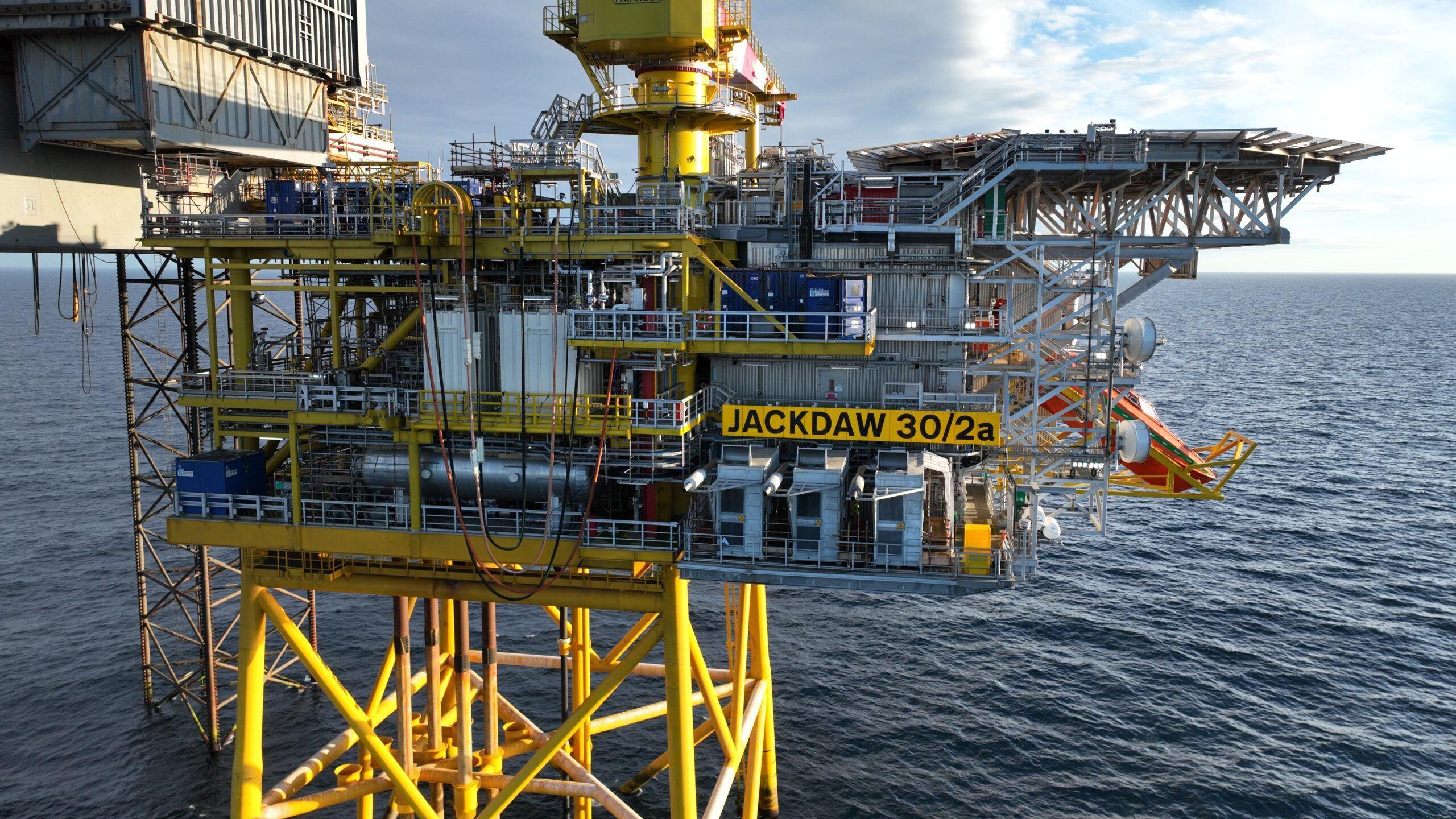 Image source, Adura
The Jackdaw field is owned by Adura - a joint venture by energy giants Shell and Equinor
McCulloch said: "If I were the Secretary of State for Energy Security and Net Zero, I'd be looking closely at where's my next source of energy security, and you're standing on it.
"The wells are drilled, they're hooked up. We're just readying the systems. It will be ready for the 1st of October.
"Jackdaw will play a vital part of this winter's gas supply," he added, providing energy security, employment and taxation to the UK.
Environmentalists say Jackdaw will only produce two per cent of the country's annual gas demand during the lifetime of the field.
"It would be a huge betrayal of the British public for the UK government to approve new oil and gas fields at a time when ordinary people are suffering so much as a result of these record-breaking heatwaves," said Tessa Khan, executive director of the campaign group, Uplift.
In response McCulloch said: "So we all watch the same news, and we see that.
"But what we're saying is that Jackdaw should not take that on its shoulders, or it should take a very small portion of that.
"It's a very, very small proportion of the total global emissions."
As Andy Burnham prepares for Downing Street, he is under pressure from within the Labour party to allow more oil exploration and to lower and stabilise taxation on investment and production.
Former prime minister Sir Tony Blair, trade union leaders, and Westminster's energy committee are among those echoing US President Donald Trump's call for the UK to "open up the North Sea."
That is a challenge. The most accessible and most lucrative fields have largely been drained.
Production in the basin peaked in 1999 at 4.5 million barrels of oil (or equivalent) per day (BOE). In 2024 it produced just over one million BOE.
The Energy Transition Institute, external at Robert Gordon University predicts that current policies will lead to some 1,600 offshore job losses per year for the coming decade.
"Oil and gas is declining faster than many of us were expecting, but the renewables industry is simply not ready to take all the jobs," the institute's director, Prof Paul de Leeuw, told me.
Rosebank contains an estimated 300 million to 500 million barrels of oil, making it the largest known untapped field in UK waters.
Adura says the gas from Jackdaw could supply 1.4m homes.
Decisions on oil and gas licensing are a matter for the UK government at Westminster but the Scottish government, run by the pro-independence Scottish National Party, also takes an interest, and it is split on the subject.
Oil was once central to the economic case for Scotland leaving the UK but, as first ministers, the SNP's Nicola Sturgeon and Humza Yousaf both opposed Rosebank and Jackdaw.
Current First Minister John Swinney has tried to fudge the matter, saying new developments should only go ahead if they are compatible with the UK's commitment to reducing greenhouse gas emissions.
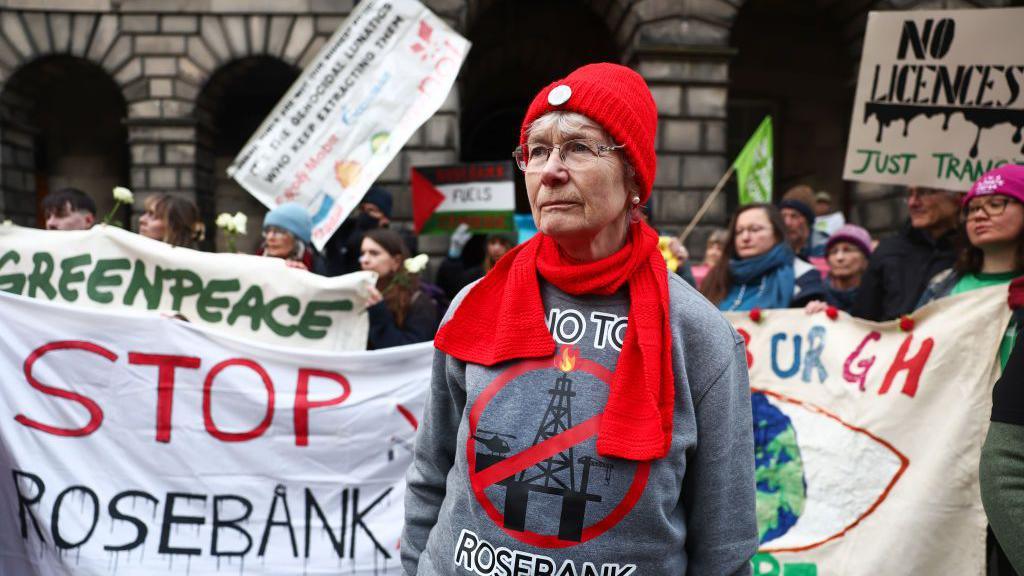 Image source, Getty Images
Climate campaigners launched a legal challenge against Jackdaw and Rosebank
Last year, the Court of Session in Edinburgh ruled that both fields had been unlawfully approved because the consenting process had failed to take into account the impact on the climate of burning the oil and gas extracted from them.
The judge Lord Ericht said the operators would have to submit revised environmental impact assessments to the regulator, the North Sea Transition Authority (NSTA).
On Tuesday, Adura said the updated assessment it had been required to produce suggested Jackdaw would account for less than 0.02% of annual global greenhouse gases during its lifetime.
That claim was dismissed as "self-serving" by Greenpeace, whose UK chief scientist Doug Parr said approving the field would be "reckless and indefensible" in the context of international commitments to slow down global warming.
If the NSTA gives its approval, the final decisions will fall to the current Energy Secretary, and Burnham's potential chancellor, Ed Miliband.
More than any other Labour politician, in opposition and in government, Miliband has crafted a policy which is positive about renewable energy such as wind, wave and solar and sceptical of new oil and gas developments.
While Miliband has said that oil and gas will be part of the UK's energy mix for decades to come, he has also been clear that he believes no new fields should be explored.
"Drilling every last drop will not take a penny off bills," he argued in a speech on 21 April, adding that it "cannot give us energy security" either.
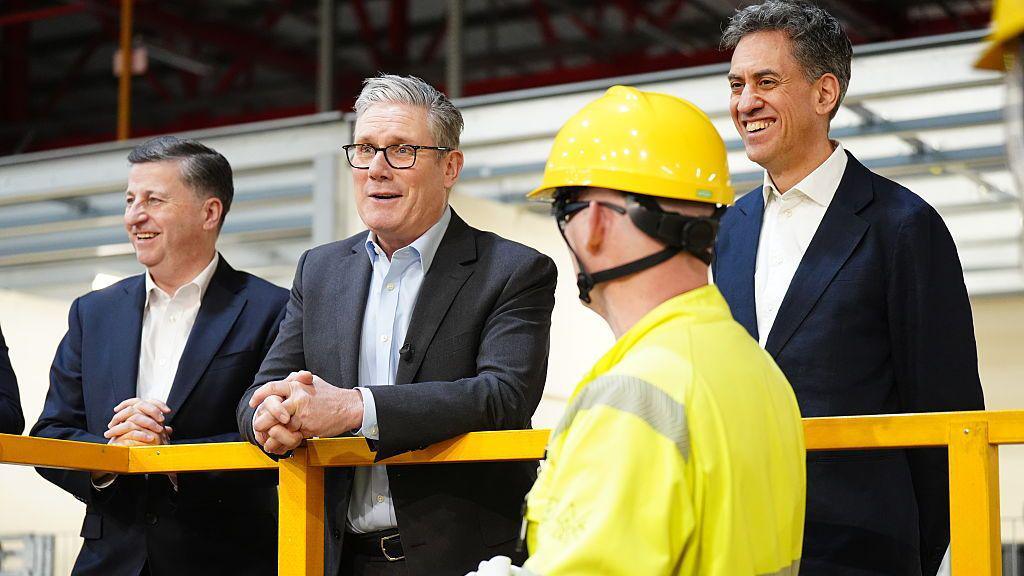 Image source, Getty Images
Sir Keir Starmer and Ed Miliband have been criticised for fumbling the transition to renewables
Critics accuse Miliband and departing prime minister, Sir Keir Starmer, of fumbling the transition to renewables, and causing hardship in north east Scotland, which is home to an estimated one in three of the UK's 115,000 offshore oil and gas workers.
The Conservatives say this is why they stormed to victory three weeks ago in Westminster's Aberdeen South by-election when they gained the seat from the SNP and pushed Labour into fourth place.
The morning after her party's emphatic win, Tory leader Kemi Badenoch told me the vote had been a "referendum on oil and gas".
Badenoch said she supported the transition to greener energy but added: "Renewables aren't ready.
"Simply switching off oil and gas is madness, especially when we're then importing oil and gas from Russia, of all places."
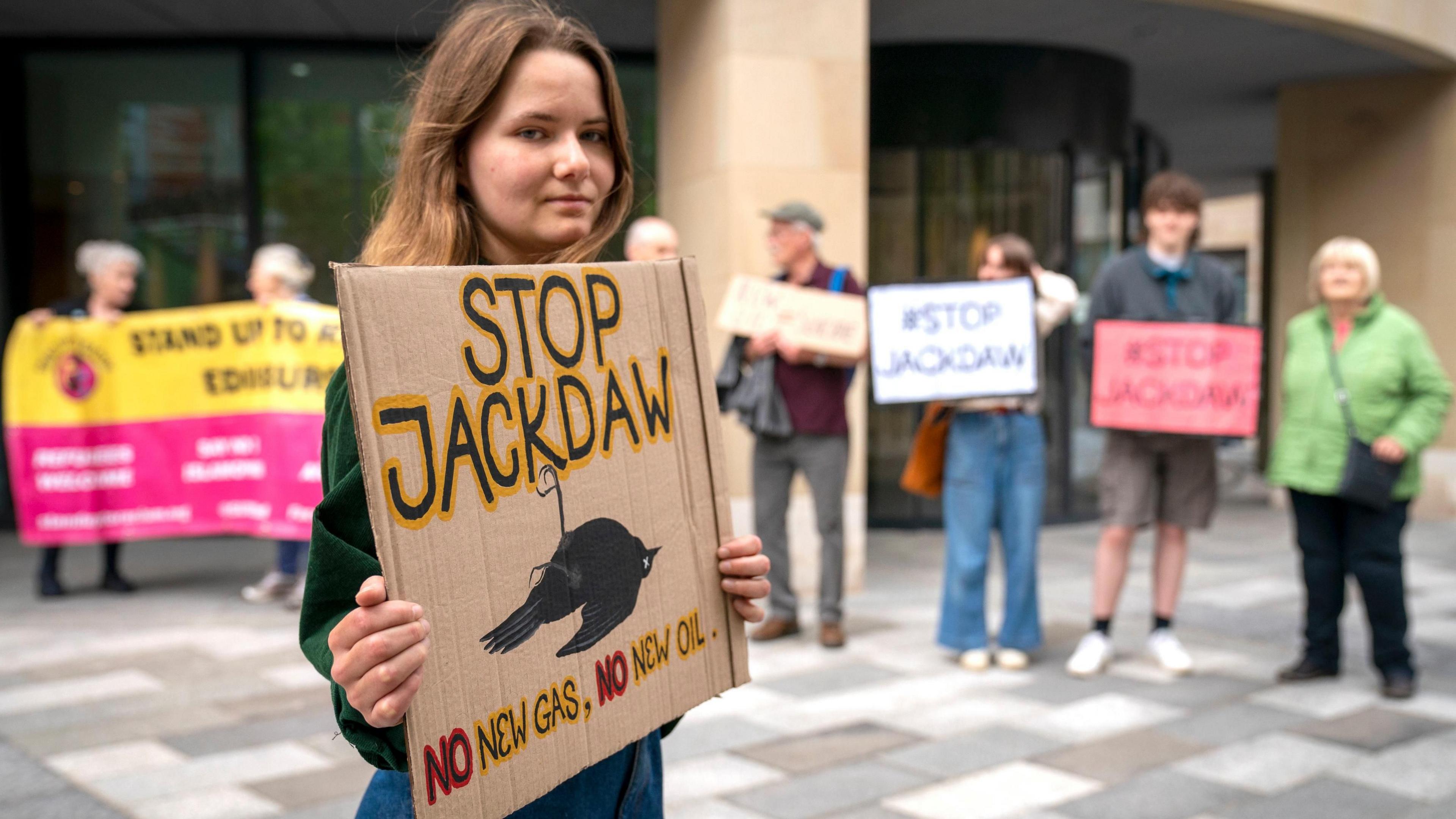 Image source, PA Media
Environmental campaigners are opposed to the Jackdaw development
In the light of global economic turmoil and disruption to oil and gas supplies driven by the wars in Ukraine and Iran, Labour has shifted position, pledging to reform the energy profits levy - also known as the windfall tax which amounts to a 78 per cent levy on production - and to allow some new drilling if it is linked (or tied-back in industry jargon) to existing facilities.
There is much less talk these days of Labour's flagship 2024 election policy, the creation of a publicly-owned green energy company called GB Energy based in Aberdeen.
In April, the head of the International Energy Agency, an intergovernmental organisation that advises on energy policy, appeared to validate Miliband's scepticism.
Fatih Birol said approving Jackdaw and Rosebank "would not make any significant difference" to the global energy crisis unleashed by the US and Israel's war on Iran.
"It is up to the government, but these fields would not change much for the UK's energy security, nor would they change the price of oil and gas," he told the Guardian.
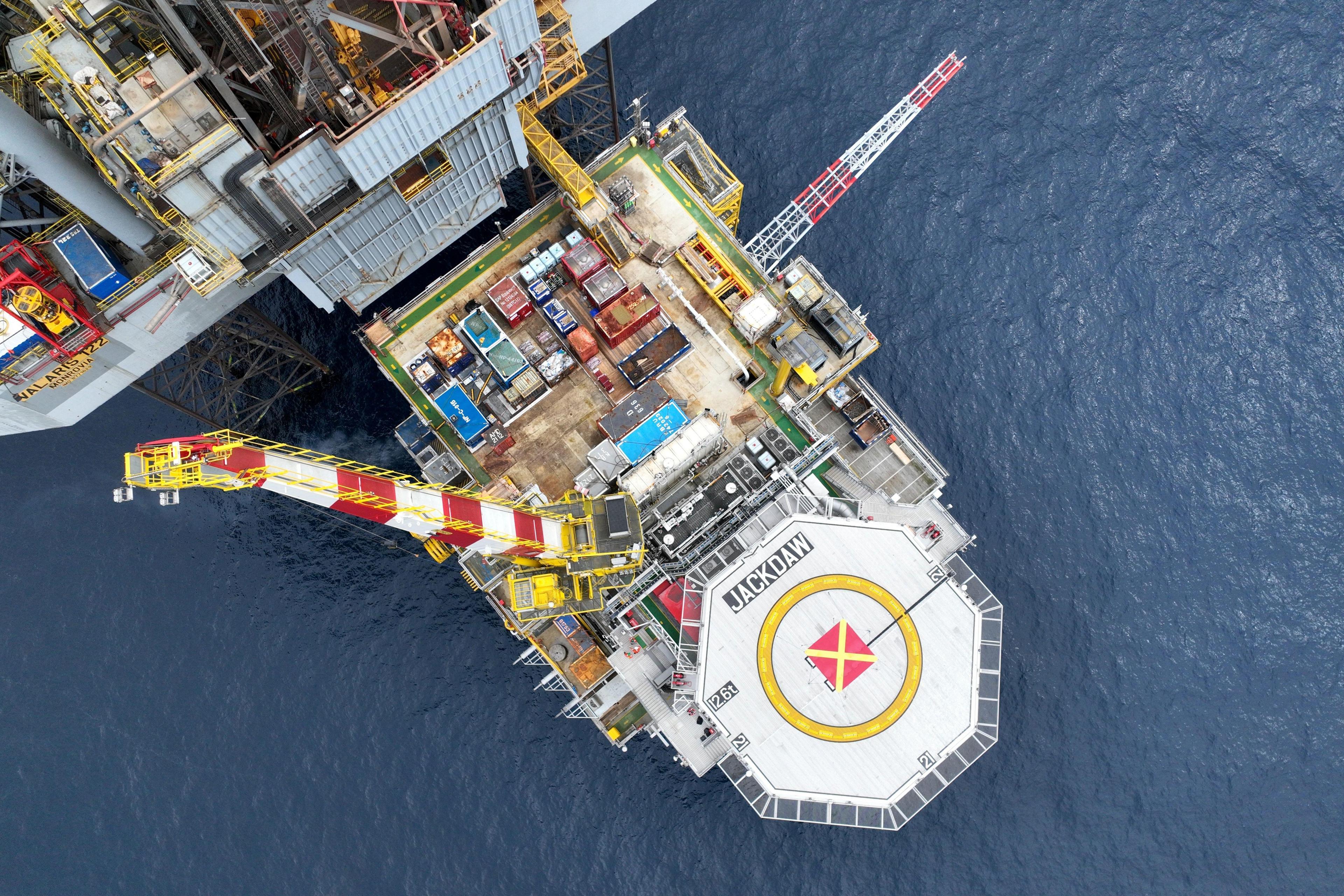
Back on Jackdaw, the work of preparation continues regardless.
Four huge columns await the delivery of high pressure gas from 5km below the platform, all but 100m of which is under the seabed.
This is a complex engineering project involving very high pressure gas and very high temperatures.
A few steps away we saw the enormous pipe which has been tied back to the existing Shearwater field, where the gas would be processed before being piped ashore to the St Fergus terminal in Aberdeenshire.
It all hangs in the balance.
The weather was calm as we visited Jackdaw but it is clear the field is in the middle of a stormy debate about how to power the nation.