1 hour ago
3
1 hour ago
3

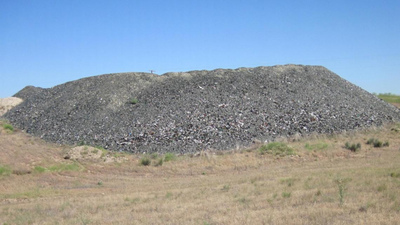
Idaho buried nearly 300 tons of crushed waste glass beneath Highway 75
Transport authorities in Idaho turned nearly 300 tonnes of discarded glass into road foundation material under Highway 75, creating a durable structural base while solving a local landfill crisis.
The engineering trial, executed along a 200-foot stretch of highway near Ketchum, placed an eight-to-12-inch layer of crushed glass cullet directly beneath the road surface. Conceived by late Idaho State Senator Clint Stennett, the initiative redirected massive piles of glass accumulating at the Ohio Gulch Recycling Center in the Wood River Valley into practical civil infrastructure. "This project is an excellent example of Idahoans, business and government working together to use our resources in the best possible way," Stennett said during an Earth Day site visit alongside transport officials, as reported by industry journal Roads & Bridges.
"It is critical that not only in highway projects, but in all aspects of our lives and businesses we look to reuse and recycle our critical resources."
Engineering performance of glass cullet
Instead of letting discarded bottles collect in regional landfills, civil engineers crushed the material into small, granular fragments known as glass cullet. When crushed down to optimum particle sizes, glass behaves similarly to natural sand and crushed rock, exhibiting strong compaction and drainage characteristics.
According to technical specifications published by the Federal Highway Administration (FHWA) in its User Guidelines for Waste and Byproduct Materials in Pavement Construction, glass cullet serves as an effective substitute for conventional aggregate in road embankments and base courses.
The FHWA technical documentation notes that clean cullet displays high internal friction angles, good permeability, and low moisture susceptibility, making it stable under heavy traffic loads.
When used as granular subbase or structural fill, crushed glass reduces thermal conductivity compared to natural stone. In cold climates like central Idaho, this thermal performance helps protect underlying road beds from severe freeze-thaw cycles, which frequently cause cracking and potholes in traditional asphalt surfaces.
Overcoming local recycling bottlenecks
The Highway 75 pilot project addressed a widespread economic issue facing rural communities across the United States: the high cost of transporting post-consumer glass to distant processing plants.
Because raw glass is heavy and yields low market value, municipal recycling programs in isolated areas often struggle to cover shipping costs to urban recycling centers. By processing waste glass locally and using it in nearby civil engineering projects, local authorities eliminated long-distance haulage fees while reducing the need to quarry virgin stone aggregates.
Prior to the Idaho installation, laboratory evaluations guided by FHWA frameworks verified that properly crushed cullet poses minimal environmental or safety risks.
When ground down to maximum particle sizes below 9.5 millimetres (3/8 inch), sharp edges are eliminated, allowing highway crews to handle the material using standard heavy construction equipment. Environmental testing further confirmed that inert glass does not leach harmful contaminants into surrounding groundwater or soil.
Broader adoption in road infrastructure
The Idaho transport experiment built upon broader federal research evaluating industrial byproducts for highway construction.
Federal guidelines highlight that incorporating processed cullet into subgrade layers, asphalt mixtures, and utility trench backfills offers double environmental savings by preserving natural aggregate reserves while extending landfill capacities. Highway agencies across several US states have since adopted guidelines allowing up to 10 to 15 per cent crushed glass content in asphalt wearing courses, and up to 30 per cent or higher in unbound subbase layers.
The Highway 75 section demonstrated that processed municipal waste can meet strict engineering standards for load-bearing road foundations, providing transportation departments with a practical strategy for sustainable infrastructure development.