1 hour ago
3
1 hour ago
3

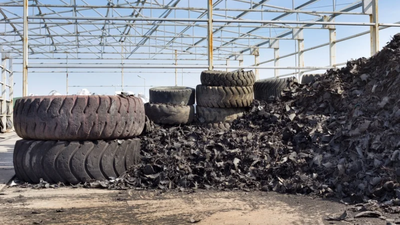
Engineers working to upgrade a busy highway junction near San Francisco in 2000 faced a serious technical problem. The ground was made up of about 30 feet of unstable bay mud, a soft type of soil that could sink or crack under the weight of normal road-building materials.
To solve the problem, project planners used an unusual method: they buried 662,700 shredded waste tires directly beneath the new highway on-ramp. The site, at the intersection of Interstate 880 and Dixon Landing Road in Milpitas, needed a raised embankment about 26 feet high, 700 feet long, and 50 feet wide to support a southbound connecting ramp. Using normal earth or rock fill would have placed a huge amount of weight on the soft ground.
This could have caused the road to settle over time and forced engineers to wait up to a year for the soil to become stable.Instead, the California Department of Transportation and local authorities replaced traditional fill with tire-derived aggregate. This lightweight material is made by shredding old vehicle tires into large pieces of rubber. According to records from CalRecycle, the state agency responsible for recycling and waste management programs, the method reduced the amount of downward pressure on the soft soil by about 40 percent.
It also saved $477,000 compared with other lightweight materials, including specially manufactured commercial aggregate. More than two decades later, state records show that the tire fill has continued to work without needing structural repairs or suffering performance problems.
Solving a foundation nightmare on bay mud
The soil around San Francisco Bay has created problems for civil engineers for many years. When heavy structures are built on deep layers of soft, water-filled sediment, the weight of traditional soil embankments slowly pushes the ground down.
This can cause uneven roads, cracks in structures, and expensive maintenance. When engineers designed the Dixon Landing Road interchange for Interstate 880, they considered two main ways to prevent the road from settling.
The first option was to use thousands of tons of normal fill and wait about 12 months for the soft mud underneath to compress and become stable before paving. The second was to use a specially designed lightweight fill that would put less weight on the ground.
Normal mineral soil is much heavier than engineered lightweight materials. A standard earth embankment at the site would have placed a downward load of about 3,750 pounds per square foot on the soft foundation. By using tire-derived aggregate, which weighs about one-third as much as normal soil, engineers reduced that load to 2,250 pounds per square foot. This 40 percent reduction in weight meant construction could continue without waiting for a long period of soil settlement, helping the project stay on schedule.
Turning toxic waste piles into civil engineering
The Interstate 880 project also helped solve an environmental problem that had been growing across California during the late 1990s: huge piles of discarded tires. At the time, California produced about 40 million scrap tires each year. Uncontrolled tire piles often caught fire, sending toxic black smoke into the air and producing dangerous oil runoff that could contaminate groundwater. To get the material needed for the interchange, the former California Integrated Waste Management Board, whose responsibilities were later taken over by CalRecycle, made an agreement with transportation officials to collect and transport the shredded tires.
In total, workers used 6,627 tons of shredded rubber in the ramp's foundation. To keep the structure stable and prevent heat from building up inside the fill, workers placed the rubber in two separate layers, each up to 10 feet thick, using normal heavy construction equipment. The two rubber layers were separated by a three-foot layer of low-permeability soil. Heavy geotextile fabric was also placed around the sides to stop nearby soil from entering the spaces between the rubber pieces.
The shredded tires remain completely covered by normal road materials and pavement, making them invisible to drivers traveling above.
Long-term performance and financial returns
The project did more than prevent the road from becoming uneven. It also produced major savings from the beginning. Other lightweight materials considered during planning, such as processed rock and special mineral aggregates, were expensive to purchase. In its official project summaries, CalRecycle reported that using tire-derived aggregate instead of commercial lightweight aggregate saved about $477,000 in total project costs.
The Milpitas on-ramp also gave engineers a real-world example of how shredded tires could be used as lightweight road fill. In a CalRecycle case study, state officials reported that after 22 years of continuous highway traffic, the on-ramp had operated without maintenance problems, ground movement, or structural damage. Research by DingXin Cheng, a civil engineering professor at California State University, Chico, who helped develop technical guidelines for the state agency, found that the layered design used at Interstate 880 provided a useful model for similar infrastructure projects. After the Dixon Landing Road interchange proved successful, transportation agencies across North America began using similar methods for lightweight fill. In California, engineers have since used tire-derived aggregate to stabilize damaged highway slopes, fill spaces behind retaining walls, and reduce vibrations beneath light rail transit lines.