1 month ago
41
1 month ago
41

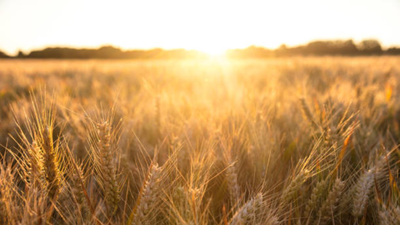
The four-hectare barley field was abandoned in 1961 after researchers harvested its final crop, allowing nature to take over without further human intervention.
In 1961, researchers at Monks Wood in Cambridgeshire harvested a final crop of barley from a four-hectare agricultural plot known as Stocking Close, ploughed the soil and walked away.
They did not plant a single tree, build a fence or protect young saplings with plastic tubes. Yet over the next six decades, the bare farmland naturally developed into a dense, closed-canopy native woodland. The long-term natural experiment, monitored by the UK Centre for Ecology & Hydrology (UKCEH), shows that passive rewilding can restore biodiverse native woodland on lowland farmland in a surprisingly short time.
The peer-reviewed findings, published in PLOS ONE under the title Long-term woodland restoration on lowland farmland through passive rewilding, provide important evidence for national afforestation strategies and show that nature can restore itself without expensive artificial intervention.
How thorny scrub protects young oaks
Researchers tracked vegetation changes across two nearby farmland plots that were abandoned decades apart next to the Monks Wood National Nature Reserve.
The four-hectare barley field abandoned in 1961 became known as the "Old Wilderness". A two-hectare grassland plot, last mown in 1996, was called the "New Wilderness". Scientists combined field surveys with airborne lidar laser scanning to track how the woodland developed.
At both sites, the first stage of regeneration was dominated by aggressive, thorny shrubs, including hawthorn, blackthorn, bramble and wild rose.
Rather than preventing trees from growing, the thick scrub protected them from large herbivores. Deer and rabbits could not easily get through the thorny vegetation, allowing young trees to grow without fences or plastic tree guards. "Biodiversity-rich woodland that is resilient to drought and reduces disease risk can be created without any input from us," said Dr Richard Broughton of UKCEH, the study's lead author.
"Our study provides essential evidence that passive rewilding has the potential to expand native woodland habitat at no cost and within relatively short timescales".Broughton said natural colonisation also avoids several problems linked to conventional tree planting. "Natural colonisation could play a significant role in helping to meet the UK's ambitious targets for woodland creation, as well as nature recovery and net zero greenhouse gas emissions by 2050," he said.
He added that it can expand woodland without the cost of planting, the disease risks linked to transporting nursery-grown trees or the environmental pollution caused by plastic tree tubes.
The unexpected role of jays and wind
The new woodland did not develop in neat rows. Its pattern was largely shaped by natural seed dispersal. Wind carried light seeds from species such as common ash and field maple from nearby ancient woodland into the fields, with many saplings appearing around the edges.
Deep inside the plots, heavier acorns formed clusters of pedunculate oak. These oaks were largely established by Eurasian jays and small mammals, which carried and buried acorns as winter food stores but failed to recover all of them.
Broughton said the findings highlight an important benefit of jays, which are sometimes viewed as agricultural or garden pests. "The huge benefits that jays provide in natural colonisation by dispersing tree seeds, especially acorns, helps to create more woodland habitat for all wildlife and far outweighs any impact of predation," he said.
Reaching canopy maturity in 50 years
The study showed that the change from open farmland to closed-canopy woodland happened quickly. Within 15 to 20 years of abandonment, both fields had become wildlife-rich shrubland, with vegetation averaging almost three metres in height. After 50 years, the Old Wilderness had reached 100 per cent woody plant cover. Trees more than 13 metres tall formed a canopy across 91 per cent of the area. The site had about 390 live trees per hectare, mainly pedunculate oak, ash and field maple.
Lidar data showed that after only five decades, the height and structure of the unmanaged Old Wilderness were approaching those of nearby Monks Wood, a semi-natural ancient woodland documented in historical records since 1279 AD. The new woodland also proved highly resilient. Severe summer droughts in Cambridgeshire in 1973, 1976, 1990, 1995 and 2003 did not stop the forest canopy from developing.
Policy impact on UK forestry targets
The project was carried out through the Achieving Sustainable Agricultural Systems (ASSIST) programme, funded by the Natural Environment Research Council (NERC) and the Biotechnology and Biological Sciences Research Council (BBSRC).
Researchers worked with government bodies including Defra and Natural England, helping inform new environmental policy. Their findings contributed to schemes such as the England Woodland Creation Offer (EWCO), which provides financial incentives to landowners who allow natural colonisation near existing sources of tree seeds.
Researchers stress that passive rewilding will not work everywhere. The approach depends on having nearby trees that can provide seeds, so some agricultural areas may still require active planting. But the Monks Wood experiment shows that where suitable seed sources already exist, simply allowing nature to take over can be one of the most effective and low-cost ways to restore native woodland.