1 hour ago
4
1 hour ago
4

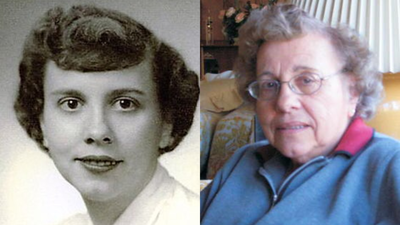
Mathematician and programmer Mary Tsingou Menzel
When mathematician and programmer Mary Tsingou Menzel sat down in 1952 at Los Alamos National Laboratory to code a complex physics problem on one of the world’s earliest digital computers, she was breaking new ground.
Her work helped make possible a landmark experiment that went on to influence chaos theory, non-linear dynamics and modern scientific computing. Yet when the findings were published in a major 1955 paper, her name was missing from the title page and appeared only in a sentence at the bottom of the front page: "We wish to thank Miss Mary Tsingou for running the computations on the Los Alamos MANIAC machine." It took more than half a century for the scientific community to formally recognise her contribution.
Following her death on 27 August 2026 at her home in Los Alamos, New Mexico, aged 97, obituaries in major publications including The Washington Post and the Los Alamos Daily Post highlighted her important role in 20th-century physics. Born to Greek immigrant parents in Milwaukee, Wisconsin, on 14 October 1928, Tsingou earned a bachelor’s degree in mathematics from the University of Wisconsin in 1951 before joining Los Alamos.
At the time, female mathematicians were paid less than male colleagues because employers openly argued that men were the main breadwinners.
Turning equations into computer code
Tsingou was assigned to the laboratory’s Theoretical Division, where dozens of women worked as manual "computers", carrying out routine calculations on mechanical desktop calculators. But her technical skills soon led to her becoming one of the first programmers of the MANIAC (Mathematical Analyzer, Numerical Integrator, and Computer), a huge room-sized machine built under the direction of Nicholas Metropolis.
Working with leading theoretical physicists Enrico Fermi, John Pasta and Stanisław Ulam, Tsingou was asked to code a non-linear string oscillation problem to study how energy moved through the system over time. The physicists developed the equations but did not have the programming skills needed to run them on the new machine. "They didn't know anything about programming," Tsingou said in an oral history interview recorded for the IEEE Global History Network.
"They set up the equations, and I did all the programming." Tsingou wrote the code line by line on punch cards, carefully checking her work before putting them into the MANIAC. The computer ran for hours and produced a result that surprised the researchers. Instead of spreading energy evenly as expected under statistical mechanics, the system returned to its original energy state in a repeating pattern. The unexpected result changed theoretical physics and led to decades of research into non-linear systems and soliton theory.
From footnote to full recognition
When the study was released as a Los Alamos report in May 1955, shortly after Fermi’s death, it listed Fermi, Pasta and Ulam as the main authors. Tsingou was mentioned only in a footnote for carrying out the computations. For decades, the experiment became widely known as the Fermi-Pasta-Ulam (FPU) problem. University textbooks, academic papers and scientific conferences continued to use the three men’s names, while Tsingou’s role remained largely unknown.
That began to change in 2008, when French physicist Thierry Dauxois published a paper in Physics Today titled "Fermi, Pasta, Ulam, and a mysterious lady." Dauxois argued that, under modern academic standards, Tsingou’s contribution was important enough to deserve full authorship. "It is time for a proper recognition of her decisive contribution," Dauxois wrote, suggesting that the problem should be renamed the Fermi-Pasta-Ulam-Tsingou (FPUT) problem.
The scientific community gradually adopted the new name, formally adding Tsingou to the title more than 50 years after she first ran the code.
A quiet pioneer of computing
Tsingou completed a master’s degree in applied mathematics from the University of Michigan in 1955 before returning to Los Alamos. She worked there for 35 years before retiring. She later married Joseph Menzel and became an early expert in Fortran, developing algorithms used to simulate nuclear weapons effects, explosions and fluid dynamics.
She is also credited with co-creating one of the earliest computer graphics programmes capable of showing physical explosions visually on a screen.
Despite the later campaign to give her proper academic credit, colleagues remembered Tsingou Menzel as a modest person who rarely focused on her historic role. She often spoke with pride about serving her country during the Cold War through national security science. She is survived by her two daughters, Ann and Carol, both medical doctors. Her work on the MANIAC machine remains an important milestone in the history of computational physics.