1 hour ago
2
1 hour ago
2

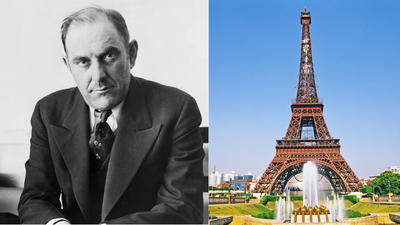
A con artist named Victor Lustig famously 'sold' the Eiffel Tower for scrap in 1925. He convinced scrap metal dealers the monument was being dismantled due to high maintenance costs. Lustig used forged documents and official appearances to execute his elaborate deception. After his initial success, he attempted the same scam again in Paris. His criminal career eventually ended with his arrest and imprisonment in the United States.
The Eiffel Tower is one of the world's most recognisable landmarks, attracting millions of visitors to Paris every year. Yet in 1925, it became the centre of an astonishing fraud that continues to fascinate historians.
Victor Lustig, a charismatic con artist, convinced a wealthy scrap metal dealer that the French government had secretly decided to dismantle the iconic monument and sell it for scrap. Using forged documents, an official identity and remarkable powers of persuasion, he disappeared with the victim's money. Encouraged by the silence that followed, Lustig later returned to Paris and attempted to repeat the extraordinary deception, turning an unbelievable idea into one of the most famous scams ever recorded.
How Victor Lustig 'sold' the Eiffel Tower in 1925
Victor Lustig's extraordinary scam began in the spring of 1925 when he noticed newspaper reports highlighting the soaring maintenance costs of the Eiffel Tower. Although the French government had no intention of dismantling the landmark, the discussions gave the seasoned con artist an idea. Posing as the Deputy Director-General of the Ministry of Posts and Telegraphs, Lustig forged official government documents and invited six of Paris's leading scrap metal dealers to a confidential meeting at the luxurious Hôtel de Crillon.
There, he claimed the government had secretly decided to sell the Eiffel Tower for scrap because maintaining the ageing structure had become too expensive, but wanted to keep the decision hidden until the deal was finalised to avoid public outrage.To make the proposal appear genuine, Lustig presented official-looking paperwork, explained the supposed logistics of dismantling the tower and even arranged for the businessmen to inspect the monument.
Among the invited dealers, André Poisson stood out as the ideal target. He was relatively new to the scrap metal business and eager to establish himself among Paris's elite industrialists. Sensing his ambition, Lustig privately hinted that a personal bribe would ensure Poisson won the contract.
Rather than raising suspicion, the request made Lustig seem like a typical corrupt government official. Convinced the deal was legitimate, Poisson paid both the purchase price and the bribe without demanding official receipts.Once the money was in his possession, Lustig immediately fled to Austria. Expecting the fraud to dominate newspaper headlines within days, he waited for news of his arrest. Instead, nothing happened. Embarrassed by the deception and unwilling to admit he had attempted to bribe a government official, Poisson reportedly chose not to report the crime. Realising his victim's silence had protected him, Lustig boldly returned to Paris a few months later with the same forged documents and the same elaborate story.
He approached another group of scrap metal dealers in an attempt to repeat the remarkable fraud. While many popular retellings claim he successfully completed a second sale, the official history of the Eiffel Tower states that one prospective buyer became suspicious before the deal could be finalised, forcing Lustig to flee France before authorities could intervene. Regardless of how the second attempt ended, the episode secured Lustig's place in criminal history.
Who was Victor Lustig?
Born in 1890 in what is now the Czech Republic, Victor Lustig built an international reputation as a master swindler. Fluent in several languages and known for his polished appearance, he travelled across Europe and the United States using dozens of aliases to carry out elaborate frauds. His ability to read people's ambitions and weaknesses made him exceptionally successful. Beyond the Eiffel Tower episode, he is also remembered for deceiving notorious gangster Al Capone and later operating a major counterfeit currency ring in the United States.
What became of André Poisson?
Very little is known about André Poisson after the incident, largely because he chose not to publicise what had happened. Historians believe embarrassment played a major role in his silence, as reporting the fraud would also have meant admitting he had attempted to bribe a government official. His reluctance to come forward gave Lustig enough confidence to revisit Paris and attempt the same scheme again before suspicion eventually forced him to abandon it.
How did Victor Lustig's life end?
Lustig's career of deception eventually caught up with him in the United States. By the 1930s, he had become involved in an extensive counterfeit currency operation that drew the attention of the US Secret Service. Arrested in 1935, he briefly escaped from federal custody before being recaptured less than a month later. He was sentenced to prison and died in 1947 at the United States Penitentiary Medical Center in Springfield, Missouri.The attempted sale of the Eiffel Tower remains one of history's most remarkable frauds because it transformed an impossible idea into a believable business deal. Rather than relying on force or theft, Lustig exploited timing, public perception and carefully crafted official appearances to deceive his victims. Nearly 100 years later, the story continues to be studied as one of the finest examples of how confidence schemes can succeed when trust outweighs scepticism.