1 month ago
46
1 month ago
46

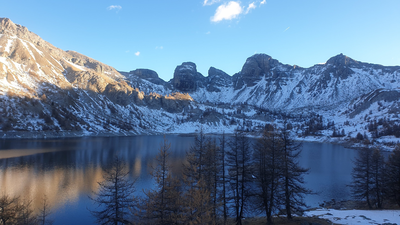
Lake Allos (French Alps), the largest natural high-altitude lake in Europe and one of the two study sites for this research. Credit: Hervé Rogissart
In 1924, Arctic charr from Lake Geneva were introduced into Lake Allos. A hundred years later, scientists found that their descendants had developed different metabolic responses, even when raised under the same laboratory conditions.A new study by researchers from Université Savoie Mont Blanc-INRAE in France found that two populations of Arctic charr (Salvelinus alpinus) developed distinct physiological traits after being separated for just 100 years. Published in Proceedings of the Royal Society B, the study shows that cold-water freshwater fish can adapt to new environments much faster than scientists once believed.Evolution is often thought to take thousands or even millions of years.
However, when small populations become isolated in very different environments, the process can happen much more quickly."This natural experiment gave us a rare chance to study how quickly populations can become different after moving into a new environment," said Hervé Rogissart, the study's first author, in an interview with Phys.org."We also wanted to find out whether these differences were mainly caused by phenotypic plasticity, where organisms adjust to their surroundings, or by genetic changes that built up through natural selection over many generations."
Raising fish under the same conditions
The original Arctic charr population lived in Lake Geneva, a large lake on the northern side of the Alps. In 1924, conservationists moved some of these fish to Lake Allos, a high-altitude lake located in France's Mercantour National Park.To understand whether the differences between today's fish populations were caused by the environment or by genetic changes, the researchers carried out several experiments.They first studied adult fish from both lakes, comparing their body shape, structure, and growth. During the breeding season, they collected eggs and sperm from fish in both populations and raised their offspring in a controlled laboratory.The young fish from both groups were raised under the same water temperatures, feeding schedules, and other conditions in what scientists call a "common garden" experiment.
This allowed the researchers to separate genetic effects from environmental influences."We found clear differences in body shape and growth among wild adult fish, which we expected because they live in different environments," Rogissart said. "More importantly, although differences in young fish were smaller, they still showed clear differences in metabolism when raised under identical conditions. This suggests that rapid physiological adaptation had taken place, even though the two populations shared a common origin less than a century ago.
"
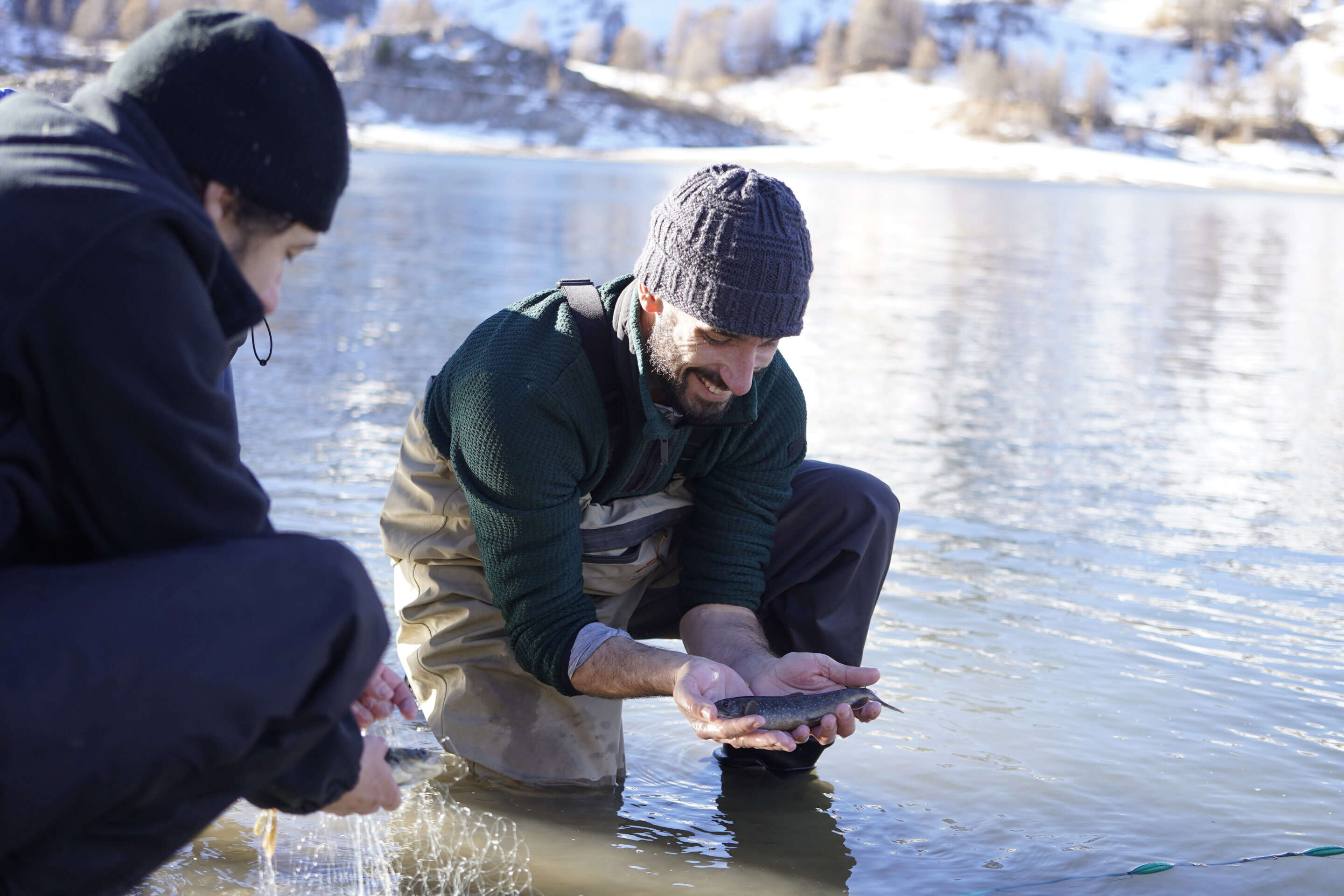
Field sampling of Arctic charr at Lake Allos (French Alps), one of the two study sites. Credit: Martin Daufresne
Physical changes and metabolic differences
The study showed that the two fish populations adapted in different ways.The differences in body shape and growth among adult fish were mainly explained by phenotypic plasticity. In other words, the fish adjusted their physical development according to local conditions such as water temperature and food availability, without changing their genetic makeup.The young fish raised in the laboratory told a different story.Juveniles descended from the Lake Allos population had a higher metabolic rate than those from Lake Geneva. When researchers increased the water temperature to create heat stress, the Lake Allos fish continued to show a different relationship between body size and metabolism, even though they had never lived in Lake Allos."Our results suggest that most differences in body shape and growth come from phenotypic plasticity, meaning fish quickly respond to local conditions like temperature and food supply," Rogissart explained.
"However, the Lake Allos juveniles still showed a higher metabolic rate and different metabolic responses at higher temperatures, even when both groups were raised under the same laboratory conditions.
"
What this means for conservation
The rapid physiological changes seen in the Lake Allos population suggest that some species may have a greater ability to adapt genetically to changing environments than previously thought.As climate change continues to warm freshwater lakes across Europe, understanding how isolated fish populations respond to higher temperatures could help guide future conservation efforts."Our findings improve our understanding of how genetic diversity and population history affect traits and heat tolerance, which ultimately influence how well populations can cope with environmental change," Rogissart said. "Our next goal is to study the genetic basis of climate adaptation. By examining more Arctic charr populations, we hope to identify the genes and genetic changes that help these fish survive rising water temperatures.
"
Why Arctic charr are an important species for evolution research
Arctic charr are among the most adaptable freshwater fish in the Northern Hemisphere. They inhabit environments ranging from deep alpine lakes to Arctic rivers and coastal waters, often developing distinct forms within the same species to exploit different habitats and food sources. In some lakes, separate populations feed on plankton near the surface, while others specialize in insects, crustaceans, or fish living close to the lake bottom.
These differences can emerge over relatively short evolutionary timescales, making Arctic charr a valuable model for studying adaptation and early stages of speciation.This adaptability does not mean the species is immune to environmental change. Many southern populations, including those in Lake Geneva, already live near the warmest limits of the species' natural range. Rising lake temperatures reduce the amount of cold, oxygen-rich water that Arctic charr depend on, increasing pressure on breeding populations. Previous studies have linked warming waters with declining Arctic charr numbers in Lake Geneva.