1 hour ago
4
1 hour ago
4


Christopher Malcolm, right, physically and psychologically abused his former fiancée - who has told her story to the BBC anonymously
ByMary McCool
BBC Scotland
This article contains details, including depictions of violence, which some readers may find distressing.
Without the interventions of her family and friends, Amy says she would have married the man who had physically and psychologically abused her for much of their relationship.
Had the wedding gone ahead, she fears he would have eventually killed her.
Christopher Malcolm, a serial rapist who was recently jailed for his crimes, inflicted life-changing injuries on his former fiancée - on one occasion she said he left her face "black and blue" just before she visited her terminally ill father for Father's Day.
Amy, not her real name, told the BBC that staying in the relationship was often a means to calm the violence and survive. So long as Malcolm was free, she said she did not feel safe enough to report him to police.
Her loved ones, meanwhile, grew increasingly concerned. On several occasions they reported their concerns for Amy's welfare to Police Scotland's disclosure scheme for domestic abuse, external (known as Clare's Law in England and Wales), supplying evidence including text messages and photos of her injuries.
This ultimately helped officers build a strong enough case to arrest Malcolm, who was taken into custody in September 2024. Shortly afterwards, Amy gave a full report of the rapes, assaults and abuse she had been subjected to.
She had been due to marry Malcolm four weeks later.

Amy was due to marry Christopher Malcolm, but he was arrested four weeks before the ceremony
Amy met Malcolm on the dating app Tinder around the end of August 2023.
They went for a coffee and a walk (he didn't drink) and she remembers him being "lovely and fun" – but the relationship progressed much more quickly than she expected.
Within the first week she had met his parents, within months they were living together and they were engaged by Christmas.
"When we were happy it was like he was like my best friend," she said. "Towards the end, he could finish my sentences. He knew what I was thinking – it was nice, but scary at the same time."
Malcolm quickly began exerting control over Amy's life. She said he insisted she delete social media so their relationship remained "just between us".
She said she was not allowed to take phone calls from her family in their home because he "didn't like their accents" – he would hide her phone or physically take it from her.
Get in touch
Do you have a story you would like to share with the BBC?
On multiple occasions he turned up at her work and demanded that she leave early, threatening to cause a scene. She said she knew if she didn't comply she would have a "horrific night" when she got home.
"It upset me a lot," said Amy. "That was the industry I'd worked so hard to get into and I absolutely loved my job. I felt like I was losing a part of myself by losing that side of work.
"I started feeling like my employees didn't respect me anymore because I was allowing someone to tell me when I was leaving work. I didn't know they were aware of what was going on."
Three days in 'attack mode'
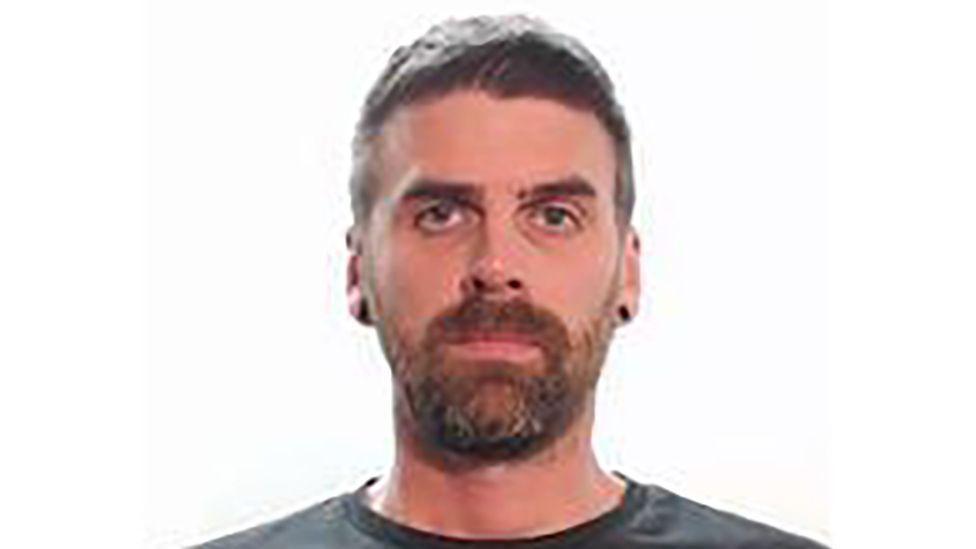 Image source, Police Scotland
Christopher Malcolm was jailed for his crimes in July
Violence was also introduced into the relationship – occasionally to begin with, but Amy said it increased to every other weekend.
She described one incident where Malcolm was in "attack mode" for three days, had ripped up their sofa with a Stanley knife and had threatened suicide.
Amy also described occasions when Malcolm would straddle her chest and strangle her. She said he would taunt her during these assaults and threaten more violence.
He left her permanently injured and disfigured. During one attack, Malcolm fractured her wrist and stopped her from going to hospital, which now means she cannot hold a book in one hand. Amy said this happened during an argument when he ranted: "Women are always trying to control my life".
He raped her on more than one occasion – including when a child was in the property. Amy was made to sit on the floor in front of the child and apologise for any fright she had caused.
On some occasions, she described it as a "switch" being flipped in his personality. On others, he let her know what was about to happen.
"He would play heavy metal first thing in the morning at 6am on the days when he would behave badly," she said. "I told him how much it triggered me - he knew it was a torture method, 'be prepared for what happens today'."
Amy tried to reason with Malcolm after the attacks – saying she did not deserve to be treated this way. He would turn the conversation back to his own struggles, which left her feeling like she could "do nothing right".
"You start to just become numb to it because you realise there's nothing you can do," said Amy.
"You just feel a bit trapped because you know if you tell anyone else, they'll just tell you to leave, but you're not in a position where you feel like you can leave."


One of the things that prevented Amy from becoming completely isolated was the way her friends and family spoke to her about their concerns – "directly, but not forcefully".
They were clear that they loved her and wanted her to be safe. They were also clear that they felt Malcolm was not a good man - but they said any decisions she made had to be her own.
Her sister wrote her a letter explaining why she could not come to their wedding, describing "terrible nightmares" and the worry that she would never see her again.
It reads: "Please know this, if you decide at the last minute not to go through with it, get in your car and drive, drive to me if you have to.
"My door will always be open for you."

Without Amy's knowledge, four people separately reported their concerns to police. Malcolm was arrested and released on bail after the first report, but evidence continued to mount and officers urged Amy to make her own statement.
"They were very explicit with me," she said. "They said 'if you don't make a statement we're going to find you in a ditch at the side of the road'.
"I remember that hitting me really, really hard because I'd never really had someone say something so candidly to me before. I was very aware that this was potentially a possibility at some point, if I continued."
Amy, now aged 30, approached the BBC to tell her story as she believes her family, friends and the police officers involved in her case ultimately saved her life.
In her case, she said, the system worked.
Police Scotland said that in cases where abuse survivors are reluctant to make reports, officers will look for a whole range of evidence that is not dependent upon the survivor.
This includes body-worn video, phone analysis, injury photographs, medical evidence and histories of previous incidents or evidence from previous partners. Such evidence can allow cases to proceed if there is a realistic chance of conviction.
A spokesperson for the force said the information Amy's family and friends gave was "crucial" in painting a picture of Malcolm's offending.
Following a trial involving 56 witnesses, Malcolm was convicted of crimes against four women in Lothian and Moray, including Amy, stretching as far back as 2008 when he was still a teenager.
He recently lodged an appeal against his 16-year sentence.
Amy believes that Malcolm's long-ingrained misogyny shows that he will never be rehabilitated.
Reading headlines about the recent murders of women like Stacy Hunter and Vikki Solomon by their partners makes Amy concerned for her future safety – particularly when Malcolm could be automatically released early under recent government proposals.
These proposals were criticised this week by Scotland's most senior judges, external, who warned that releasing violent criminals and rapists into communities would put public safety at risk.
Protecting women from violence looks to be high on First Minister John Swinney's agenda, with promises to criminalise misogyny and fund specific support services over the course of the parliament – though critics including Rape Crisis Scotland say there needs to be "clear commitments and timescales".
For the moment, Amy is determined to enjoy her life. She has been supported by multiple organisations, received counselling, got herself a new car and a home and is ready to start a family.
With work, she says she has let go of resentment over how she was treated – and remains immensely grateful to the people who stood by her.
She added: "I think it's really important for family and friends to know that you will be empowered if you stand up for someone you're concerned about.
"My friends and family were absolutely petrified that I was going to hate them, that I wouldn't want to have anything to do with them afterwards. All I felt was relief and thankfulness for them being so brave.
"I didn't know so many people cared - I was so grateful."
If you have been affected by any of the issues in this story, help and support is available at BBC Action Line.