
 6 months ago
64
6 months ago
64

Laura Devlin,in Norwichand Neve Gordon-Farleigh

 PA Media
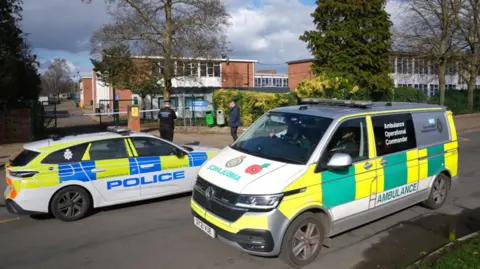
A teenage girl was stabbed at Thorpe St Andrew School near Norwich on Wednesday - sending the building into lockdown
An incident at a secondary school near Norwich in which a teenage girl was stabbed has raised questions about safety procedures when an emergency happens.
How do staff respond to such incidents in order to protect pupils and others, and does the current guidance go far enough?
What happened at Thorpe St Andrew School?
 PA Media
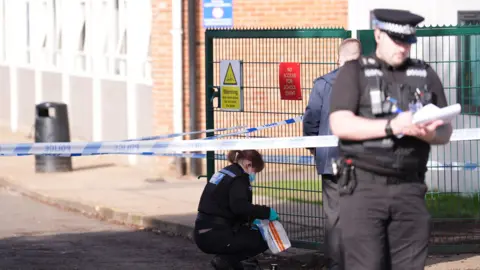
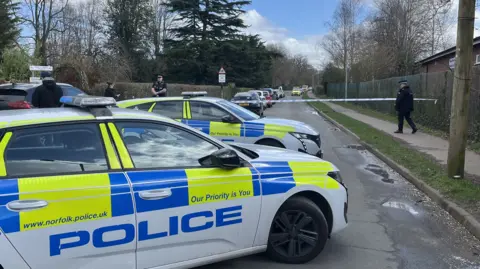
Police and forensic teams spent Wednesday gathering evidence at the school
The incessant ringing of a bell, pupils hiding under their desks, all doors locked.
Thorpe St Andrew School near Norwich went into lockdown on Wednesday when a teenage girl was stabbed on site during mid-morning lessons.
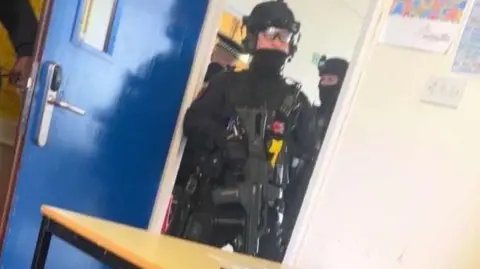
As staff and pupils barricaded themselves inside, armed police entered the school and launched a manhunt for the suspect. A 15-year-old boy was arrested soon after, and has since been charged with attempted murder, on a road close to the school site.
Outside, parents and guardians gathered, anxiously waiting for news.
Inside, the school had activated its emergency response. Children were told to stay under desks and to switch off their phones.
Staff relayed what had happened, said everyone else was safe and eventually allowed its 1,800-plus pupils to go home early. The injured girl was later discharged from hospital.
How did staff and pupils react?
 Contributed
A photo taken from within a classroom showed an armed police officer at the scene
Owen Jenkins, chief executive officer at the Broad Horizons Education Trust which runs Thorpe St Andrew School, said it had clear procedures in place - and staff acted swiftly.
"We want to recognise how well our staff and students responded during the lockdown," he said in a statement on Thursday.
"Throughout a prolonged and understandably distressing situation, staff remained calm, focusing on supporting and protecting the students in their care, who in turn showed great maturity and composure.
"As the situation unfolded, staff needed to respond to the needs of the particular students in front of them and adapt their approach accordingly, always with the priority of keeping everyone safe and supported.
"We understand how worrying this event was for families and want to thank our students who coped so well.
"We have shared a range of support measures we are providing for students, families and the community for as long as it is needed.
"We sincerely hope that we, and indeed every other school across the country, never have to put these protocols into practice again and would like to thank the emergency services for their expertise and response yesterday."
What has been the wider impact?
 Shaun Whitmore/BBC
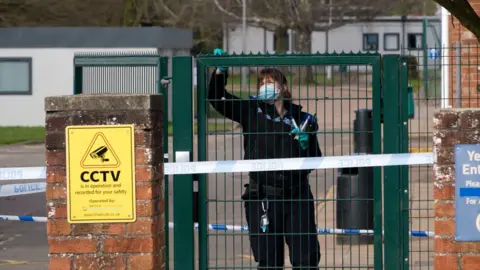
Police were called to Thorpe St Andrew School at 10:24 GMT on Wednesday
David Trickey, leading consultant clinical psychologist and co-director of the UK Trauma Council, said that while some children had "strong reactions" following the incident, things would "settle" over time.
"When something frightening happens, children and young people cope best when adults focus on three things," he said.
"First, help them to feel safe and calm by reassuring them and keeping routine as normal as possible.
"Second, help them to feel connected so they know they are not alone and can talk about what they are feeling.
"Third, help them feel capable and hopeful, remind them that difficult things usually settle and that the adults are there to support them."
He said normal reactions following these sorts of incidents included children having memories that felt "stuck going round and round", whereas others might not want to think about it - and others may startle easily or find it difficult to sleep.
"These sorts of events have a whole ripple effect," he added.
"Of course they affect the children who experience it directly, but also other children around them, other classes, other schools and the adults.
"Also the community as well, people will hear about the events and it will make them question perhaps what's going on and how safe they feel."
What is the official guidance?
 Qays Najm/BBC
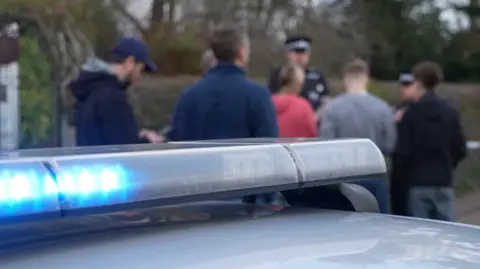
James Wilson said incidents like the lockdown at Thorpe St Andrew School were "extremely rare"
The school's procedure would have been based on a 60-page document from the Department for Education (DfE) which details protective security and preparations for emergencies.
Norfolk County Council told the BBC it expected all schools to follow the "comprehensive guidance".
It includes appointing a head of security, who then leads the incident response and liaises with police and families; having a plan and possible drills for lockdown and evacuation - and providing additional support for pupils with special educational needs and disabilities (SEND).
Schools are also advised to have "grab kits" in place ready for an emergency - containing school site plans, medication lists, registers, emergency contact details, and its lockdown/evacuation template.
"Incidents like this are extremely rare and schools have plans in place in the unlikely event that something like this happens," said James Wilson, director of strategy and outcomes for children's services.
"Our priority now is to ensure that the school has the support it needs over the coming days.
"We have colleagues from our critical incident team in school today, who are trained to support children, young people, and school staff during and after traumatic or distressing events."
'Schools should practise like fire drills'
 PA Media
Wayne Bates from NASUWT The Teachers' Union, said practice drills for emergency situations reduced stress and panic
The NASUWT, the Teachers' Union, says it has had concerns for some time that advice given to schools about lockdown procedures is inadequate.
Wayne Bates, from the union, said the procedures could be "quite distressing", which was why schools should practise in the same way they would with fire drills.
"Because you practise things, people understand what they have to do and respond accordingly," he said.
"If lockdown procedures are practised and drills occur, that helps people to respond effectively without that level of stress and panic that could creep in otherwise.
"If you don't practise something it's very hard to enact it in an emergency situation.
"Schools that are effectively following best practice will be simulating incidents that require a lockdown situation and how that goes."
He said advice for schools could be obtained from the government, police, local authority and multi academy trusts.
He hopes the introduction of Martyn's Law — the government's response to the Manchester Arena Bombing in 2014 — would help schools.
The DfE has been approached by the BBC for comment.


