6 months ago
50
6 months ago
50

Jonathan BealeDefence correspondent

 US Navy via Getty Images
US President Donald Trump claims his country has a "virtually unlimited supply" of key weapons. Iran's Defence Ministry says it has "the capacity to resist the enemy" for longer than the US had planned.
Weapons stocks and supplies alone will not decide the outcome of this conflict - Ukraine has long been outnumbered and outgunned by Russia - but it's certainly a significant factor.
The tempo of operations has been high from the the start. Both sides will already be using up weapons faster than they can be produced.
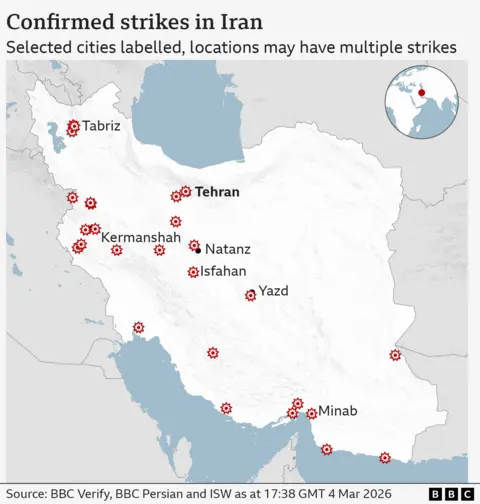
The Tel Aviv-based Institute for National Security Studies (INSS) estimates that the US and Israel have already carried out more than 2,000 strikes, each involving multiple munitions.
The INSS says Iran has already launched 571 missiles and 1,391 drones. Many will have been intercepted. For both sides, this level of combat will become harder to sustain the longer the war drags on.
Western officials say they have already seen a decrease in the number of missiles Iran is firing – down from hundreds in the first day of the war to dozens now.
Before the war, it was estimated that Iran had a stockpile of more than 2,000 short-range ballistic missiles. No military publishes precise numbers on how many weapons they have at their disposal, as such figures remain classified to keep adversaries in the dark.
America's top commander, Gen Dan Caine, said on Wednesday that Iran's ballistic missile launches were down 86% from the first day of the fighting on Saturday. US Central Command (Centcom) says there's been a 23% decrease in just the last 24 hours.
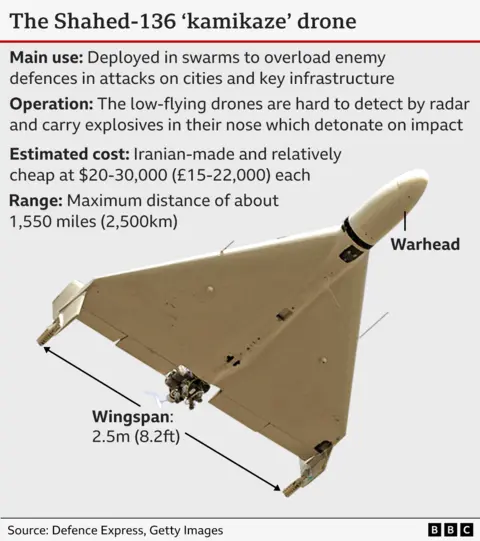
Iran was believed to have mass-produced tens of thousands of its Shahed one-way attack drones before the war. It's exported the technology to Russia – which has been using their version of the Shahed to devastating effect in Ukraine. Even the US has copied the design.
But Caine said Iran's drone launches had dropped by 73% since the first day of the conflict. Iran appears to be struggling to maintain a high tempo of operations.
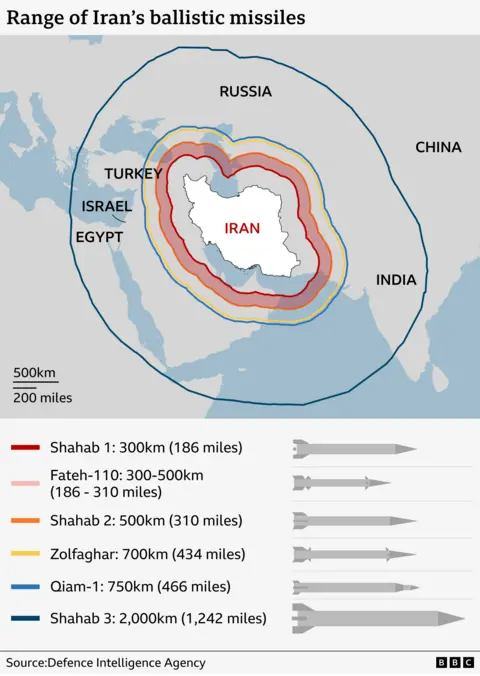
It is still possible this dramatic decline may be an attempt to preserve stockpiles - but maintaining production will only become harder.
US and Israeli jets now have air supremacy over Iran. Most of Iran's air defences have been destroyed. It no longer has a credible air force. Centcom says the next phase of the war is focused on hunting down Iran's missile and drone launchers, its weapons stockpiles, and destroying the factories that produce them.
It may now be easier for the US and Israel to degrade Iran's ability to fight. But it'll be difficult to destroy all its weapons stockpiles.
Iran is a country three times the size of France. Weapons can still be hidden from the sky.
Recent history also shows the limitations of wars fought from the air. Israel's military has still not destroyed Hamas in Gaza after more three years of intensive bombing. Houthi rebels in Yemen survived a year-long US bombing campaign - as did some of their weapons.
The US remains the world's most powerful military. Its conventional stockpiles will be deeper than any other country.
But the US military still largely relies on expensive precision-guided weapons that are produced in limited quantities. Trump is reported to have called a meeting with defence contractors later this week to press them to speed up production. It's an indication that even America's resources might be stretched.
Some of the pressure may have eased now that the US has relative freedom to carry out strikes at close range.
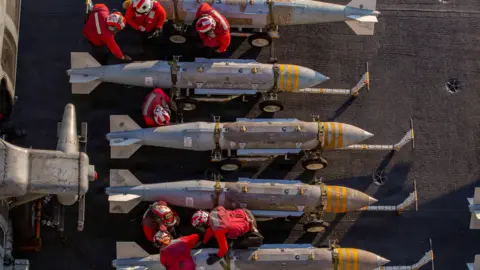
Caine said the US had already moved from using "stand-off weapons" – more costly and sophisticated long-range weapons such as Tomahawk cruise missiles. The US Air Force is now using less expensive "stand-in" weapons – like JDAM bombs – with which can be dropped above a target.
Mark Cancian, a former US Marine colonel with the Washington-based Center for Strategic and International Studies (CSIS), says that, after the initial attack from a distance, the US "can now use less expensive missiles and bombs".
He says the US could keep that level of fighting going on "almost indefinitely". The longer the war lasts, the list of targets also gets smaller – meaning a gradual slowing down in the tempo of operations.
Mark Cancian says the US has tens of thousands of JDAM bombs - but expensive air defence systems are in shorter supply. In the initial stages of the conflict, those have been essential to defeating the threat from Iranian retaliatory attacks.
Patriot missiles have been in high demand – not just from the US but also its Arab allies and Ukraine. Each interceptor missile costs more than $4m (£3m) and the US is believed to currently produce around 700 a year. If Iran is still able to launch ballistic missiles, it will eat into these limited stockpiles.
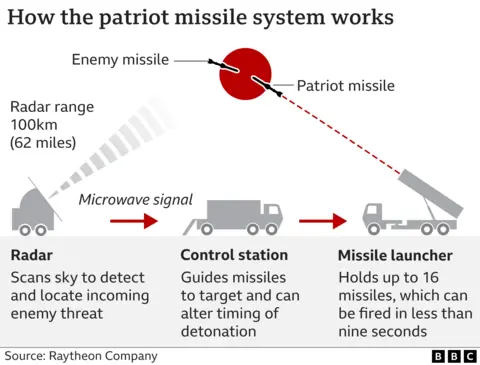
CSIS expert Cancian estimates that the US may have stockpiles of around 1,600 Patriot missiles – which in recent days will have been depleted. While he says the US can keep the air-to-ground war going for a "long time", the air defence war is "more iffy".
"If President Trump is willing to draw down on the number of Patriots, then I think we can outlast the Iranians - but it will come at a cost of risk in a potential Pacific conflict."
The fact that Trump is set to meet US defence firms later this week is a sign that there is some concern about weapons stocks. But the US Defence Secretary Pete Hegseth insists "Iran can't outlast us". On this, he's probably right.