1 hour ago
3
1 hour ago
3

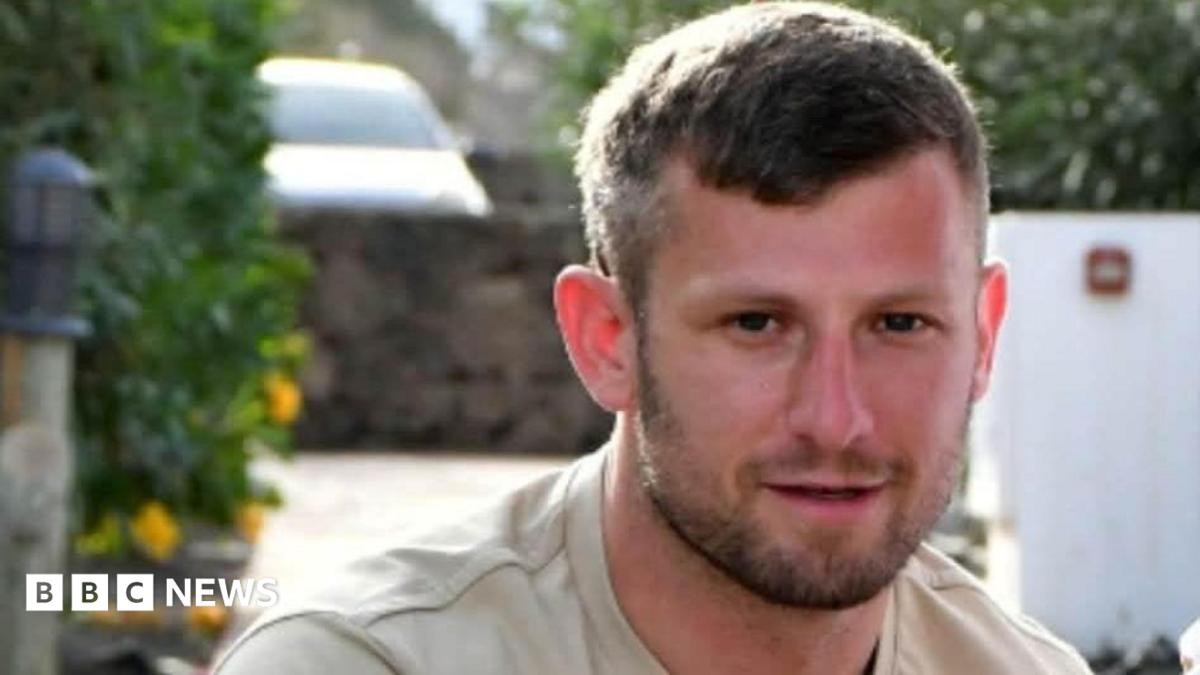
 Image source, Family handout
PC Harper was killed on duty in 2019, just four weeks after getting married
ByDaniel Sandford
UK correspondent
Just three weeks after becoming prime minister, Andy Burnham is already unpicking a key piece of legislation passed under his predecessor Sir Keir Starmer.
The Sentencing Act 2026 was designed to produce a semi-permanent solution to the prisons overcrowding crisis, by releasing large numbers of prisoners earlier than had been previously planned.
After ordering a review, Burnham announced that he would exclude most rapists, child sex offenders and members of grooming gangs from the legislation.
But that left many people convicted of manslaughter still eligible for early release, including two of the men convicted of the manslaughter of PC Andrew Harper - prompting outcry from his family and former colleagues.
Burnham now says he is "increasingly confident" of being able to prevent the early release of "other serious offenders" including PC Harper's killers.
But how might he do that and why have the options he is looking at been previously rejected?
The problem: packed prisons
The prison population in England and Wales on 10 August was 86,536, which was 97% of the total capacity.
For decades politicians have been encouraging longer and longer sentences, but have not built the prisons to match.
If the prisons get completely full, courts will not be able to sentence murderers, rapists and other violent offenders. People suspected of the worst crimes will also have to be released instead of being held in custody ahead of their trials.
The controversial Sentencing Act 2026 made a number of key changes designed to see fewer people sent to prison, and to release many prisoners earlier than planned.
Following intense public and political pressure, Burnham now says he wants "a more focused approach" that will free up more prison spaces.
With the prisons in crisis, and no obvious way just to pick and choose who is released early, how can he do it?
In social media posts by the prime minister and his Justice Secretary Alex Norris, three areas were highlighted - female prisoners, foreign prisoners, and prisoners given the discredited Imprisonment for Public Protection sentences (IPPs) .
Option one: releasing female prisoners
In England and Wales, 4% of prisoners are women. Generally, they have been convicted of less violent crimes than male prisoners, and are often victims of domestic abuse, or have substance abuse problems.
In theory, more than 2,000 women in prison for non-violent crimes could be released.
The former Prisons Minister Lord Timpson had long argued that there could be far fewer female prisoners. If one of the 12 prisons that hold women could be closed and reopened as a male prison, that would produce more headroom in the prison system.
This sounds like an easy fix, but reducing the number of women's prisons will mean some female inmates being held even further away from their families, and half of them are mothers, government data shows.
Women's prisons are also less secure than male prisons, so converting them would not be a quick or simple task.
Option two: deporting foreign prisoners
Around 12% of the prison population, more than 10,000 people, are foreign nationals - though only around 6,500 are eligible for deportation, government data shows, as the rest are awaiting trial or sentencing.
One way of reducing the number of prisoners in England and Wales would be to deport the foreign nationals, long before they have completed their sentences. The Sentencing Act actually has a clause, not yet enacted, that would allow foreign nationals to be deported at the point of sentence.
But deporting prisoners convicted of violent crimes and sex offences before they have served a substantial part of their sentences could be politically unpalatable, so this will need to be considered carefully.
There are also huge problems with deporting foreign prisoners. In many cases foreign offenders who have even completed their sentences end up being released into the community in the UK instead of being deported, because of logistical problems, including the difficulty in getting travel documents from some countries.
In theory this is the area with the most potential, but beneath the simple number - more than 10,000 (which is in fact around 6,500) - lurk some tricky problems that need working through.
Option three: releasing prisoners serving IPP sentences
Another apparently easy option is the controversial Imprisonment for Public Protection sentences, known as IPPs.
These IPP sentences were introduced for prisoners convicted of serious sexual or violent offences by Lord Blunkett when he was home secretary, and he has long since disowned them.
They came into force in 2005 and ran until they were abolished in 2012.
Prisoners sentenced to IPPs were told they would not be released until it was safe to do so, but they have found it hard to show that they are no longer a risk and many have languished in prison for years and years.
According to Ministry of Justice data, 2,271 people are serving IPP sentences as of June. Of those, 856 have never been released because the Parole Board thought it was not safe to do so.
As all IPP prisoners have been inside since at least 2012, it would be easy just to say they should all be released. But that carries huge risks.
While there are likely to be some reformed characters in the 2,271, at least some of them will be people who are still extremely dangerous. Quite possibly much more dangerous than PC Harper's killers.
Burnham's aims - and the challenges he faces
What Burnham is trying to do is free up a few hundred more prison spaces so that he could exclude another category of prisoners from early release - one that would include PC Harper's killers.
That could be for example, everyone convicted of manslaughter who is serving a determinate sentence - informally estimated as just under 500 people.
That could be further reduced by excluding only those convicted of manslaughter who had been given a determinate sentence of more than 10 years, as an example.
Just focusing on people convicted of the manslaughter of emergency workers would probably not work, as that was not a specific offence category until recently.
If the prime minister managed to find a category that did not exclude too many prisoners from early release, but did keep PC Harper's killers inside then he would satisfy the campaign and the petition which now has more than 900,000 signatures.
But none of the possible solutions he has proposed today are quick or easy. They are intractable problems that have not previously been solved. What is more, some of them also carry political risk.
Sometimes a fresh set of eyes can identify innovative solutions that have been previously missed. Sometimes they just discover that there are no easy solutions.