53 minutes ago
1
53 minutes ago
1

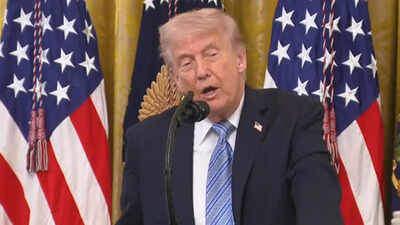
Trump-era political misinformation concerns resurface as fake polls spread online, raising questions over how fabricated data can influence election campaigns
NEW YORK: Locked in a competitive re-election race, Los Angeles mayor Karen Bass declared on social media last week that a new poll was evidence that her campaign was "gaining momentum".
Just a few days later, the truth emerged: The poll was fabricated. The California results were among at least three "polls" across three states posted online this month by Median Strategies, a previously unknown organisation that admitted to Los Angeles Times Monday that the purported results were fake.Before shuttering its website this week, the company wrote that it "was created as a short-term social experiment examining how purported polling information could enter and spread through the political information ecosystem without independent verification".
The post did not explain who was behind the "experiment" or for what purpose.The Guardian reported Thursday that a 21-year-old recent college graduate was behind the website. "I wanted to see if fake polls could really penetrate the ecosystem that easily," Rahil Prakash told the Guardian when reached by phone. "And as it turned out, it could."The trajectory of the California poll offers a cautionary tale about the perils of trusting unvetted polling.
While high-quality independent polls still exist, they appear amid a slew of other surveys produced by outside groups, campaigns or super PACs or using undisclosed or questionable methodologies. It can be a struggle to make sense of the findings - and as the latest episode shows, even campaigns may end up falling for falsified data."This is much bigger than one fake poll," said Chris Wilson, a veteran Republican pollster who now leads the public opinion firm EyesOver.
"It's never been easier to make invented numbers look legitimate, and campaigns and outside groups have every incentive to amplify anything favourable before anyone verifies it."The Median Strategies fake polls claimed to evaluate support in the Democratic primary for governor in Wisconsin, the gubernatorial race in Nevada, and the mayoral race in Los Angeles. The Los Angeles poll, which purported to show Bass, an incumbent Democrat, leading councilmember Nithya Raman, a progressive Democrat, by about 12 percentage points in the mayoral race, was shared by the Bass campaign on social media and covered by the California Post before it was revealed to be bogus.The Bass campaign has since deleted its social media post promoting the poll but defended itself by saying that it "was reported on by multiple news outlets". "Any bad faith attempts to influence elections should be investigated and prosecuted to the fullest extent of the law," Bass campaign spokesman Alex Stack said.New York Times and FiftyPlusOne noted that the polls were released without basic information that was needed for vetting, such as who was running the firm."When the poll was released, it lacked basic information about how it was conducted and who was behind it," Will Davis, director of Election Data Analytics at New York Times, wrote in an email to the AP. "Releasing this type of information is standard practice for pollsters, and because that information was not provided, we did not include it."Mary Radcliffe, head of research at FiftyPlusOne, also thought the methodology statement for the Wisconsin poll was missing key details, including the source for the voter file the company claimed to have used. "There is a universe where they could have come up with plausible answers to my questions," she said. "This is an industry built on trust. I have to trust that people are answering my questions in good faith." While admissions of falsified polling data are rare, they are not without precedent.
In 2010, for instance, the left-leaning blog Daily Kos said that polling for its website, conducted by a firm called Research 2000, was fraudulent.