1 hour ago
3
1 hour ago
3

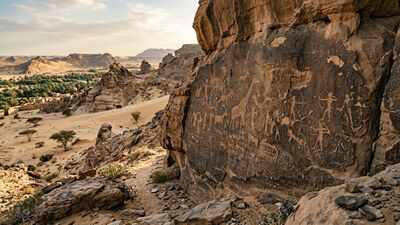
Hidden among the vast landscapes of Egypt’s Western Desert, the Dakhla Oasis preserves a remarkable record of human activity carved directly into stone. For thousands of years, its sandstone cliffs have carried images of animals, people and symbols left behind by communities that lived in a changing Sahara.
Now, these ancient markings are facing a new era of decline. Natural erosion, shifting weather patterns and modern damage are gradually wearing away some of the oldest traces of life in the region. Archaeologists are documenting the fragile rock art as they work to preserve details that may not survive for future generations.
Dakhla Oasis preserves 7,000 years of human stories carved into stone
The Dakhla Oasis sits roughly 350 kilometres west of the Nile Valley and has long been a crossroads between different parts of North Africa.
Ancient routes passing through the region connected communities travelling between Egypt, the Sahara and Libya, leaving behind evidence of repeated human activity.Among the most valuable remains are thousands of petroglyphs carved into exposed rock surfaces. Some depict animals that once lived in a wetter Sahara, while others show people, hunting scenes and symbols connected to different periods of settlement.
The oldest examples date back around 7,000 years, when the landscape around the oasis was very different from the dry desert seen today. Later generations continued adding their own marks, creating a layered record that stretches from prehistoric communities to more recent historical periods.The Dakhleh Oasis Project, an archaeological programme that has documented the region’s heritage for more than four decades, has recorded hundreds of rock art locations.
Some sites contain only a handful of carvings, while others feature hundreds of images spread across sandstone surfaces.The markings are not limited to prehistoric artwork. Inscriptions in hieroglyphics, Coptic, Greek, Graeco-Latin and Arabic reveal how different cultures used and passed through the oasis over centuries.
How wind, rain and rising temperatures are reshaping Egypt’s rock art
Many of the carvings were created on Nubian sandstone, a material that can preserve details for thousands of years but is also vulnerable to weathering.
Exposure to wind, dust and temperature changes slowly breaks down the outer layers of the rock.The ResearchGate study was published ‘(2013) Rock art research in the Dakhleh Oasis, Western Desert (Egypt). Petroglyph Unit. Dakhleh Oasis Project’ reveals that Dr Paweł Polkowski, who leads research into the Dakhla Oasis rock art, has warned that some surfaces have become extremely fragile. In certain areas, the stone has deteriorated so much that even light contact can damage it.The process is gradual, but the losses add up over time. A carving that remains visible today may have already lost details that disappeared decades earlier.
Climate patterns are adding new pressure. Rainfall is historically uncommon in this part of Egypt, but heavier downpours have become a concern for exposed archaeological sites. Water can penetrate cracks in the stone, weaken surfaces and speed up erosion.The same environmental changes affecting desert settlements and landscapes are also affecting ancient carvings that were never designed to withstand sudden weather events.
Modern marks are adding new scars to Egypt’s ancient desert art
Natural erosion is not the only challenge. Human activity has also altered parts of the oasis’s rock art record.People have been leaving new marks on these stones for centuries. Earlier additions, including inscriptions from historical periods, are now considered part of the archaeological record. Modern graffiti, however, can obscure older carvings and permanently change the appearance of important sites.
Some locations have limited protection, making it difficult to prevent visitors from adding names, messages or new carvings over ancient artwork.The region has also revealed unusual examples of more recent imagery. Archaeologists have documented carvings that appear to resemble modern objects, including one sandstone image interpreted by some as resembling a smartphone. Other engravings appear to show British soldiers with weapons and flags during military activity in the oasis in 1916.These later additions provide their own historical information, but they also highlight how constantly changing human marks can complicate the preservation of older layers.
Documenting the carvings before they vanish
For archaeologists, recording the artwork has become increasingly important. Detailed surveys, photographs and digital documentation allow researchers to preserve information about carvings that may not survive physically.The Dakhleh Oasis Project has played a major role in building a record of these sites, but fieldwork has faced interruptions in recent years.According to Heritage Daily, international teams working on the project have struggled to return to Egypt’s Western Desert since 2014 because of difficulties obtaining the necessary security clearances. Although approval had reportedly been granted by Egypt’s Ministry of Tourism and Antiquities, delays have limited further documentation work.With every passing year, some carvings lose more of their original detail. The challenge for archaeologists is not only protecting the visible remains but also creating a record of a desert landscape that has been quietly preserving human history for thousands of years.The petroglyphs of Dakhla Oasis were created by people who wanted to leave a trace of their lives. Their survival now depends on whether modern efforts can keep those traces from being erased.