2 hours ago
3
2 hours ago
3

China has some of the most polluted cities on the planet, and for years the usual fixes, stricter emission rules, factory shutdowns, better public transport, have only chipped away at the problem.
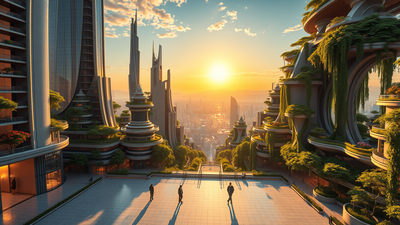
So Italian architect Stefano Boeri decided to try something far more radical, wrapping entire buildings and eventually entire cities in trees. His firm's biggest project so far is Liuzhou Forest City, a planned neighbourhood in southern China where offices, homes, hotels, schools and even a hospital are meant to be covered almost completely in greenery. It sounds more like science fiction than city planning, but the idea comes straight from an earlier experiment that already worked in Italy, and China has been trying to scale it up ever since.
How Milan's Vertical Forest inspired China's plan for a forest city
The whole concept traces back to Bosco Verticale, or Vertical Forest, a pair of residential towers Boeri built in Milan that were finished in 2014. According to Stefano Boeri Architetti's own project page, those two towers alone are said to filter around 15 to 17.5 tons of soot out of the air every year, which convinced Boeri that the same principle could be scaled up into something much bigger, an entire city built the same way. Liuzhou Forest City takes that logic and applies it across dozens of buildings instead of just two, turning an architectural experiment into a full urban planning model.
Where is Liuzhou Forest City being built in China
Liuzhou Forest City is planned for the northern edge of Liuzhou, a city of roughly one and a half million people tucked into the mountainous Guangxi region of southern China. The site itself covers about 175 hectares running along the Liujiang river, chosen partly because Liuzhou already struggles with heavy smog thanks to rapid industrial growth in the surrounding area. The masterplan was commissioned by the Liuzhou Municipality Urban Planning Bureau, and the design ties the new neighbourhood into the existing city through a dedicated rail line reserved for electric vehicles.
How many trees and plants will cover the buildings
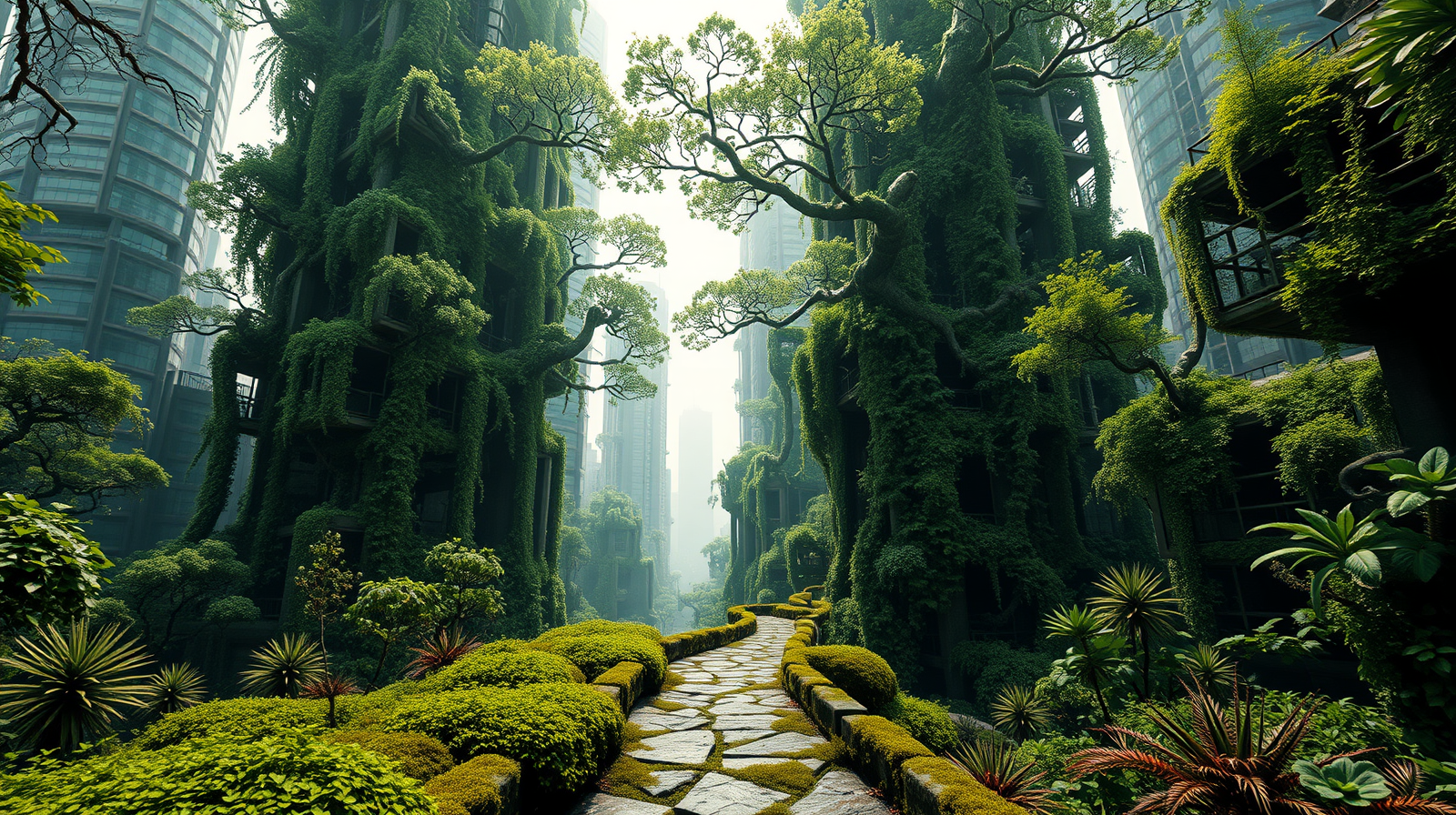
The scale of greenery planned here is genuinely enormous. Once finished, Liuzhou Forest City is expected to include around 40,000 trees and close to a million plants spread across more than 100 different species, covering rooftops, balconies and building facades throughout the neighbourhood. Rather than treating greenery as a decorative add on, the design treats it as a core structural feature of every building, meaning plants are built into the architecture from the ground up instead of being planted afterwards.
Can trees on buildings actually clean the air
According to figures shared by Stefano Boeri Architetti, this much plant life is expected to absorb close to 10,000 tons of carbon dioxide and around 57 tons of fine particulate pollutants every single year, while producing roughly 900 tons of oxygen annually. Beyond simply cleaning the air, this dense layer of vegetation is also designed to help cool down the neighbourhood by reducing the urban heat island effect, cut down on traffic noise, and create genuine habitat space for birds, insects and small animals that already live in the surrounding countryside.
How the city plans to run on renewable energy
Liuzhou Forest City is not just about greenery either, energy self sufficiency is baked into the design from the start. The plan calls for geothermal energy to handle indoor heating and cooling, paired with rooftop solar panels to generate electricity, aiming to make the entire neighbourhood run independently of traditional power sources. Combined with the electric-only transport network connecting it to the wider city, the goal is a fully self-contained green district rather than just a cluster of plant-covered buildings dropped into an ordinary urban grid.
Is China building more forest cities beyond Liuzhou
Liuzhou is meant to be just the starting point. Stefano Boeri Architetti has floated similar forest city concepts for other heavily polluted Chinese cities, including Shijiazhuang, a city that has at times recorded some of the worst air quality readings in the country. The firm has also completed standalone vertical forest towers in cities like Nanjing, applying the same tree-covered building concept on a smaller scale even where a full forest city masterplan is not yet in the works.
Why forest cities matter for China's pollution problem
China adds tens of millions of new city dwellers every year as people migrate from rural areas in search of work, putting even more pressure on air quality in cities that are already struggling. Boeri has described projects like Liuzhou Forest City as an attempt to prove that dense urban living and genuine biodiversity do not have to work against each other, showing that even fast-growing, heavily populated cities can build environmental recovery directly into their skyline instead of treating it as an afterthought.
Whether or not Liuzhou Forest City ends up matching its ambitious targets once fully built, it stands as one of the most visible attempts yet to answer China's pollution crisis with architecture rather than regulation alone.