4 months ago
46
4 months ago
46

KUALA LUMPUR, Malaysia, May 12 (IPS) - Transnational agribusinesses increasingly shape food policies worldwide. Claiming to best address recent food security concerns, they seek to profit more from innovations in food production, processing, and distribution.
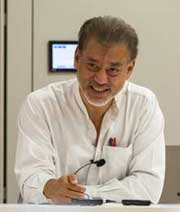 Jomo Kwame Sundaram
Post-war food security
Food policies in the Global South have evolved significantly since World War Two (WWII), especially after nations in Asia and Africa gained independence, often after experiencing wartime food deprivations.
The early post-WWII and post-colonial eras saw new emphases on food security, especially following severe food shortages before, during, and after the war.
Many starved as millions experienced acute malnutrition. The wartime Bengal famine in India claimed over three million lives as Churchill prioritised British imperial interests and military priorities.
After WWII, colonial powers weaponised food supplies for counterinsurgency and population control purposes, especially to overcome popular anti-imperialist resistance.
Many who died were not military casualties but victims of deliberate counter-insurgency food deprivation. Unsurprisingly, food security efforts became a popular policy priority after WWII.
Western-controlled research organisations, including the United Nations Food and Agriculture Organisation (FAO), became highly influential, shaping and even developing post-colonial food security policies.
 Felice Noelle Rodriguez
Green Revolution
Public research institutions were established in developing countries, many of which are affiliated with the Consultative Group on International Agricultural Research (CGIAR).
The Green Revolution initially focused on increasing yields of wheat, maize, and rice. These efforts increased cereal production unevenly during the 1960s and 1970s.
Malthusian logic held that rising life expectancies meant population growth outstripped the increase in food supply, constrained by limited agricultural land.
As government funding from wealthy nations declined, powerful corporate interests and philanthropies became even more influential. They often promoted their own interests at the expense of farmers, consumers, and the environment.
The International Fund for Agricultural Development (IFAD) was established in the 1970s, channelling a small share of windfall petroleum incomes into food and agricultural development.
Soon after, the US transformed its Public Law (PL) 480 program into the World Food Programme (WFP). Thus, some FAO functions were ceded to donor-controlled UN funds and programmes also set up in Rome.
Embarrassingly, an FAO report found WFP food supplies were withheld from Somalia to avoid being taken by the ‘Islamist’ As-Shabaab militia. Chatham House also estimated two to three hundred thousand deaths as a consequence.
Neoliberalism
The counter-revolution against national development efforts in the 1980s undermined government fiscal capacities, import-substituting industrialisation, and food security efforts.
Neoliberal structural adjustment policies involving economic liberalisation were imposed on heavily indebted developing countries, mainly in Latin America and Sub-Saharan Africa.
The Global North promoted trade liberalisation, undermining earlier protection of and support for food and industrial production.
Powerful food conglomerates sponsored and promoted import-friendly food security indicators, undermining FAO and other civil society research and advocacy efforts.
Countries hardly producing any food were highly ranked, as civil society organisations tried to counter with their own indicators, mainly focused on food sovereignty.
Trump 2.0
A new phase has begun with Donald Trump’s re-election as US president.
Trump 2.0’s weaponisation of economic policies and agreements, including food supplies, has ominous implications for countries trying to assert some independence.
Economic and military threats have been used for diverse ends, including economic, political, and other ‘strategic’ goals. Tariffs and sanctions are now part of a diverse arsenal of such weapons deployed for various purposes.
Governments have even been threatened with tariffs and sanctions for personal reasons. Trump has demanded Brazilian ex-President Jair Bolsonaro’s freedom following his failed coup after losing the last presidential election.
Deploying such economic weapons has worsened the deepening worldwide economic stagflation, as various Trump economic and military policy threats exacerbate contractionary and inflationary pressures.
The US-controlled WFP was long used to provide food aid selectively. But there is little sympathy left in Washington for other nations’ food security concerns.
To cut federal government spending, Trump has ended official development and humanitarian assistance, including food aid, while the US remains the world’s leading food exporter.
Nevertheless, Trump may take unexpected new steps to boost farmers’ earnings to recover electoral support before the November mid-term election.
Weaponisation of food aid took an ominous turn during the Israeli siege of Gaza, by calibrating food access to enable selective ethnic cleansing.
The Gaza Humanitarian Foundation attracted hungry residents to its food centres, causing hungry families desperately seeking food to be shot while seeking food.
Poverty is primarily defined by inadequate access to food, while the FAO considers income the main determinant of food insecurity.
Although World Bank poverty measures have generally continued to decline, FAO indicators suggest a reversal of earlier progress in food security over the last decade.
These contradictory trends not only reflect problems in estimating and understanding poverty and food security but also suggest that resulting policies are poorly informed, if not worse.
Professor Felice Noelle Rodriguez is Director of the Centre for Local History and Culture, Universidad de Zamboanga, Philippines.
IPS UN Bureau
© Inter Press Service (20260512061021) — All Rights Reserved. Original source: Inter Press Service