2 months ago
35
2 months ago
35

32 minutes ago
Danielle HerbertBBC Wales

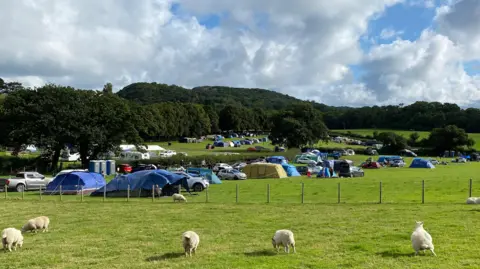 Mark Rutherford
Mark Rutherford, who runs Camp Llandudno, is concerned that his site will be affected by the new rules, as the landowner's main field is in a flood zone
Pop-up campsite owners and accommodation providers have criticised upcoming rule changes in Wales, labelling them "unworkable" and "ridiculous".
From June, landowners can apply to run their pop-up for up to 60 days per year - the same as is in England, and an increase on the current 28-day allowance.
But the new system, announced by the previous Welsh government, also includes restrictions on where these pop-ups will be allowed, which some in the tourism sector claim means a "significant part of Wales" will not benefit.
The new Welsh government said its recently-appointed cabinet would be "setting out their priorities shortly" and would "have a relentless focus on doing what's best for Wales".
Dan Yates, founder of outdoor accommodation booking site Pitchup, said the concept of "permitted development" - meaning no planning permission is needed - was now "a misnomer in Wales".
He said this was because the changes were "fraught with hoops you have to jump through" that "deters a lot of people from even bothering".
 Rachel Andre
Dan Yates, founder of Pitchup, says the new rules are "unworkable" and "damaging"
Current rules allow landowners to open pop-up campsites in Wales for up to 28 days a year under permitted development.
In 2023, the rules reverted back to pre-Covid limit.
But it added it wanted to address concerns raised about "the disruption caused by living next to a pop-up camping site".
It proposed a new type of permitted development, where pop-up campsites would need to apply for permission for the 60-day allowance.
These would not be allowed within a 100-metre "buffer" of a building not occupied by the site owner. Other excluded areas included certain flood zones and in the vicinity of listed buildings.
During this phase, pop-up sites on land within a national park, area of outstanding natural beauty (AONB) or world heritage site remain under the 28-day allowance.
Landowners would also have to agree vehicle access and wastewater management procedures with their local council.
While the new legislation is being phased in initially, all pop-up campsite operators will need to abide by it from 1 September.
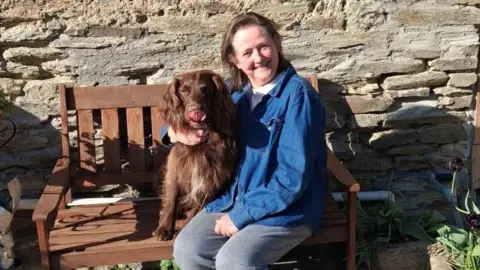 Caroline Roberts
Caroline Roberts has been running a pop-up campsite and van pitches since 2021
Yates said he thought the Welsh government had "done a good job of talking about the headline figure of 60 days", but the small print showed "this won't apply to a significant part of Wales".
"If you are unfortunate enough to be in a flood zone 2 or 3, which in England they think is perfectly OK as long as you seek prior approval, the permitted development right is completely removed in Wales," he said.
He said the legislation was "unworkable and damaging", adding pubs in particular would be "really disadvantaged", as the buffer rule means they cannot set up a temporary campsite within 100 metres of their venue.
"It is a ridiculous situation and one that will only make things worse for pubs, farmers, landowners, local councils, holidaymakers and everyone else involved with the issue."
Caroline Roberts, who runs a pop-up campsite and van pitches in Pant Y Barcud, Carmarthen, decided it would be more "cost-effective" to have a permanent site, running for a full six-month season, due to paying for things such as insurance.
She applied to Carmarthenshire council for planning consent in March 2023, but this was denied, which a spokesperson confirmed was on the grounds that "intensification of use would give rise to highway safety concerns".
She is now worried this means she won't even be able to run a pop-up under the new rules, calling the process "desktop analysis" and claiming no-one from the council visited the site.
Farm owner Mark Rutherford, who runs Camp Llandudno in Conwy county, is also concerned his site could be impacted as his main field is in a flood zone.
"[It] effectively means we can't run half of the camp," he said.
"You can't make blanket rules because not all situations fit in a box. We don't flood ever, and certainly don't in the summer when we run our pop-up camp."
 Mark Rutherford
Mark Rutherford says he understands the desire to protect people, but doesn't think it should be a "blanket rule"
Rutherford said he "totally understands" the desire "to protect people" but added his business had never had an issue in four years of operating.
He said landowners in flood zones should be able to provide additional information to local planning authorities, to allow them to "make an educated decision".